Tips
Jan 9, 2026
First-Time Home Interiors in Chennai: Questions That Clarify Scope and Budget
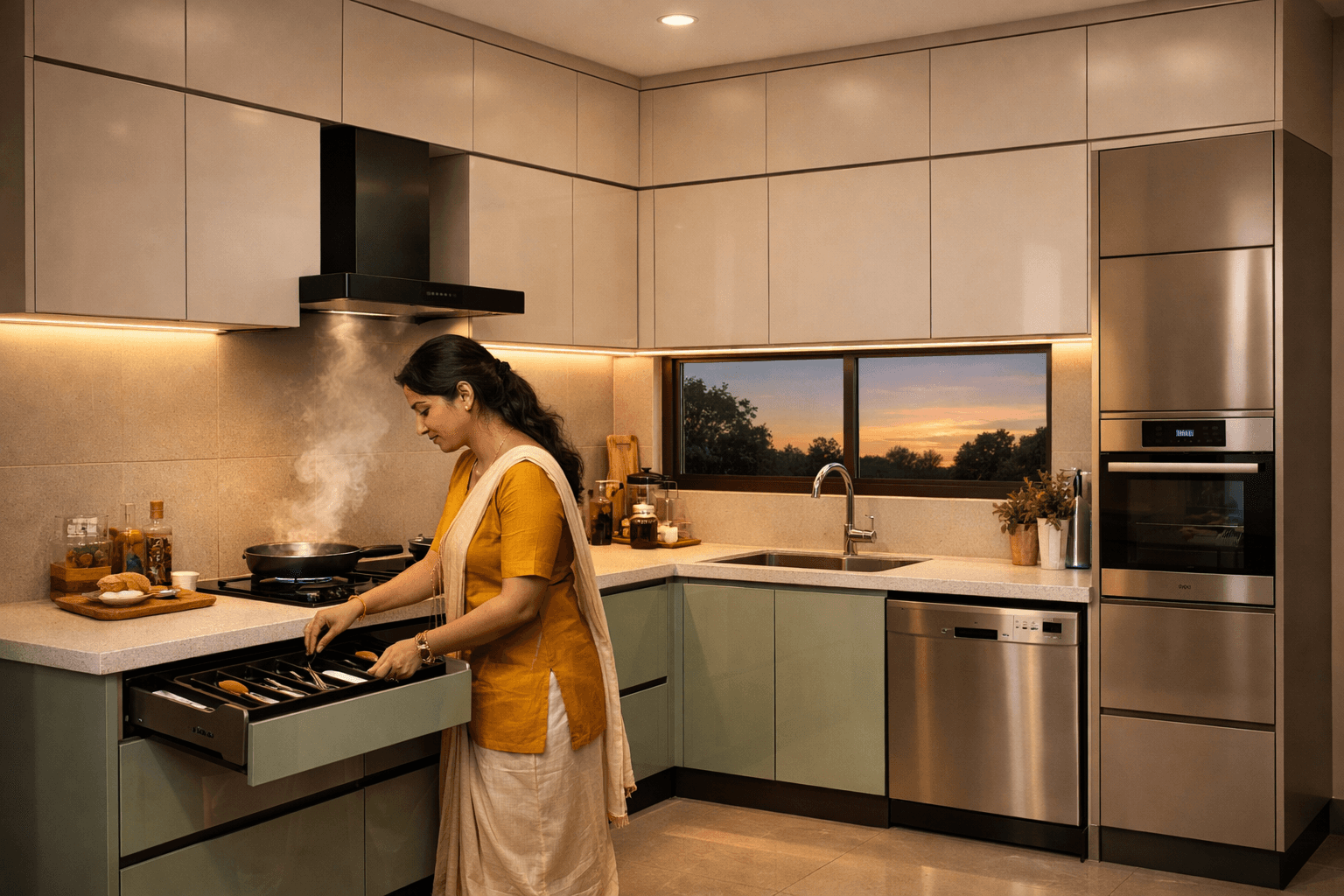
Why First-Time Interiors Feel So Uncertain in Chennai
Starting interiors for your first home in Chennai often feels less like a creative exercise and more like a test you did not prepare for. The builder hands over the apartment or villa, family wants it ready before a certain date, brokers and friends share contacts, and suddenly you have half a dozen quotes in completely different formats. Each vendor uses their own jargon, each one assures you that everything is “covered”, but the numbers and inclusions rarely match.
The main reason scope and budget feel ambiguous is simple: everyone is quoting for a slightly different project. One quotation might include basic civil work, but no false ceiling. Another might include false ceiling and lighting, but only provision for appliances, not supply. Soft furnishings, after-sales support, and even cleaning are often left vague.
This article focuses on first-time homeowners in Chennai, especially along the OMR/IT corridor and in newer villas and gated communities, and gives you clear, practical questions so you can define what you actually need, and what it is likely to cost when you work with a designer locally.
Defining Scope Room by Room and Building a Budget
Once lifestyle is clear, you can move to scope. For a typical Chennai apartment or villa, interiors usually fall into a few broad categories:
Fixed furniture: kitchen, wardrobes, TV unit, crockery unit, study tables, shoe racks
False ceiling and lighting: from basic functional to more design-heavy setups
Civil and related work: demolitions, loft removal, tiling changes, new counters, electrical and plumbing shifts
Surfaces and finishes: laminates, veneers, PU, glass, mirrors, wallpapers, wall panelling
Soft elements: curtains, blinds, loose furniture and whether appliances are supplied or only provisioned
Within each category, clear questions help you know what is in and what is out.
For example:
Kitchen: Is the granite and sink included? Are accessories, hob, chimney and water purifier part of your quote or separate? Is provision for hard water/RO considered, given Chennai’s varying water quality?
Wardrobes: Are lofts included, and if yes, how deep and how high? Are there internal accessories or just shelves and hanging rods?
Electrical: Does your price include new wiring and extra points, or only fitting lights and fans on existing points?
False ceiling: Is it only for certain rooms, or the entire home? Are LED lights and coves included or only the gypsum work?
At this stage, whether an item is included or excluded is more important than design pictures. Serious firms usually work with a structured scope checklist instead of relying on verbal promises.
Once you understand scope, you can start mapping to budget. For a mid-size 2 or 3 BHK apartment in Chennai, roughly 900 to 1,300 square feet built-up, you can think in cost buckets like these:
Item | Typical Range (Chennai) |
|---|---|
Modular Kitchen | INR 1.5L, 4L |
Wardrobes + Storage | INR 2L, 6L |
TV, Crockery, Study Etc. | INR 1L, 3L |
False Ceiling + Lights | INR 1L, 3L |
Civil & Electrical Mods | INR 0.5L, 3L |
Soft Furnishings (Basic) | INR 0.5L, 2L |
These are indicative ranges, not fixed rates, and can vary based on material choices and site conditions.
To use them:
If your comfort zone is around INR 6, 8L, you will likely choose simpler finishes, limit panelling, and keep civil changes minimal.
If you are in the INR 10, 15L range for a larger apartment or villa, you can usually allow for better finishes, more detailed panelling and more rework of builder provisions.
Budgets usually jump when you add veneer and PU finishes, extensive false ceilings, major civil changes, premium accessories and full loose furniture and decor. It is more useful to ask a designer: “At my carpet area and lifestyle, what is a realistic total range, including everything we have discussed?” rather than asking only for a per-square-foot rate.
Questions To Ask Designers Before You Share Your Number
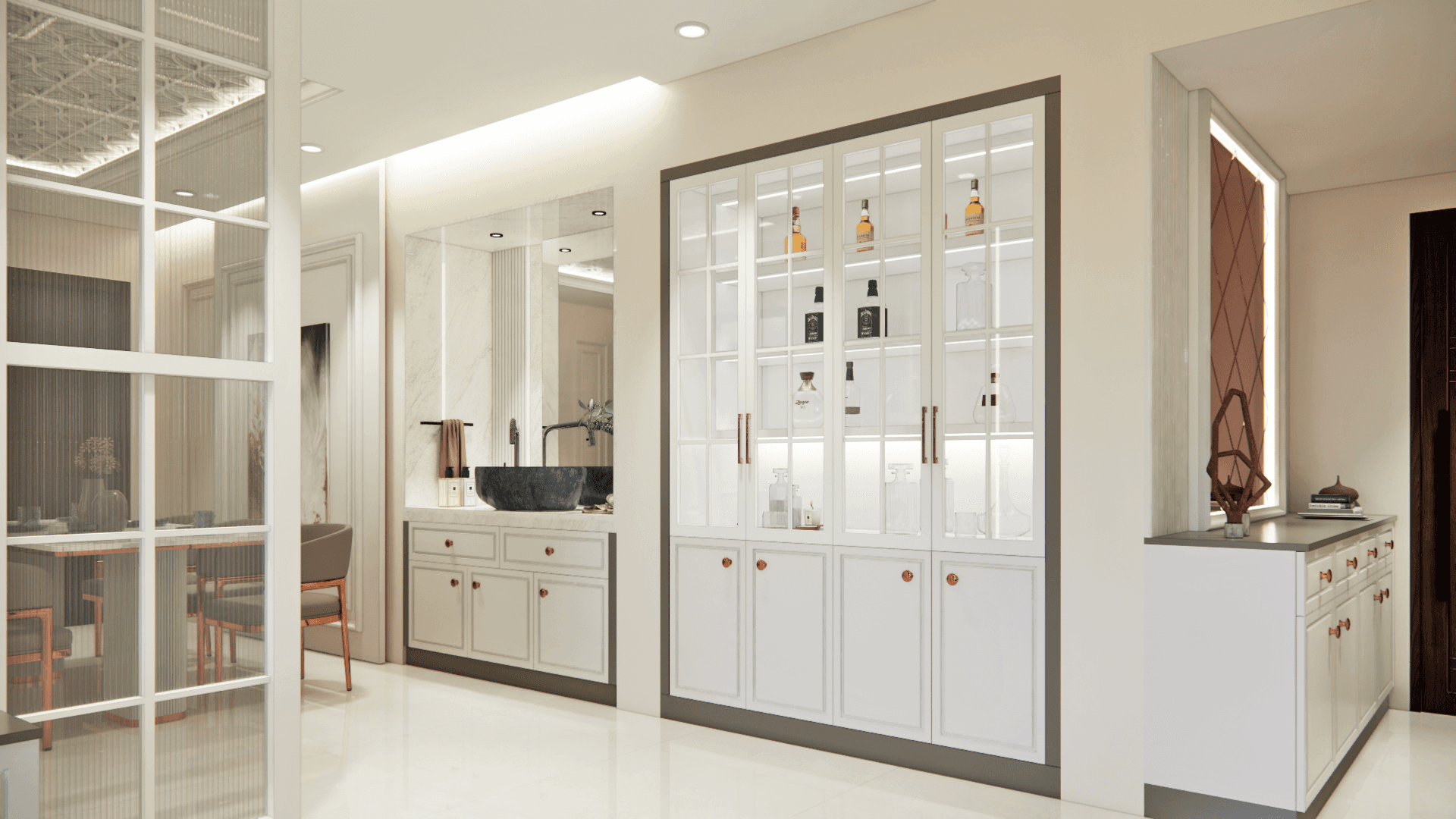
The questions you ask early will tell you a lot about how a designer thinks about money, scope and responsibility.
Some useful ones:
When you say turnkey, what exactly is included and what is excluded?
Can you show one completed project in Chennai where the final amount was close to the initial quoted range, and explain what helped keep it on track?
How do you handle changes after work starts, both in terms of process and pricing?
What are your payment milestones tied to: actual site progress, drawings, or fixed calendar dates?
How long do you support the project after handover, and what sort of issues are covered?
Ask at least one firm for a detailed, itemised quote for a similar Chennai home, even if the numbers are only approximate. This shows you how they structure costs and where money is going. Steady firms are usually comfortable explaining how they arrived at a figure rather than giving only a single lump sum.
Avoid comparing only the lowest line item without checking quality, inclusions and after-sales commitment. A slightly higher quote that includes proper support and realistic scope can work out better than a low number that keeps growing.
Timelines, Local Traps And A Simple Checklist
Time has a cost, especially if you are paying both rent and EMI. For an average 2 or 3 BHK in Chennai, a realistic sequence often looks like this:
Design and approvals: 2 to 4 weeks, depending on how quickly you respond
Production and site work: 6 to 10 weeks, depending on civil work and false ceiling complexity
Clarify timing with questions like:
What is your realistic start and finish date, assuming approvals from the association are on time?
Who coordinates with the building association and security on permissions, lift usage and debris removal?
If I delay selections or payments, what happens to the cost and schedule?
Delays can quietly add cost through extra rent, more site visits, and storage charges if materials are made but cannot be delivered. It helps to agree on a written timeline with assumptions clearly mentioned, instead of a vague “about 45 days.”
Local conditions in Chennai add a few common traps:
Builder changes a layout element late, like moving a sink or changing window style
Society rules may restrict drilling, wet work or working hours
Confusion between what the builder hands over and what you thought the designer would fix or improve
Weather-related concerns, such as balcony seepage or coastal humidity, that may require additional protection in cabinetry and finishes
You can reduce surprises by asking:
Which parts of the builder’s work are we modifying, and what could that involve in terms of extra levelling or correction?
If the association restricts certain work, what is our alternative plan?
Are walls, tiles and counters in a condition where we can directly install, or do you foresee rectification work?
All such assumptions should be summarised in the scope document so that any additional work later is clearly marked as a variation with a separate cost.
Finally, before you meet designers, create a one-page checklist:
Lifestyle profile and long-term plans: who lives here and how you use the space
Room-by-room must-haves and nice-to-haves
A rough budget range with a 10 to 15 percent buffer
A clear list of inclusions you want priced, such as false ceiling, appliances, curtains and loose furniture
Timeline expectations and any fixed dates like school term or lease expiry
When both you and your chosen designer start from this shared written understanding, the project usually feels calmer, clearer and easier to manage from start to finish.
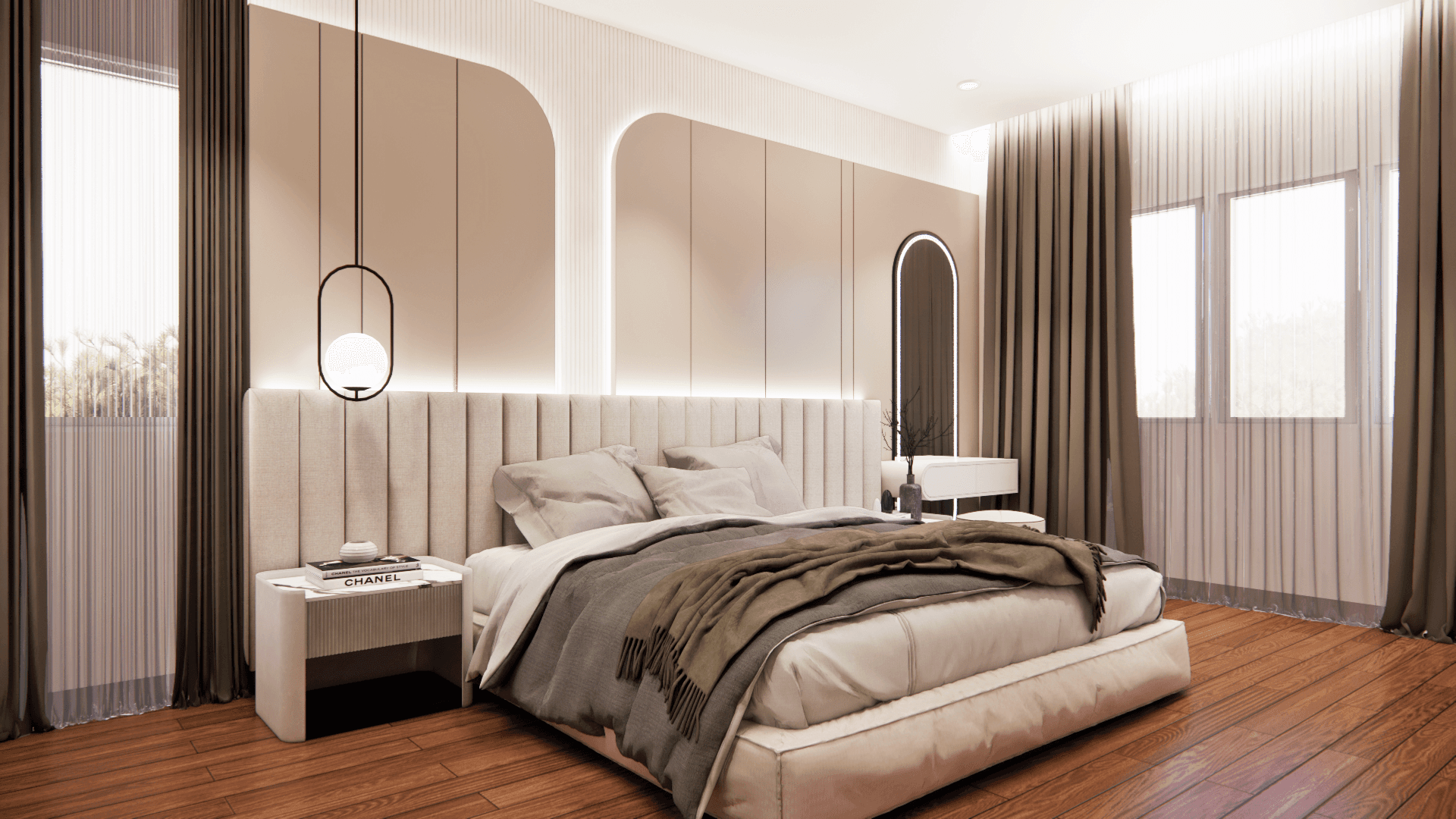
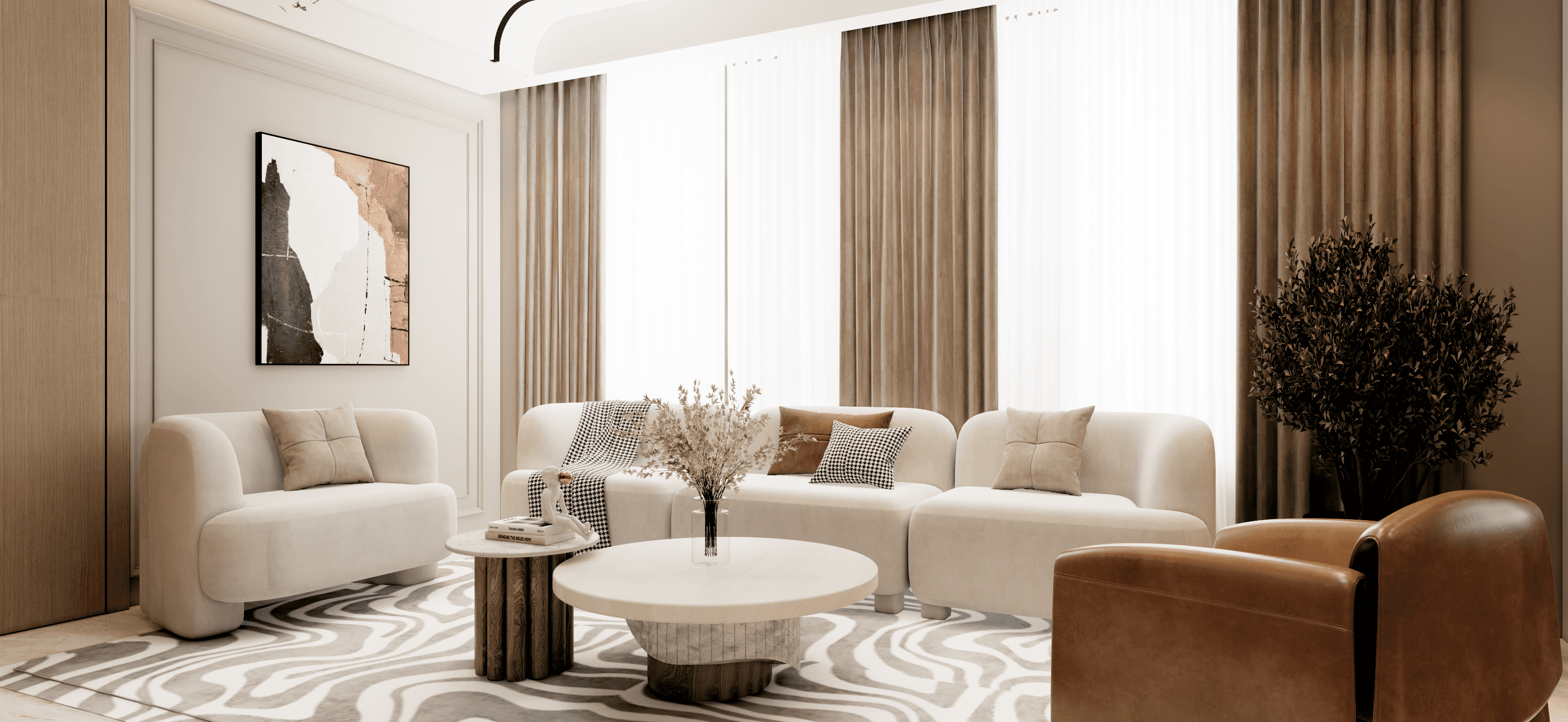
Transform Your Chennai Apartment Into A Home You Love
At Interiors by DeX, we work closely with you to turn every square foot of your apartment into a space that feels beautiful, practical and distinctly yours. Explore how our apartment interior designers in Chennai can create a tailored design that suits your lifestyle, budget and timeline. When you are ready to take the next step, simply contact us and we will guide you from the first idea through to the final finishing touches.
FAQs
Frequently asked questions
Find helpful answers about our services, detailed process, and bringing your vision to life.
Is It Better to Start Interiors Before or After Handover?
How Much Should I Keep as a Buffer in My Interior Budget?
Are Modular Units Always Cheaper Than Carpentry in Chennai?
How Do I Know If a Quote Is Too Low to Be Realistic?
When should I bring a designer into the process if I am still shortlisting properties on OMR or in other Chennai suburbs?