Tips
Jan 9, 2026
Design Choices That Keep Chennai Apartment Interiors Calm Over Time
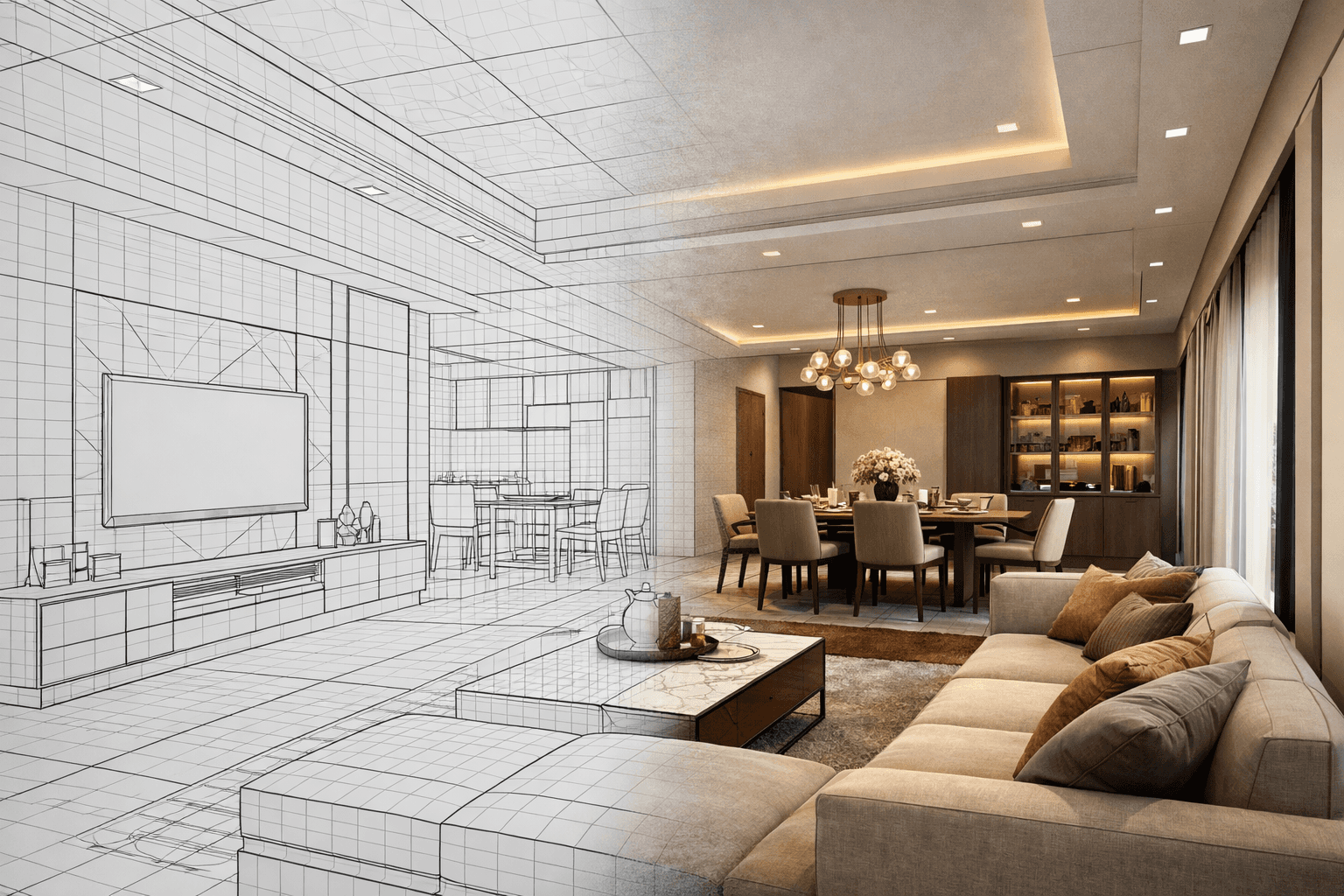
A calm apartment in Chennai does not happen by accident. It comes from many small, clear design choices that respect heat, humidity, dust and the way your family actually lives every day. When those choices are off, even a new flat can start to feel noisy and tiring very quickly.
The real difficulty for most new homeowners in Chennai is not taste. It is uncertainty:
How much should you really spend on interiors in a 2BHK or 3BHK flat?
Which materials can handle Chennai’s humidity and dust without constant maintenance?
How do you plan storage, light and circulation in a compact builder layout without making it feel cramped?
This article lays out a simple, structured way to think about calm apartment interiors in Chennai, based on what we see in gated communities across the city. The goal is straightforward: spaces that look quiet, stay easy to maintain and age well as your routines, guests and needs change.
We will use a practical framework you can apply to any Chennai apartment:
1. Context Check (climate, locality, society rules)
2. Layout & Zoning
3. Storage & Circulation
4. Materials & Colours
5. Lighting & Furniture Scale
6. Balcony & Utility Planning
7. Costs & Priorities
8. Working With a Designer
1. Why Calm Chennai Apartments Are Harder Than They Look
New homeowners in Chennai often get pulled in many directions. Contractors push one look, relatives insist on another, and online photos show multiple styles that may not suit local conditions. The result is common: too many finishes, busy false ceilings, loud colours and furniture that fights with the compact scale of the flat.
When we say a home feels calm in a Chennai apartment, we usually mean:
Visual quiet: fewer competing patterns and colours
Easy cleaning in humidity, dust and coastal air
Layouts that keep up with kids growing, work from home and guests
Common regrets we hear are similar:
Lofts missing where they were needed most
Wardrobes that stop short of the beam and waste volume
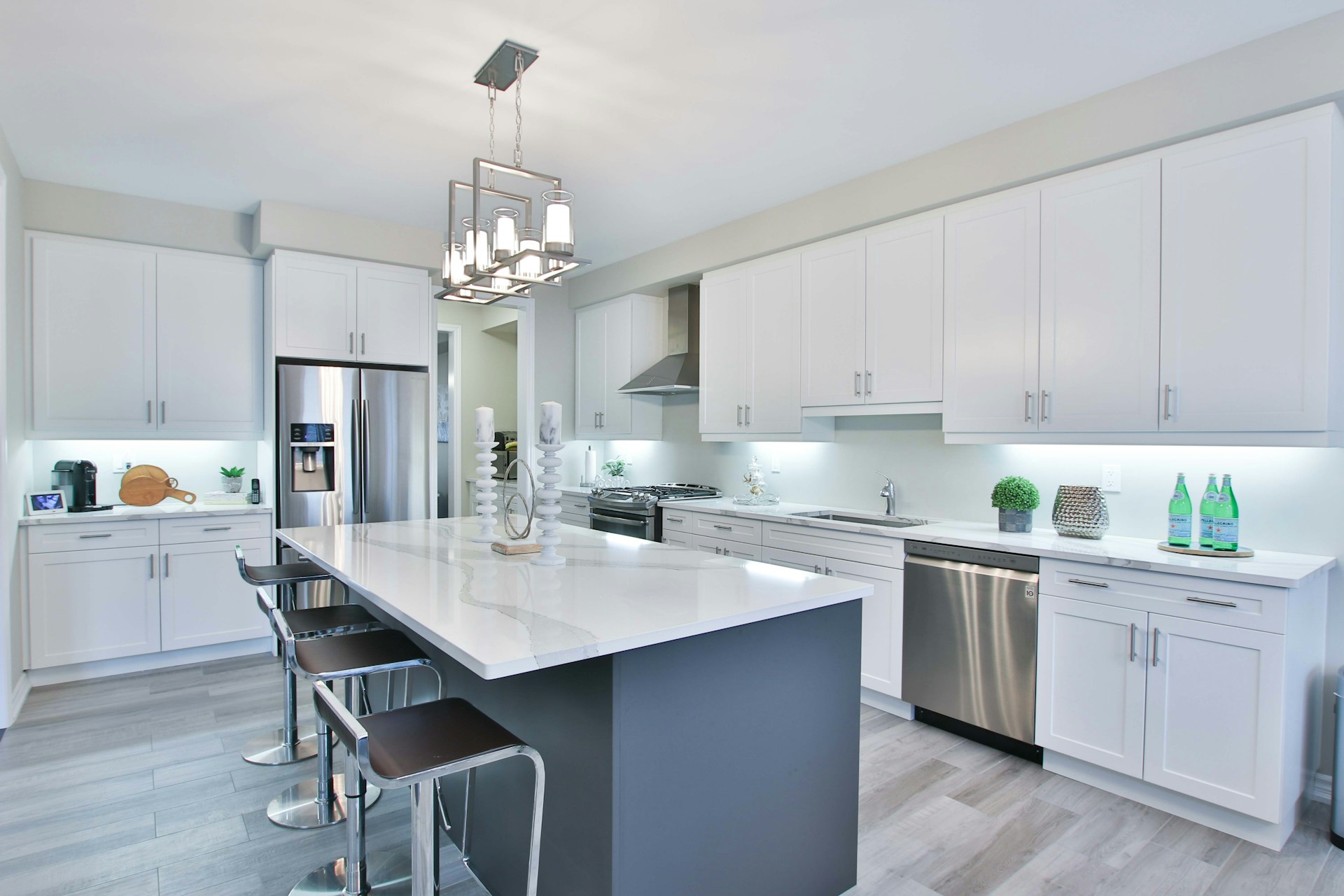
A kitchen in glossy shades that felt exciting for six months then tiring
Sofas that looked grand in the showroom but eat up half the living room
So the real promise is not a trendy look. It is a set of long-term design decisions that continue to feel calm through heat, dust, visitors and daily mess.
2. Context Check: Reading the Chennai Apartment Clearly
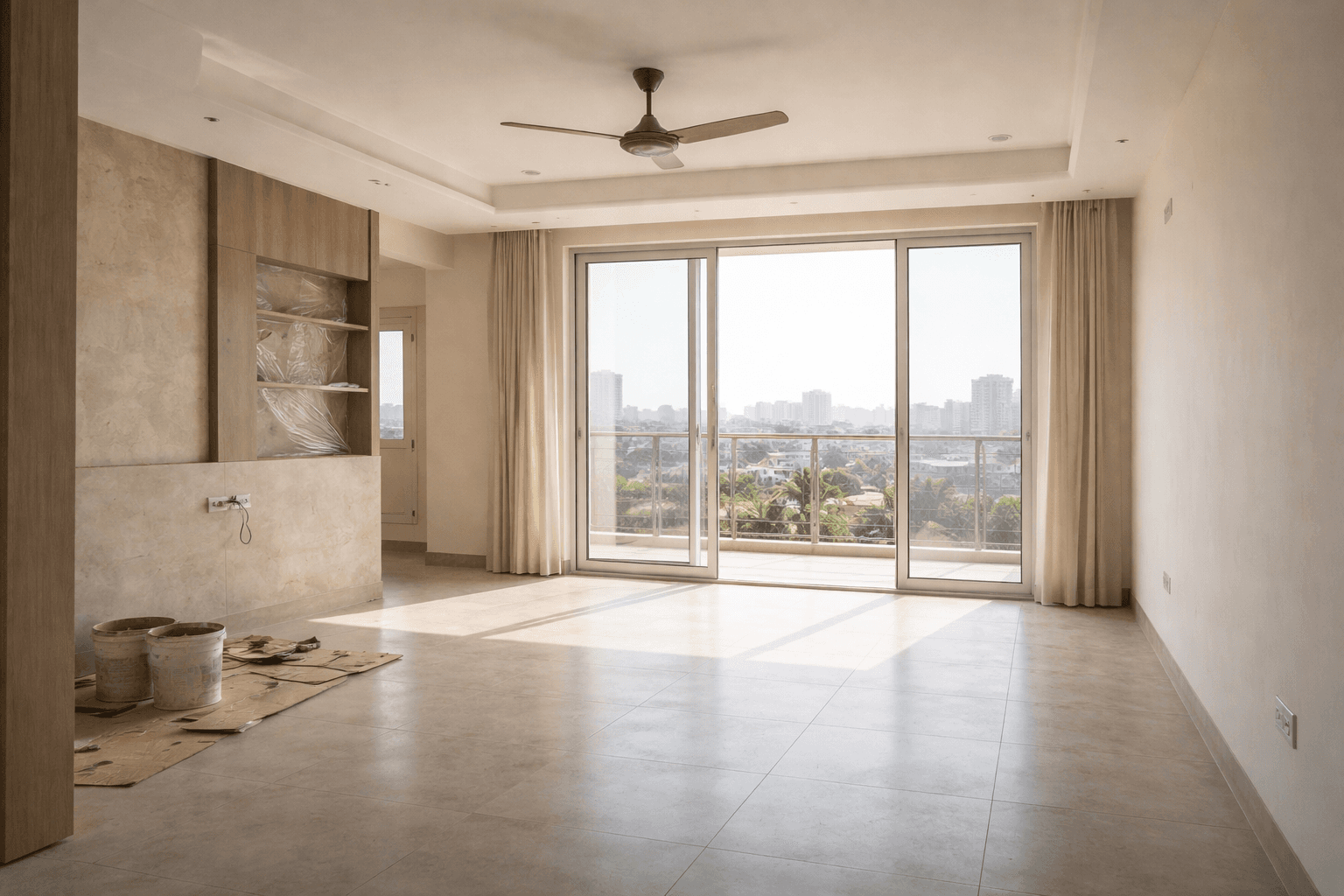
Before choosing finishes, it helps to read the flat and its surroundings carefully. Chennai’s microclimate matters. Coastal humidity, salt in the air and dust from roads like OMR, GST Road or Arcot Road all change how surfaces age and how often you will be wiping them.
Some practical effects of this context:
Cheaper hardware can rust faster near the coast
High gloss surfaces show dust and streaks more in strong light
Frequent mopping means edges and skirtings must handle water well
Layouts in gated communities in Sholinganallur, Medavakkam, Porur, Pallikaranai and similar areas often come with:
Narrow balconies
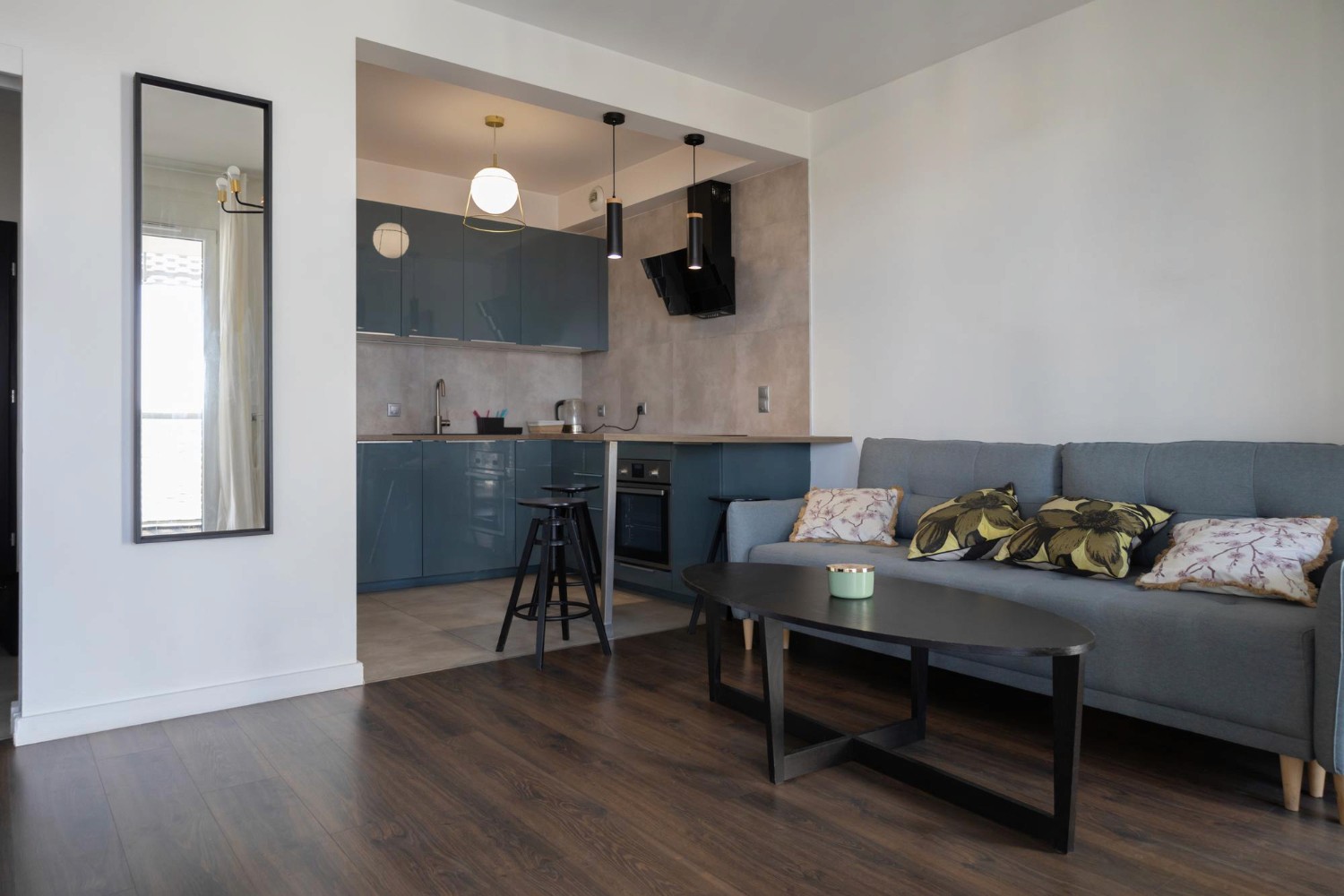
Combined living, dining areas
Lower ceiling heights
Fixed builder tiles you cannot easily replace
Society rules may limit what you can do on balconies, where AC outdoor units can sit, or how much you can alter walls.
This means shutters, access panels and service zones should be planned so that local maintenance staff can work easily. If they struggle to reach a valve or a hinge, daily calm will not last.
Context Checklist
Which side gets the strongest sun and the most heat?
How close are you to the sea or a main road (dust vs. salt)?
Society rules on balcony use, grills, AC units and plumbing changes noted?
Existing tiles and doors assessed for re-use vs. overlay?
3. Layout & Zoning: Planning Calm Spaces Before Colours
It is useful to plan zones before discussing colour charts. In a 2BHK or 3BHK, even in 900 to 1,200 square feet, it is possible to separate noisy and quiet areas.
A simple zoning idea for typical Chennai apartments:
Entrance and shoe zone
Work or study corner
TV and friends zone
True retreat spaces for sleep and recharge
Storage comes next. Built-in, full-height wardrobes and lofts that align with beams often do more for long-term calm than any decorative panel.
Many flats in Thoraipakkam, Velachery or Navalur have odd columns or drops. Working with them, not against them, gives extra hidden storage and fewer jutting units.
We also study circulation:
Where do doors swing?
How will the main door, balcony door and toilet doors open in relation to your sofa and dining table?
A calm home has clear walking paths, no sharp corners catching your hip every morning and no chairs that need to be dragged each time someone passes.
Layout & Zoning Checklist
Noisy vs. quiet zones clearly marked on plan
Door swings checked against furniture layout
Main circulation paths free of sharp corners and obstacles
Work-from-home or study spot identified with minimal disturbance
4. Storage & Circulation: Keeping Daily Life Contained

Chennai homes are active. There are shoes, parcels, water cans, school bags, guests and extra bedding in constant rotation. Calm design accepts this and gives each item a home.
Useful design moves include:
A proper entrance unit for shoes, parcels and keys
Tall cabinets or benches that hide water cans
Planned space for guest mattresses and pillows, not just the top of the wardrobe
Balconies and utilities carry drying clothes, mop buckets and AC outdoor units. Instead of pretending these do not exist, it helps to plan:
Sliding or louvred shutters to hide clothes when not needed
Simple screening to mask AC units while keeping airflow free
Utility zoning so the living room view does not always include cleaning tools
Open shelves are tempting, but they collect dust faster along busy roads in areas like T. Nagar, Adyar and Nungambakkam. Limited open display, with back-lit niches where artefacts and pooja units can be seen clearly but cleaned easily, usually works better.
Storage & Circulation Checklist
Full-height wardrobes and lofts aligned with beams
Dedicated spot for water cans, shoes and parcels
Guest bedding storage planned
Open shelves limited in high-dust localities
Service access to valves, panels and meters kept clear
5. Materials & Colours: Choosing Options That Age Quietly
In Chennai’s humidity, material choice is not just a style call; it is a maintenance decision.
For kitchens and wardrobes, many homeowners in gated communities weigh laminate, membrane and acrylic shutters. Each behaves differently with steam, everyday mopping and sea breeze that enters when windows are open during monsoon.
In many apartments, it is often sensible to keep the builder tiles if they are neutral and reasonably laid, and then use rugs and furniture to warm up the space. When the original tiles are too busy or too cold in tone, overlay options can calm things down as long as door thresholds and heights are handled carefully.
Wall paints in areas closer to the sea, like ECR, Neelankarai or Tiruvanmiyur, need to cope with more moisture and salt. In inner-city zones, traffic pollution is the bigger concern, so washability and stain resistance matter more than textures that trap dust.
Hardware is one of those quiet decisions that buyers sometimes ignore. Soft-close hinges, good quality channels and the right stainless steel grades can:
Cut down daily slamming noises
Reduce calls to repair sticky shutters
Keep rust marks away from light-coloured cabinets
For colour, a restrained base palette with controlled accents works well in Chennai’s strong daylight and mixed artificial lighting.
A simple approach:
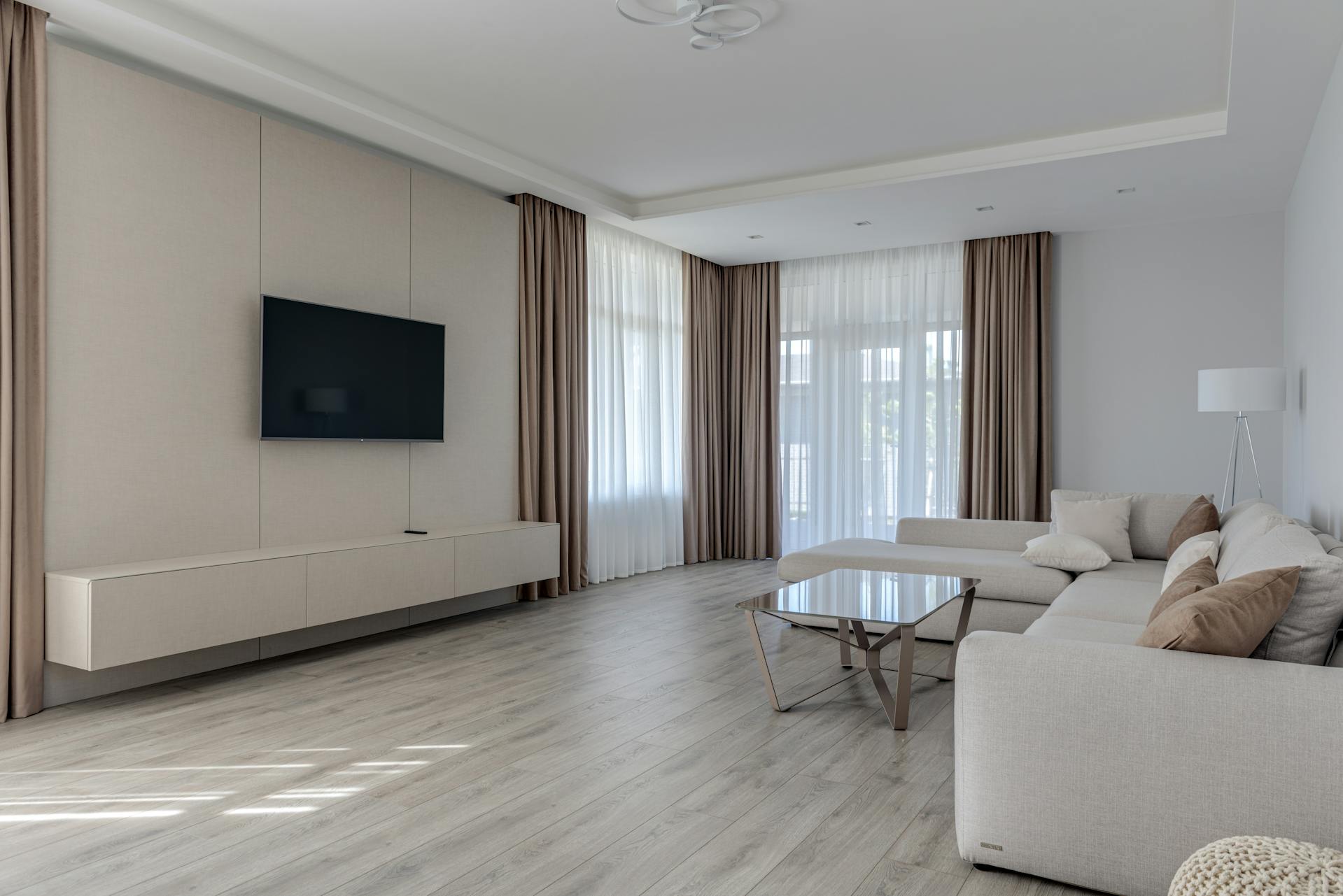
Calm neutrals for most walls and large furniture
One or two accent tones used repeatedly, not in every corner
Textiles like cushions and runners as changeable colour carriers
Materials & Colours Checklist
Shutter materials chosen for humidity and cleaning, not just looks
Hardware with suitable stainless steel grades (esp. near coast)
Wall paints washable in traffic-heavy areas, moisture-tolerant near sea
Base palette neutral, with limited repeated accent colours
6. Lighting & Furniture Scale: Supporting Calm Through the Day
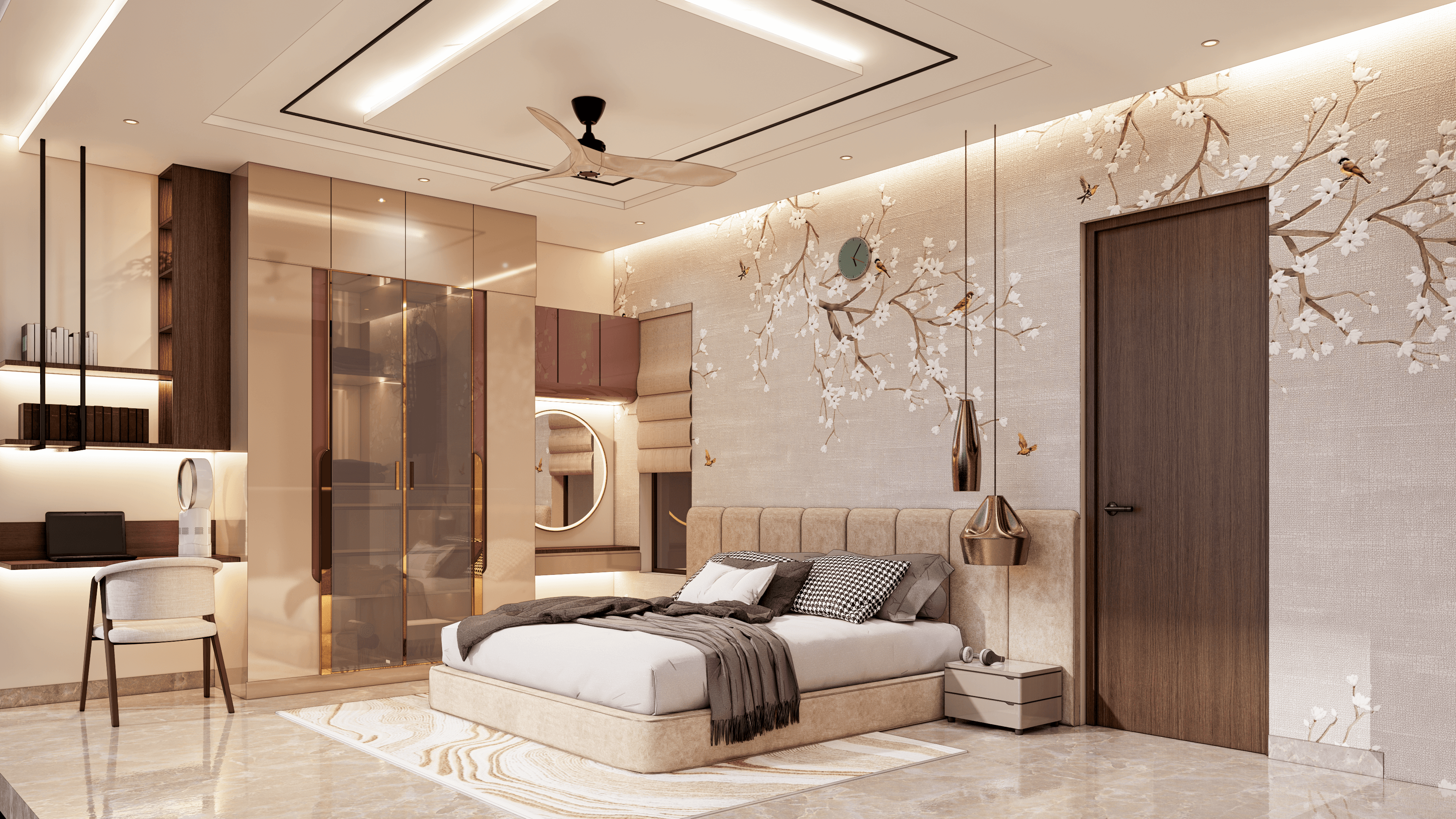
Lighting strongly influences how calm a Chennai apartment feels.
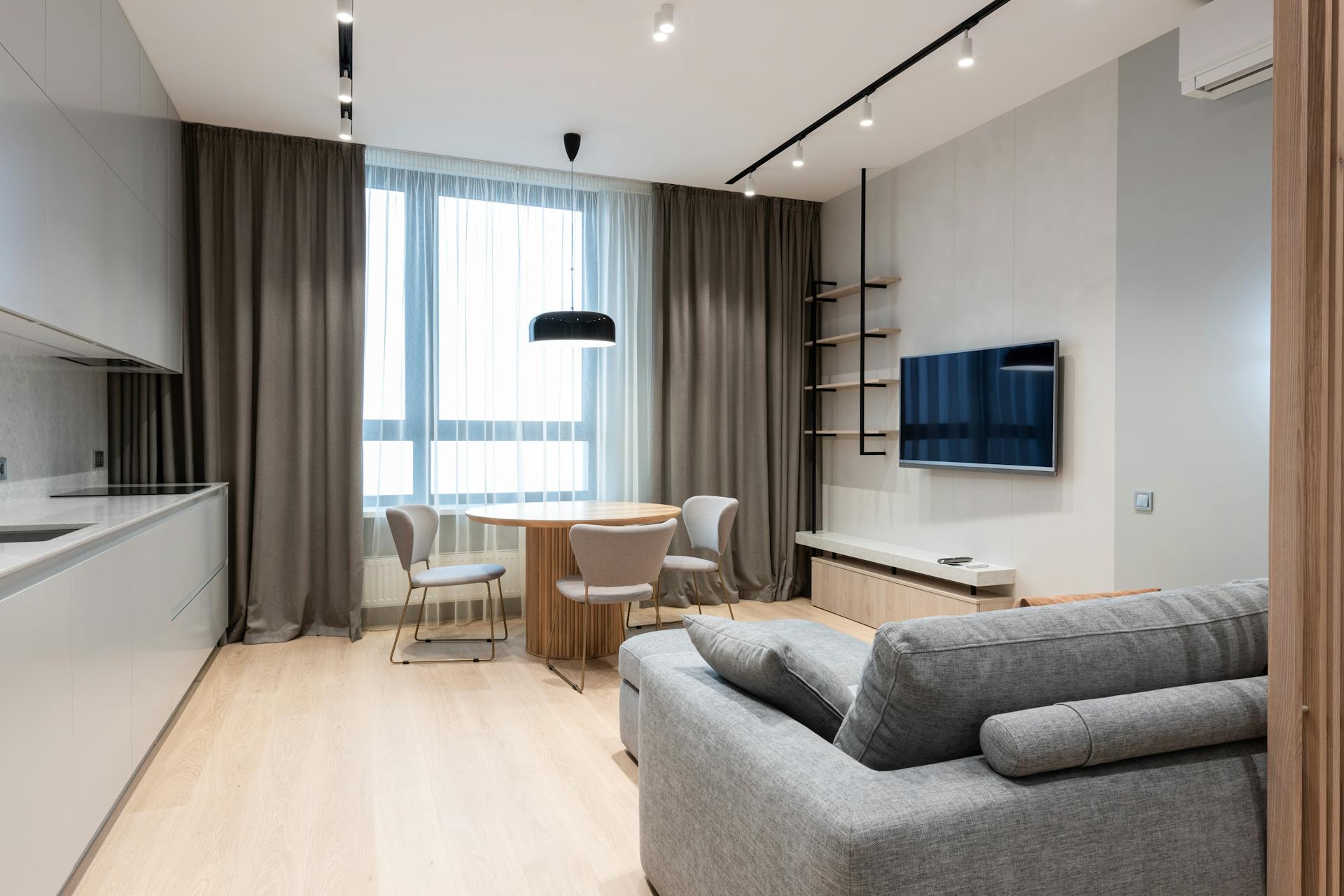
Harsh cool-white light bouncing off shiny tiles can feel like an office. Layered lighting with warm-white LEDs, softer indirect glow in the living room and focused task light in the kitchen and study keeps eyes relaxed through long summers.
Furniture scale is another quiet factor. In many builder flats, deep sofas, large recliners and heavy six-seater dining sets block air movement and cleaning access. Slimmer sofas, compact dining tables and correctly sized wardrobes keep visual flow open while still giving comfort.
Lighting & Furniture Checklist
Mix of ambient, task and accent lighting (not just one ceiling light)
Warm-white LEDs in the living areas and bedrooms
No strong glare on shiny floors or high-gloss surfaces
Sofa and dining sizes checked on plan for movement and balcony access
7. Balcony & Utility Planning: Controlling Visual Clutter
Balconies and utilities in Chennai apartments are working spaces. They handle drying clothes, house help routines, cleaning tools and sometimes small gardening experiments.
Instead of hiding this reality, planning can contain it:
Sliding or louvred shutters near drying zones to cover clothes when guests arrive
Basic but robust shelves or hooks for brooms, mops and buckets
Simple metal or UPVC screening around AC outdoor units that maintains airflow
Balcony & Utility Checklist
Drying zone identified and visually contained
AC outdoor units placed with sufficient clearance and screening
Cleaning tools given a closed or semi-closed storage zone
8. Costs & Priorities: Where Calm Interiors Are Worth the Spend
For calm interiors, cost is not just about how much you spend, but where you spend it. Some areas in a Chennai apartment see heavier wear due to humidity, mopping and daily traffic (kitchen, utility, entrance). These are usually worth a slightly higher allocation.
Below is a simple way to think about priority bands for a typical 2BHK/3BHK in Chennai. Actual figures vary by project size, building rules and finish choices, but this framework can guide questions with your designer or contractor.
Band | Focus Areas | Typical Inclusions |
Essential Calm | Function and basics | Functional kitchen, basic wardrobes, simple TV unit; standard hardware; minimal false ceiling; basic lights. |
Enhanced Calm | Better storage & fittings | More storage integration; better hardware; some wall panelling; layered lighting; a few custom niches; improved internal fittings. |
Premium Calm | Detailing & longevity | Higher-grade finishes and hardware; full-height storage; more detailed lighting; integrated study/work units; refined detailing. |
Over five to seven years in coastal conditions, what usually needs attention are some soft furnishings, light fittings, and any exposed low-grade hardware. When sound decisions are taken upfront, replacements become smaller and less disruptive.
Cost & Priority Checklist
Budget split discussed across kitchen, wardrobes, lighting and furniture
Higher-spec hardware planned where moisture is highest
False ceilings kept purposeful, not decorative-only
Future replacement items (fabrics, loose lights) identified early
9. Working with a Designer: Keeping the Project Calm
The way you work with a designer affects how calm the project feels.
A clear brief helps. It is useful to discuss:
Daily routines and who uses which room when
Long-term plans like kids, parents moving in, or work from home
Storage priorities and how much open display you really want
Guest frequency and your tolerance for regular maintenance
Process clarity also keeps stress low. Fixed drawings, material approvals before ordering, and stage-wise site checks help in Chennai’s busy project scene. Coordination with the apartment association and building maintenance team should be planned, not left to the last minute.
A calm project is also documented. You should know in writing:
What is included and excluded
Which finishes are confirmed
How payments are staggered
What replacement or warranty is promised on modular elements
Designer Collaboration Checklist
Written brief agreed on routines, storage and future plans
Final drawings and material list signed off before fabrication
Society permissions and timing discussed upfront
Payment stages and warranty terms documented
Quick Calm-Home Checklist for Chennai Apartments
You can hold this against any apartment interior design proposal in Chennai:
Layout: Clear movement paths, simple zoning of noisy and quiet areas
Storage: Full-height wardrobes and lofts planned around beams
Materials: Humidity-friendly surfaces and rust-resistant hardware
Colours: Restrained base palette, limited, repeated accents
Lighting: Warm layers, no harsh glare on shiny floors
Furniture: Sizes that respect room width, door swing and balcony access
Balcony/Utility: Planned drying, screening and storage for cleaning tools
Documentation: Drawings, specs, payment stages and service access points clearly defined
Next Steps
If you are finalising a new flat in Chennai or planning interiors before handover, it can help to walk through your floor plan with these checklists. A calm home usually comes from a few steady decisions taken early, not from last-minute additions.
When you speak with any interior designer or firm, you may want to:
Ask how they handle humidity, dust and society rules in your specific locality
Review one or two past projects in a nearby area (for example, another tower in your same community or a similar project along the same corridor)
Discuss how they document scope, costs and warranties in writing
Using these points as a reference will make your conversations clearer and your apartment more likely to stay calm through everyday Chennai life.
Transform Your Chennai Apartment Into A Space You Truly Love
If you are ready to turn your flat into a comfortable, stylish home that reflects your personality, our team at Interiors by DeX is here to help. Explore our specialised apartment interior design in Chennai to see how we can make the most of your space, light and budget. We will guide you through every step, from initial concepts to final finishes, so the process feels clear and stress free. To discuss your ideas or request a tailored quote, simply contact us today.