Why Child-Safe Interiors Feel Complicated in Chennai Homes
For most new homeowners in Chennai, the real stress around child safety is not just the fear of accidents. It is the uncertainty:
What should be made safer, and what is overkill?
How much will it actually cost?
Will the designer remember these details, or will I be fixing things later at my own expense?
In Chennai apartments and villas, we are dealing with curious toddlers, compact rooms, low window sills, balcony doors that are always in use, and tight passages that double as play zones. Add high humidity, coastal air, and the constant movement of people, from grandparents visiting to live-in help and frequent guests, and suddenly every drawer and balcony railing feels like a potential worry.
From what we see in Chennai homes, the safest interiors are not the ones packed with visible gadgets. They are the ones where child safety is built into the system from the planning stage: hardware choices, storage heights, balcony detailing, wiring routes, and even material selection. When these are planned up front with clear drawings, documented hardware, and transparent costing, you reduce last-minute fixes, decision fatigue, and the stress of wondering what you forgot to child-proof.
Key Takeaways
Discover child-safe hardware and smart storage ideas from apartment interior designers in Chennai to reduce risks, add organization, and simplify daily life.
Mapping Risk Zones in Chennai Apartments and Villas
A practical way to think about child safety is to map your home into zones and list potential risks in each. In typical Chennai layouts, certain patterns repeat.
Entry and Living Areas often have:
Shoe racks with open shelves and loose footwear
TV units with hanging wires and multiple plug points
Sliding balcony doors that are easy to open but not always easy to secure
Kitchens and Utilities are usually tight, high-use spaces, with:
Gas stoves, cylinders, and matches
Cleaning liquids, acids, detergents
Knives, peelers, graters, mixer jars
Heavy drawers that can slam on small fingers
Bedrooms bring their own set of issues, such as:
Low wardrobe handles that invite pulling and climbing
Mirrored doors at child height
Loft access ladders or open shelving that looks like a climbing frame
Study tables with cables and chargers dangling down
Bathrooms tend to be where slips and quick accidents happen:
Wet, soapy floors and smooth tiles
Open shelves with medicines or grooming tools
Exposed geyser switches and plug points
In Chennai apartments and villas, the most common interior-related risks we encounter are:
- Pinched fingers in fast-closing shutters
- Climbing on drawers and open shelves
- Easy access to chemicals and medicines
- Balcony rail gaps and climbable grill patterns
- Loose or freestanding furniture that can tip
A simple 3-level safety framework keeps this manageable:
Level 1: Remove or Move the Hazard
Example: Keep chemicals only in overhead cabinets; avoid exposed glass at child height.
Level 2: Control Access
Example: Use locks, latches, soft-close hardware, and restricted openings on shutters and drawers.
Level 3: Reduce Impact
Example: Rounded edges, anti-skid finishes, secure anchoring of tall units and TV panels.
When these three levels are integrated into the design from the start, they show up clearly in drawings, BOQs, and cost estimates instead of becoming scattered, ad-hoc purchases later.
Safer Hardware Choices That Quietly Do the Heavy Lifting
Hardware is rarely the first thing new homeowners ask about, but in Chennai’s climate it carries a lot of the long-term safety load. Poor-quality hinges, channels, and fasteners are more likely to sag, misalign, and scrape over time, creating finger traps and unstable units.
Key Hardware Decisions to Clarify with Your Designer:
Hinges and Channels
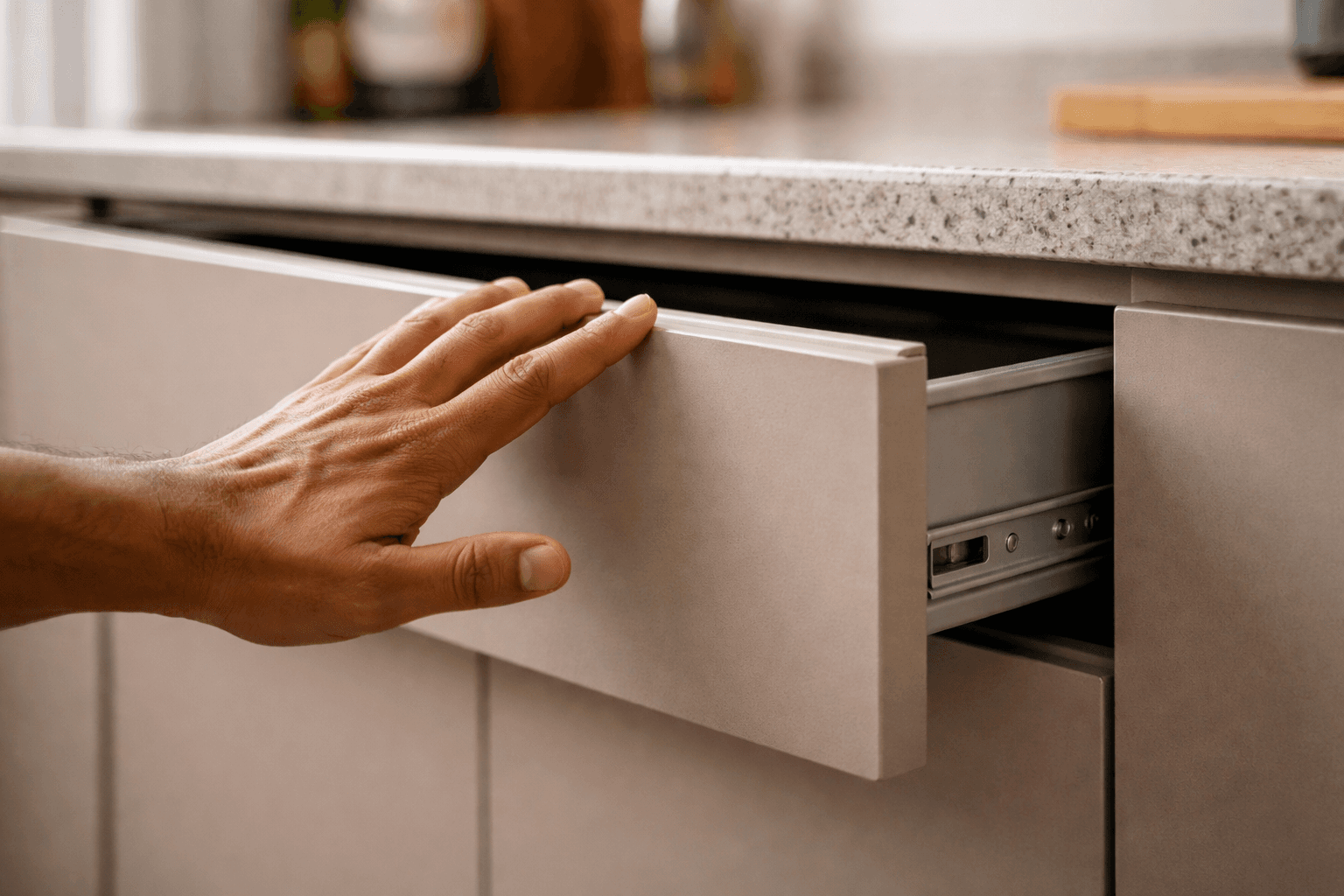
Soft-close, anti-slam systems help reduce the risk of fingers getting caught. Better-quality, branded hardware typically maintains alignment better in Chennai’s humidity and coastal air.
Handles and Knobs
Rounded profiles, no sharp ends, and thoughtful placement that works for adults without creating a “ladder” for kids to climb.
Wall Fixings
TV units, tall units, and bookshelves should be anchored to walls, not left freestanding, especially in kids’ rooms and family rooms. Anti-tip brackets are best treated as standard, not optional.
At Interiors by DeX, we work only with branded hardware, and we document the brand and model going into each home. That allows a transparent, line-item discussion on costs, such as how much extra per hinge or channel a soft-close system adds compared to a basic option, and helps homeowners see the trade-off between upfront cost and long-term reliability.
Our modular products come with a 15-year warranty, and the first 5 years carry a 100% replacement guarantee with no questions asked. For families with children who slam, pull, and climb, this reduces the fear of disputes later about a failing soft-close or a loose handle.
Storage Design That Keeps Temptation Out of Reach
The more intentional your storage planning, the less you need to “hide” items every day. In Chennai homes where gas cylinders, extra groceries, and guests’ belongings share compact spaces, clear storage zoning makes a noticeable difference.
If knives, medicines, documents, power tools, and cleaning agents all have defined, consistent locations, the home becomes calmer and safer to manage.
In Kitchens and Utilities, a Child-Aware Plan Usually Includes:
Overhead cabinets for chemicals and medicines, ideally with internal locks that are not visible or easily accessed by children.
Tall units designed with child-safe zoning: unbreakable items and everyday groceries on lower shelves; harmful or fragile items higher up.
Dedicated lockable drawers for sharp tools and accessories instead of scattering them across multiple drawers.
In Bedrooms and Living Spaces, Good Storage Design Often Looks Like:
Wardrobes with internal lockable drawers for jewellery, medicines, and documents, so they are not lying on side tables.
Low, open toy storage in kids’ rooms so children are not tempted to climb to reach their own things; heavier items stay at the bottom.
TV and media units with wiring routed in dedicated channels and lockable shutters for routers, set-top boxes, and extension boards.
When apartment interior designers in Chennai work systematically, they sit with you to list “restricted items” during design itself. Those items then get specific, often lockable, storage zones in the drawings and BOQ.
At Interiors by DeX, our instant quotation and transparent pricing model make it clearer to see what it costs to add lockable sections or to reconfigure storage for safety. Instead of rough estimates or hidden extras, child-safety-related hardware and modules appear as separate, named line items.
Finishes, Edges, and Materials That Work with Kids
Finishes and edges are not just a style decision; with children, they are a safety and maintenance decision as well.
Sharp stone overhangs at child head height or straight-cut board edges in narrow passages increase the chance of cuts and bumps. In Chennai’s humidity, poor material choices also tend to swell and chip, creating rough edges over time.
Key Areas to Discuss with Your Designer:
Edge Treatments
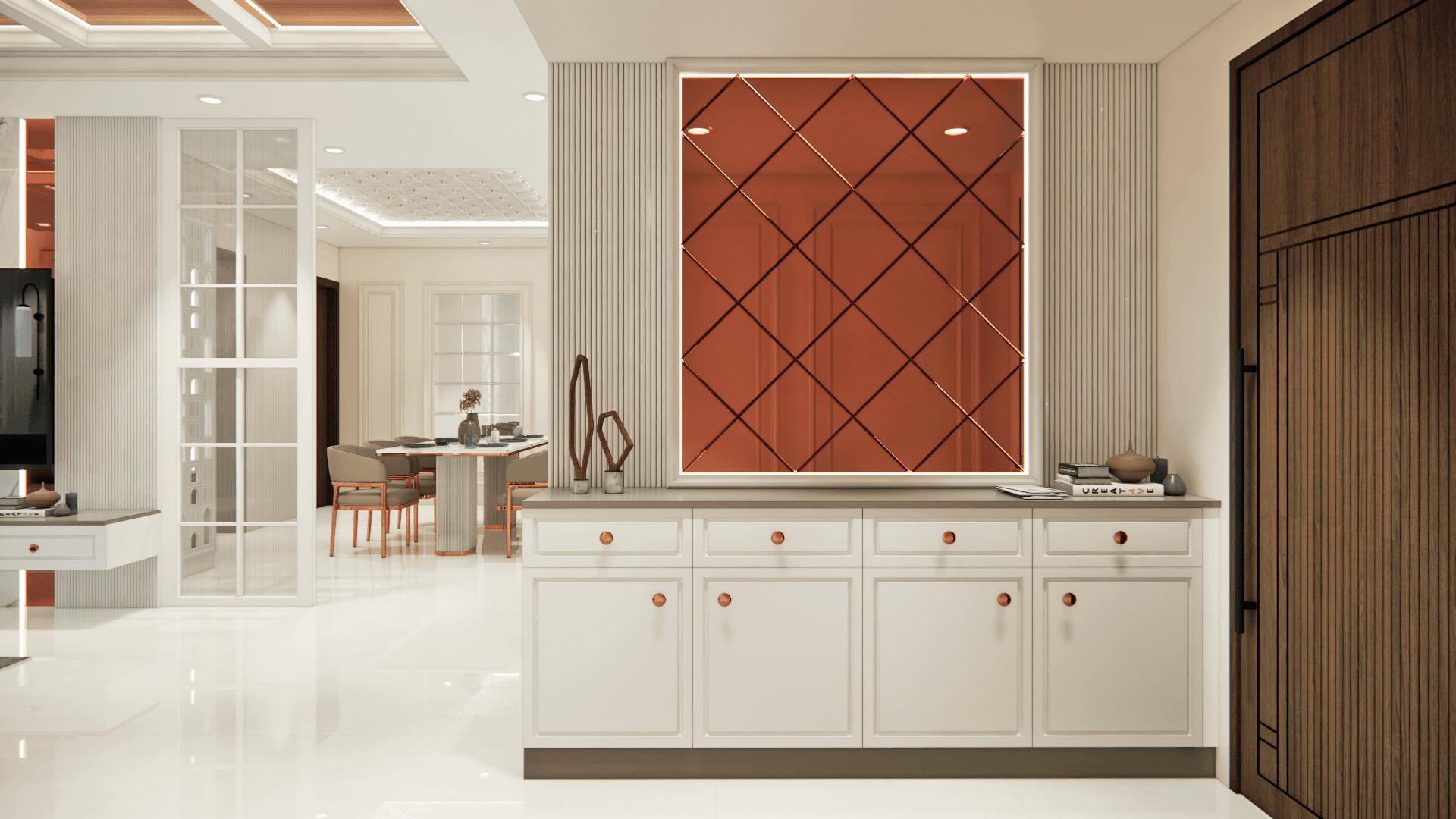
Post-formed or rounded edges for dining tables, kitchen counters that double as breakfast spaces, and kids’ study tables. Reducing sharp corners wherever children tend to run or play.
Stone Detailing
Avoiding thin, pointed overhangs around islands and counters. Safer profiles can still look clean and premium without introducing unnecessary risk.
Material Selection for Chennai’s Coastal Climate
Moisture-resistant boards in kitchens and bathrooms to prevent swelling and splintering at edges over time.
Easy-clean laminates and finishes on wardrobes and kids’ room walls that tolerate stains, doodles, and general wear better.
Flooring and Balcony Safety
Anti-skid tiles in bathrooms and balconies, with simple, secure rugs or mats inside that do not slide easily.
Balcony grills or railings that avoid horizontal bars which function as a ladder, with appropriate spacing so a child cannot squeeze through.
Since children are hard on furniture and finishes, a clear 15-year modular product warranty with no hidden clauses becomes more than a marketing line. It is a practical way to know that the boards, hardware, and finishes children pull, slam, and climb on are backed for the long term, and that you are not left debating fine print later.
How to Talk About Child Safety with Your Designer
Many first-time interior clients in Chennai feel unsure about how deeply to discuss child safety. A basic checklist can make your first conversation with any apartment interior designer more structured.
Checklist: Key Questions to Ask Any Designer
1. Hardware and Safety Standards
What hardware brands do you use?
Are soft-close hinges and anti-tip measures standard or optional?
How do you handle wall-anchoring for tall units and TV panels?
2. Lockable and Restricted Storage
How many lockable storage zones are planned in the kitchen, wardrobes, TV unit, crockery unit, and utility?
Where will medicines, cleaning chemicals, and sharp tools be stored?
3. Balcony and Window Safety
What grill designs, stoppers, or railing heights do you recommend for Chennai apartments and villas?
How do these show up in the drawings and BOQ?
4. Timelines and After-Sales
What are the timelines for installation and snag resolution, especially if children are already living in the home?
What is your typical response time for fixing safety-related issues like a misaligned shutter or loose handle?
If You Are Speaking with Interiors by DeX, You Can Also Ask:
Can I see a sample instant quotation and how safety hardware, materials, and finishes appear as clear line items?
How does your 24-hour after-sales support handle issues such as a loose balcony door latch or a misaligned cabinet in a child’s room?
How is your 15-year modular warranty documented, and what does the first 5-year 100% replacement guarantee cover in practical terms?
Documentation to Insist on, Whichever Designer You Choose
Detailed BOQs that name hardware, board brands, and finish types.
Written warranty terms without vague phrases or unclear conditions.
Clear explanation of what after-sales covers, response times, and escalation paths.
This kind of documentation reduces ambiguity, helps you compare options fairly, and lowers the mental load of remembering verbal promises.
Cost Transparency for Child-Safety Decisions
Even small safety upgrades can feel expensive if the pricing is unclear. A simple comparison table can help you see where the money goes and decide calmly.
Below is an indicative example (not an exact quote) for a Chennai 2BHK kitchen and living area, just to understand how costs can be structured:
Safety Feature
Typical Add-On (Approx.)
How It’s Usually Shown in a Transparent Quote
Soft-close hinges for kitchen
+ ₹120, ₹180 per hinge over basic
Separate line item: hinge brand, qty, rate
Lockable drawer modules
+ ₹1,000, ₹2,000 per module
"Kitchen base unit, lockable drawer" with unit rate
Anti-tip brackets for tall units
Often included as standard in system-driven designs
Shown as part of "tall unit hardware" package
Rounded edge treatment for counters
Depends on stone and profile, usually marginal
Added under "counter edge profile" in stone work
When your quotation clearly lists these elements, with branded components and quantities, it becomes easier to decide what is essential for your family and what can be phased later.
A Calm Way to Move Forward
Child-safe design does not mean turning your Chennai home into a fortress. It means quietly removing obvious hazards, planning access intelligently, and choosing materials and hardware that will perform well under real family use.
If you are planning interiors for a new apartment, villa, or gated community home in Chennai, especially as a first-time interior client, it can help to:
Map your home using the 3-level safety framework.
List your “restricted items” and balcony/window concerns.
Ask your designer for a transparent, line-item quotation that separates safety-related choices.
At Interiors by DeX, our system-driven approach, transparent pricing, instant quotations, 15-year modular warranty, and 24-hour after-sales service are all structured to reduce uncertainty and decision fatigue, not add to it. Whether you work with us or another firm, the goal is the same: a home where your child can explore with more confidence and you can worry a little less about what might go wrong behind the shutters and railings.
Conclusion
Transform Your Chennai Apartment Into A Space You Love
If you are ready to turn your apartment into a home that truly reflects your style, our team at Interiors by DeX is here to help. Partner with our experienced apartment interior designers in Chennai to create functional, beautiful spaces tailored to your daily life. Share your ideas, needs, and budget, and we will guide you through every step of the design process. To get started with a consultation, simply contact us today.
Frequently Asked Questions
Do I Need to Redesign My Whole Home for Child Safety?
Not necessarily. In many Chennai apartments, focusing on kitchens, balconies, bathrooms, and TV units covers a large part of the risk. A structured assessment using the 3-level framework (remove, control access, reduce impact) helps prioritise without overdoing it.
When Should I Bring Up Child Safety With My Interior Designer?
Ideally at the very first design discussion. Decisions on balcony grills, storage heights, and wiring routes are easier and more cost-efficient to make on the drawing board than after fabrication has started.
Is Branded Hardware Worth the Extra Cost in Chennai’s Climate?
In a humid, coastal city like Chennai, better hardware generally holds alignment and performance longer. This reduces both safety risks (like sagging shutters) and after-sales interventions. A transparent BOQ lets you see the exact cost difference and decide where to upgrade.
What Should I Look for in a Warranty for a Child-Safe Home?
- Clear duration (for example, 15-year modular warranty) - No hidden clauses or vague terms - Written coverage for boards, hardware, and finishes - Clear process for raising service requests and expected response times
How Does After-Sales Service Impact Child Safety?
Loose handles, misaligned shutters, or wobbly tall units are common in lived-in homes. Reliable, time-bound after-sales service, ideally with a 24-hour response for urgent issues, matters because safety is affected not just by initial design, but by how quickly small problems are fixed.