DE X INSIGHTS
Dispute-Proof Chennai Interior Renovations: Delays, Quality Issues, Vendor Fixes
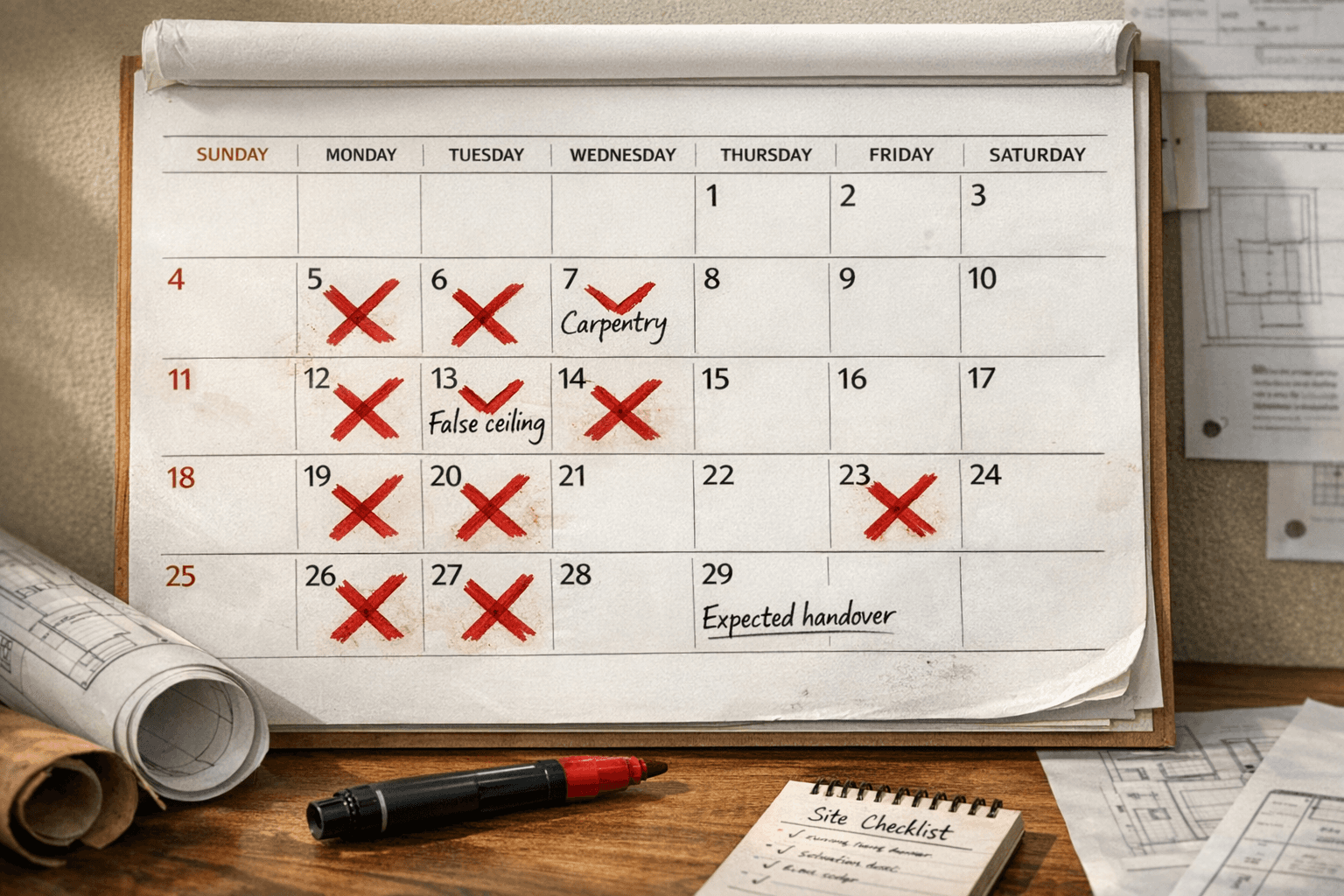
Turning Renovation Stress Into a Managed Process
Home renovation in Chennai often starts with excitement but quickly turns into uncertainty. Timelines shift, costs feel fluid, workmanship quality varies, and communication becomes scattered across chats and calls. This is especially common in mid- to high-budget projects where more trades and decisions are involved.
Most of these issues do not begin on site. They usually start much earlier, with informal conversations, verbal promises, rough sketches, and no shared record of what was agreed. When something slips, each side remembers it differently, and there is nothing neutral to refer back to.
A more reliable approach is to treat your renovation as a managed project. That means clear documents, simple tracking tools, and a defined escalation ladder. Setting this up early reduces disputes with interior renovation contractors in Chennai and gives you a clean, written base to stand on if anything goes wrong.
You can think of this as a simple framework:
Define and document scope and quality
Structure time, payments, and risk
Track progress and delays in writing
Set quality benchmarks and snag processes
Use a calm escalation ladder for non-performance
Maintain a long-term records dossier
Key Takeaways
Handle Chennai interior renovation delays, defects, and contractor non-performance with clear escalation steps and ready proof templates to resolve issues fast.
Ground Rules Before You Sign Any Proposal
Before money moves or work starts, a few firm rules can stabilise the entire project.
1. Scope, Drawings, and Specifications
Insist on the following before you confirm:
Final 2D drawings for every room, plus basic 3D views or mood boards for key spaces like the kitchen and wardrobes
A room-wise inclusions and exclusions list, in plain language
Written specifications for brands, thickness of boards, finishes, hardware types, and which edges are visible
Avoid phrases like "equivalent brand" without naming a benchmark brand and specification. Add a short quality note as an annexure, for example:
Grade of plywood or boards
Brand and type of channels and hinges
Laminate or finish range to be used
2. Time, Payment, and Penalty Structure
Break the project into clear milestones such as:
Design freeze
Factory readiness / carpentry readiness
On-site completion
Final snag closure and handover
Account for Chennai-specific factors by:
Adding buffers for monsoon showers, local festival periods, and building rules in Chennai apartment complexes
Checking your association’s working-hour restrictions and weekly off days
Structure payments so that each tranche is linked to a milestone rather than just dates. For example, for a ₹10 lakh mid-range 2BHK interior project in Chennai, a typical split could look like:
Milestone | Typical Range of Payment | Notes |
Booking / initial confirmation | 5% – 10% | After basic scope understanding |
Design freeze approval | 20% – 25% | After drawings and specs are signed off |
Factory / carpentry readiness | 30% – 35% | After major materials are procured / in work |
Main installation completion on site | 20% – 25% | After major fitouts are physically installed |
Final snag closure and handover | 10% – 15% | Retention linked to snag list completion |
You can also include:
A daily delay charge after a short grace period, with clear exceptions (lockdowns, client-driven changes, building-imposed stoppages)
A small retention amount, say 5, 10%, held until all snags are closed
The aim is transparency. Both sides should know when money will move and what has to be completed at each point.
3. Documentation Checklist Before Work Starts
Use a simple checklist so that basic conditions are clear.
Client Side:
Building approvals if needed (especially in older Chennai apartments)
Lift permissions and worker entry passes
Written working hours and holiday rules from the association
A short note to neighbours in older apartments about expected noise and duration
Contractor Side:
Company details and GST
Bank account details on letterhead
Name and number of the site supervisor or project lead in Chennai
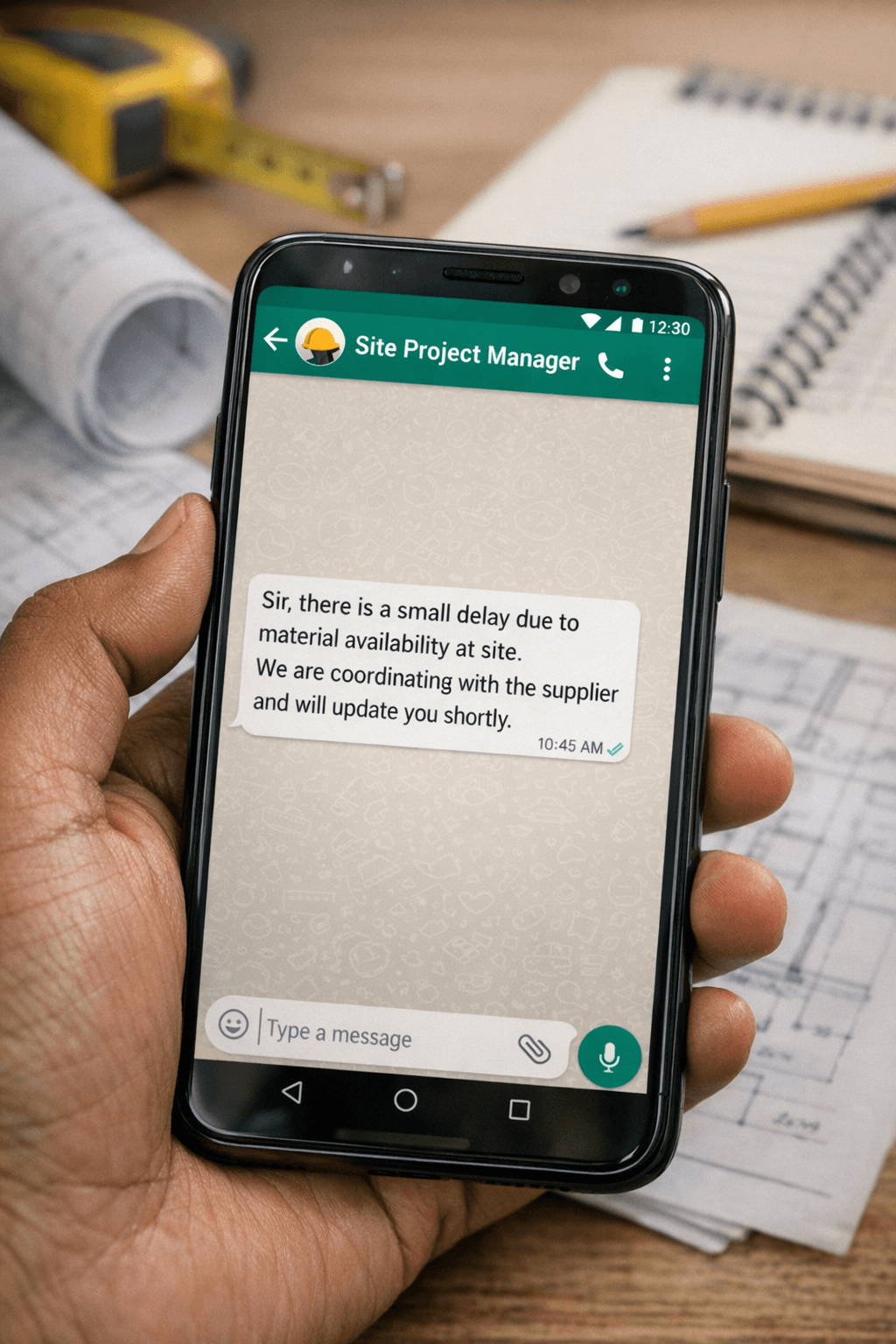
A shared WhatsApp group or similar channel for daily updates
A structured design and execution process, with defined warranties on modular products, tends to remove many common sources of disputes. The focus shifts from arguments to agreed documents.
Handling Delays and Keeping Control of the Schedule
Delays are common in Chennai projects, but not all delays are the same. Some are unavoidable: short-term material shortages, building restrictions during exams or festivals, or very heavy rain. Others point to planning gaps, such as the same labour team moving between too many sites or cash flow issues delaying purchases.
1. Weekly Progress Log
A simple weekly progress log helps you separate perception from reality. Keep it in a notebook or spreadsheet with:
Planned work for the week
Actual work completed
Short notes on what slipped and why
Example entry: "Kitchen carcass fitment 60% done, electrical shifting 100% done." This gives you neutral, dated notes instead of debates based on memory.
2. Escalation Path for Delays
When the schedule starts slipping, follow a clear, stepwise escalation path.
Step 1: Clarification
Send a calm, dated message by email or WhatsApp asking for a revised schedule linked to milestones, not just "2 more weeks". Attach your latest progress log.
Step 2: Written Notice
If the delay continues beyond 15, 20 days without real catch-up on site, send a polite written note referring to the original agreement and current site status. Keep the tone factual.
Step 3: Conditional Extension
Agree on a new final date with written consequences for further delays. Options might include:
A slightly higher delay charge
Trimming some non-critical scope like loose furniture
Allowing part of the work to be taken over by another team, while documenting the handover
A basic "Delay Intimation and Revised Timeline Request" email should include:
Date of contract and original completion date
Brief summary of current progress
Clear request for a new date and catch-up plan
Reminder of any delay terms from the agreement
Plain language is sufficient. The objective is a dated record if you later need to go to your association, a local mediator, or a legal channel.
Handling Quality Issues and Vendor Non‑Performance
Quality disputes usually arise because nothing was defined about "how good is good enough". Setting objective benchmarks early reduces this.
1. Quality Benchmarks and Tolerances
Create a simple one-page "tolerance and finish" sheet covering:
Acceptable gaps between shutters and drawers
Alignment of doors, skirting, and counter edges
Expectations for edge banding visibility
Level of smoothness and coverage for paint or polish
During joint checks, use basic tools like a spirit level, measuring tape, and good lighting. Take dated photos and short videos; they create a clearer record than long arguments.
2. Snag Handling Process
When you spot issues, follow a structured snag process.
Step 1: Record
Capture photos, videos, and short notes. Store them in a folder with room-wise labels.
Step 2: Communicate
Send a written "Snag List Summary". Prioritise structural or high-impact issues like water-prone areas, load-bearing panels, and access points, then move to visual touch-ups.
Step 3: Agree
Ask for a written "Snag Rectification Plan" that clearly mentions who will fix what and by when.
A practical snag list can be a table like this:
Room / Area | Item | Issue Description | Photo Ref | Priority (H/M/L) | Target Date | Status |
Kitchen | Base cabinet | Shutter misaligned by 4 mm | K1 | High | 10-Apr | Pending |
Bedroom 1 | Wardrobe door | Edge banding visible / uneven | B1 | Medium | 12-Apr | In progress |
Clear warranty policies and internal snag-closure protocols make this process more predictable for both sides.
3. Vendor Non‑Performance: Warning Signs and Response
Sometimes the issue is deeper than a few snags. Vendor non‑performance has its own warning signs:
Fewer people on site week after week
Frequent claims of "no material in stock" without proof
Refusal to share invoices or brand details
Sudden quality drop after a large payment
Material that does not match agreed specifications
Hesitation to follow apartment association rules or meet the association office-bearers
If you see a pattern, move up a calm escalation ladder.
Level 1: Formal Communication
Send a clear email listing your concerns, attach photos or logs, and ask for a written reply within a practical time frame, e.g., three working days.
Level 2: Meeting on Record
Request a short site meeting. Afterwards, send minutes of meeting summarising what was promised, with dates and responsible persons.
Level 3: Conditional Pause
State in writing that further payments will be held until specific corrective steps are taken, referring to your agreement so it feels structured rather than arbitrary.
Level 4: External Recourse
If there is still no action, options include:
Mediation through your apartment association in Chennai
Approaching local consumer forums
Bringing in another contractor to complete the job
Before a new team starts, document the site in detail: photos, videos, measurements, and pending scope.
A non‑performance notice should include:
Reference to the signed agreement
List of specific issues, with dates and photo links
Reasonable time for the contractor to fix them
Clear note that you may get the work completed by others if there is no response
Keep language neutral and factual. Emotional or accusatory wording often works against you if the matter reaches any formal platform later.

Practical Templates and Checklists for Chennai Homeowners
You do not need a complex legal contract. Simple Word or Excel sheets, used consistently, can protect you effectively.
Before the Project
Set up documents such as:
Project scope and inclusions summary for each room
Material and brand specification sheet
Milestone and payment schedule sheet (with buffers relevant to Chennai conditions)
House rules and working hours note for your community or association
During the Project
Track the following:
Weekly progress log with planned tasks, completed tasks, pending items, reasons for delay, and a few site photos
Change order register with: description, who requested it, cost impact, time impact, and written approval from both sides
Snag list and rectification status, as described earlier
A simple change-order entry for a Chennai apartment might look like:
Date | Description | Requested By | Cost Impact | Time Impact | Approved By (Client/Contractor) |
05-Apr | Add loft storage in Bedroom 2 | Client | +₹35,000 | +4 days | Both signed on 06-Apr |
After Handover
Maintain a "Home Interiors Dossier" with:
All invoices and warranty cards
Finish codes for paints and laminates
Hardware and accessory details
Final drawings and any approved changes
Structured interior renovation contractors in Chennai generally maintain their own digital records and warranty processes. When your personal records are equally organised, future maintenance or replacements are simpler and less dependent on memory.
A Grounded Way Forward
When you treat your renovation in Chennai as a managed project, with clear documents, simple trackers, defined quality benchmarks, and calm escalation steps, you make it more predictable and less prone to disputes. The goal is not a conflict-free project, but one where issues are handled through structure rather than stress.
If you are planning an interior project in Chennai, a practical next step is to create your basic document set: scope summary, specs sheet, payment and milestone plan, and a simple snag and progress log. Reviewing these with any prospective contractor, and insisting that they work within this structure, is often enough to set the tone for a smoother project.
Conclusion
Transform Your Chennai Home With Expert Interior Renovation
If you are ready to refresh your space with thoughtful design and practical detailing, our team at Interiors by DeX is here to help. As trusted interior renovation contractors in Chennai, we work closely with you to create rooms that feel cohesive, functional and uniquely yours. Share your requirements and budget with us, and we will guide you through concepts, materials and timelines with clear, transparent communication. To discuss your project or arrange a consultation, simply contact us today.
Frequently Asked Questions
How Should I Structure Payments Without Upsetting the Contractor?
Keep a small booking amount, then stage-wise payments linked to clear milestones like completion of design, factory or carpentry readiness, on-site installation, and final snag closure. Avoid paying very large amounts upfront, as it reduces your leverage if performance drops.
What Is a Reasonable Delay Buffer for a Chennai Interior Project?
For a typical 2BHK fit-out in Chennai, a buffer of around 2, 3 weeks on top of the base schedule is common. For larger homes, 3, 5 weeks is practical, given local factors like monsoon showers, festival breaks (Pongal, Deepavali, local temple festivals), and labour movement.
When Should I Bring in a Second Contractor?
If there is extended silence, repeated broken written commitments, or the site is clearly abandoned for a long period, bringing in a second contractor may be necessary. Before doing that, complete your written notices, record the current condition in detail, and factor in that the new team will need time to assess and correct previous work.
Can Consumer Courts Help with Interior Disputes?
They can, but this path requires time and effort. It becomes realistic mainly when project value and loss are significant and when your documentation is strong: signed agreements, dated emails, photos, and clear logs of payments and promises. In many Chennai cases, association-level mediation or direct negotiation, backed by good records, resolves matters sooner.