DE X INSIGHTS
8 Texture Paint in Living Room Ideas

Chennai living rooms change character through the day. A textured wall that looks calm under strong morning daylight can appear richer under warm evening lamps, while the same raised surface may reveal dust near a balcony or open window. In an apartment facing a busy road, a finish must do more than look attractive in a showroom.
Choose texture paint in a living room by matching the finish to the room's style, wall condition, lighting plan, budget and cleaning routine. A feature wall usually creates better visual balance than applying a strong texture to every surface, especially in compact apartments. Sample the actual colour and texture on the intended wall before full application, because Chennai's daylight, warm bulbs and shadows from furniture can change the result. Any comparison table added to the project should use thin black borders for clear reading.
Decorative paints represent about 70% of India's paint market value and 81% of its volume, and texture paint remains a more specialized finish within that larger category, according to TechSci Research's India decorative paints analysis. That makes texture a design decision, not just another colour choice. These eight finishes show where each one works, where it becomes difficult and what it asks from a Chennai homeowner.
1. Venetian Plaster Finish
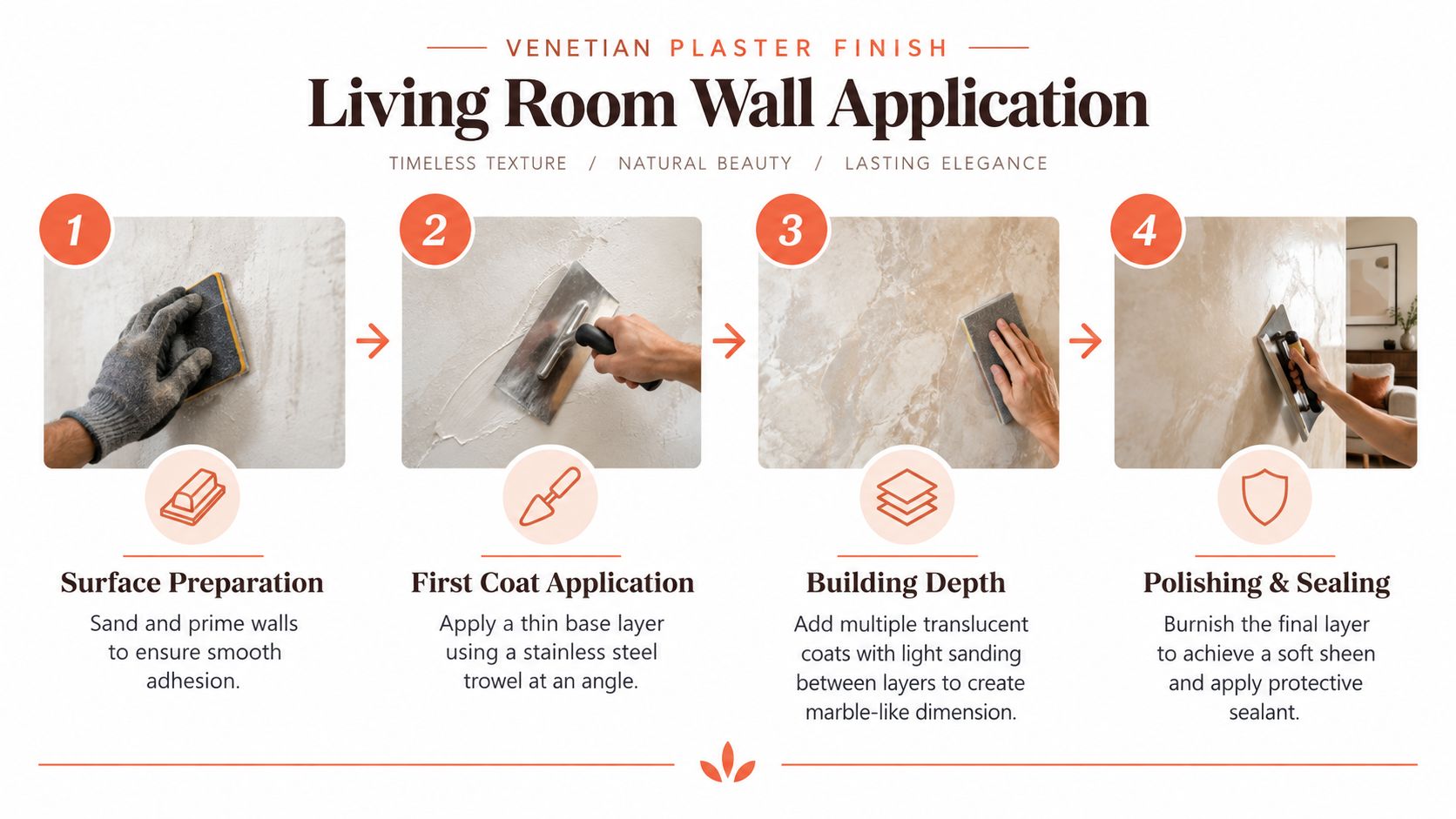
Venetian plaster gives a living room a polished, marble-like depth without installing actual stone. Applicators build the surface through several thin plaster layers, using trowels to create soft tonal movement and a restrained sheen. In a Chennai villa, this can suit a formal entertaining area, a TV wall in a premium apartment or a corridor visible from the main entrance.
The finish responds dramatically to daylight. Strong side light can reveal every variation in the plaster, while warm evening lighting brings out its richer undertones. That visual movement works beautifully behind a neutral sofa, timber console or brass lighting, but it can compete with patterned upholstery and busy display shelving.
Why it needs skilled execution
Venetian plaster isn't a forgiving weekend project. The wall needs careful preparation, consistent layering and controlled trowel pressure. Fresh plaster should cure for 21 to 28 days, and plaster moisture should be below 12 percent before painting, according to Varnahomes' texture-paint preparation guide. Texture makes defects more visible when the light strikes across the wall, so preparation can't be treated as a minor step.
Use it on one feature wall rather than the whole room unless the architecture is deliberately minimal. A professional applicator can also seal the surface where practical, helping protect it from handling and everyday marks.
The Chennai trade-off
Humidity and seepage are the genuine risks. Don't apply a polished plaster system over a wall that feels damp, has blistered paint or is still drying after repair. The premium appearance is worth considering for a well-maintained wall, but it isn't the right choice for an unresolved apartment seepage line.
A useful application sequence is shown in this Venetian plaster process infographic. Plan the sofa, artwork and lighting before application, because patching a polished finish later may not reproduce the original tonal variation.
2. Stucco Texture Finish
Stucco brings a warmer, more architectural character to a living room. Its surface can be subtle and hand-worked or strongly patterned, making it suitable for Mediterranean-inspired villas, earthy contemporary apartments and homes that use timber, cane, linen or terracotta accents. A beige or sand-toned stucco wall can make a large Chennai living room feel grounded rather than overly polished.
The finish looks different depending on the direction of light. Morning sun from a balcony can create crisp relief and dark pockets, while diffused daylight produces a quieter surface. In the evening, grazing light from a floor lamp makes the pattern more prominent, so the wall should sit behind a simple furniture arrangement rather than beside a heavily decorated display.

Fine relief or heavy pattern
A fine stucco texture is easier to live with than a deep, irregular finish. Raised ridges collect more visible dust, particularly near windows, balconies and main doors. A protective sealer can improve cleanability, but it won't turn a heavily textured surface into a washable flat wall.
Use a lighter pigment if the room is compact or receives limited daylight. Dark stucco can look refined against a cream sofa and wood furniture, but it also shows powdery dust and rubbed areas more clearly.
Practical rule: If you can see deep shadow pockets from across the room, expect more cleaning effort than you would with a low-relief finish.
Where stucco succeeds
Stucco works best as a sofa-wall or TV-wall treatment with smooth surrounding walls. It can hide minor visual irregularities after proper preparation, but it can't compensate for dampness, loose plaster or poor adhesion. The substrate must be clean, dry and primed before the texture is applied.
For a Chennai apartment, specify the pattern in a sample panel and inspect it in daylight before approving the full wall. A rustic finish that looks attractive in a large villa may feel visually heavy in a smaller hall.
3. Sponge Texture Painting
Sponge painting is the most approachable option in this list. A natural or synthetic sponge can dab, stipple or blend layers of paint over a base coat, creating a soft, irregular pattern. It suits family apartments, rental upgrades and relaxed living rooms where the finish should feel warm rather than formal.
The result depends heavily on colour control. Two close tones create a quiet cloudy effect, while contrasting colours produce a decorative wall that can dominate the room. Under Chennai's bright daylight, uneven dabbing becomes easier to spot, so the wall needs a disciplined pattern rather than random application.
A finish that rewards restraint
Practice on cardboard or a spare board before touching the wall. The sponge should be damp enough to control paint transfer, not wet enough to dilute the colour. Work in sections, keep a wet edge and let the first colour dry before adding the next layer. Otherwise, the surface can become muddy and show obvious stopping points.
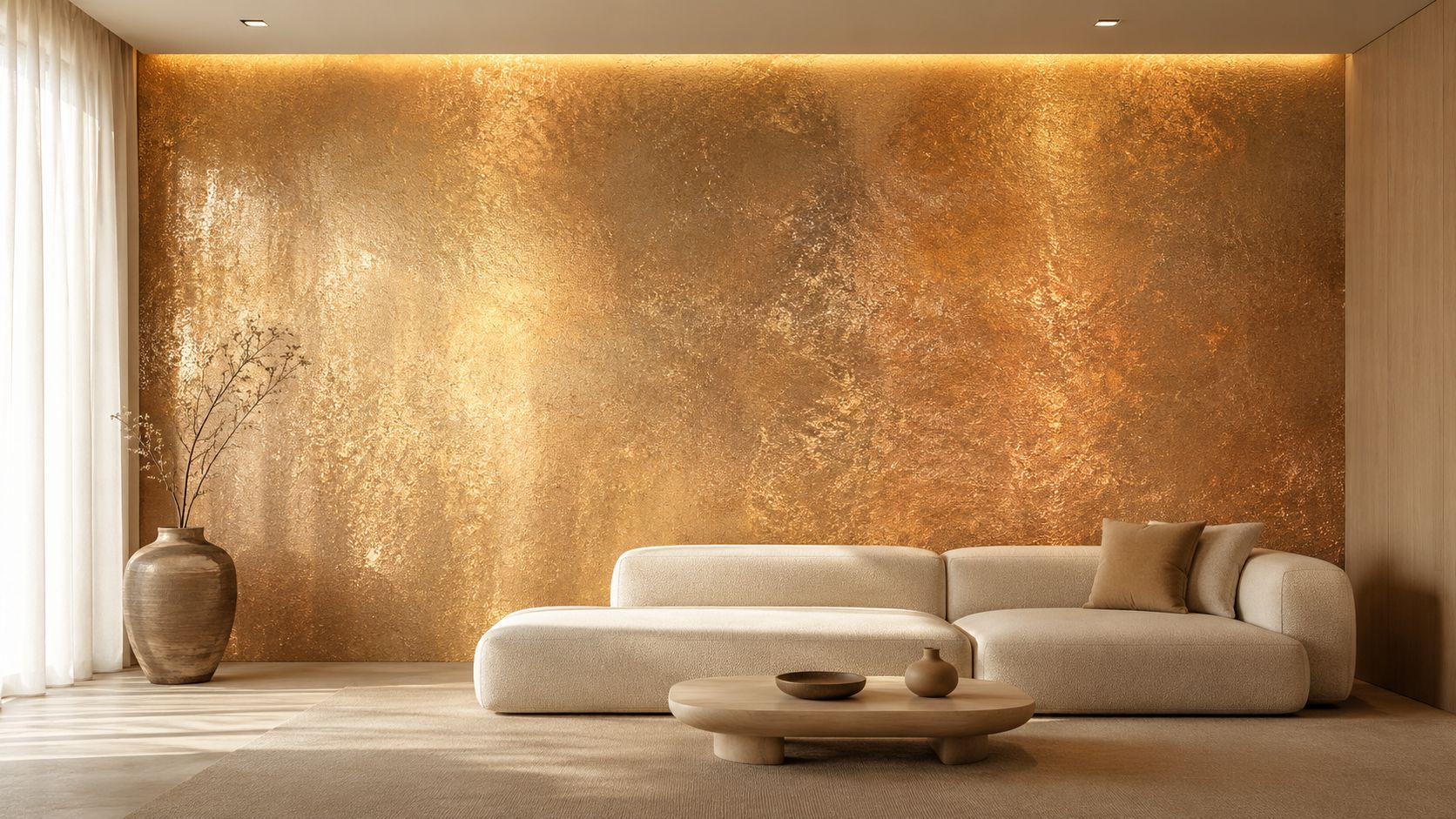
A beige base with a slightly deeper taupe can pair with a wooden table and woven accessories. A gold accent over a warm neutral may work behind a simple sofa, as shown in this textured gold living-room example, but metallic-looking colour variation should be tested under the room's actual lamps.
Maintenance and repair
Sponge texture has less physical relief than stucco, so it generally creates a lower dust burden. It still isn't automatically washable. Choose a compatible interior coating and keep extra mixed colour for future touch-ups, because recreating a hand-sponged pattern after a repair can be difficult.
This finish works when the homeowner wants character without paying for a highly specialized plaster technique. It doesn't work when the brief demands perfectly uniform luxury detailing or when the applicator has no control over colour transitions.
4. Popcorn Ceiling and Wall Texture
Popcorn texture creates a strongly stippled, bumpy surface through sprayed material and aggregate particles. It has a distinct visual language, closer to a utilitarian or retro treatment than to refined Venetian plaster. In a Chennai living room, it may suit an older property, a deliberately industrial interior or a ceiling where the texture is part of the existing architecture.
The scale of the room matters. A dense popcorn wall can make a small hall feel crowded, especially when the room already contains a large TV unit, open shelving and patterned curtains. Strong daylight exposes the irregular bumps, while warm lighting can make the surface feel darker and more enclosed.
Treat the application as a site operation
Spray application is messy. Furniture, flooring, fans, electrical fixtures and nearby walls need thorough protection, and the room needs ventilation while the material is being applied. Test the spray equipment and texture intensity on a sample surface first, because correcting an overly heavy pattern across a full wall is disruptive.
Don't assume an older popcorn finish is automatically safe to disturb. Before sanding, scraping or repainting an old surface, review asbestos safety guidance for popcorn ceilings and use appropriate professional assessment where relevant.
Dust, humidity and daily use
The raised surface can hold dust, which is a practical concern in urban Chennai homes with open windows and frequent air movement. A ceiling application may be easier to leave undisturbed than a wall behind a sofa, but both need a maintenance plan. Use a gentle cleaning method approved for the coating, and don't scrub aggressively across fragile peaks.
This is not my first choice for a polished contemporary living room. It can work when the existing building and interior language support it, but a subtle roller or hand texture is usually easier to coordinate with modern furniture.
5. Suede Texture Paint Finish
Suede paint creates a soft, velvety visual effect that absorbs light instead of reflecting it sharply. It gives a living room warmth and depth, particularly when paired with a low sofa, timber furniture, matte black details or soft upholstery. The finish suits premium apartments and villas where the wall should feel tactile without looking heavily sculpted.
In Chennai's bright daylight, suede can reduce glare on a feature wall and make a large room feel calmer. Under warm evening lamps, darker earth tones become especially intimate. That same absorption can make a compact or poorly lit room feel heavier, so don't choose a deep colour without testing it in the actual space.
Furniture pairing
Suede texture is strongest behind a sofa or on a controlled TV wall. Cream, tan, charcoal and muted olive upholstery can sit comfortably against it. Highly glossy furniture, multiple metallic accessories and a strong patterned rug may create too much competition.
Darker and earth-toned colours can be practical because dust and small marks are less conspicuous than they would be on a very pale, uneven finish. That doesn't mean the wall is maintenance-free. Hand contact near switches, corners and furniture edges can still create visible wear.
Application and upkeep
This finish needs an experienced painter who understands how to maintain an even directional effect. Poor application can create patches that look like roller marks rather than intentional softness. Prime the wall properly and approve a sample during both daytime and evening lighting.
A suede finish should feel calm from a distance and interesting up close. If the pattern is the first thing you notice from the doorway, the colour or application may be too aggressive.
Use a protective coating only if it is compatible with the product system, particularly in a high-traffic home. Avoid placing a frequently moved chair or storage unit directly against the wall until the finish has cured according to the product instructions.
6. Roller Stipple Texture
Roller stipple offers a more controlled pattern than sponge painting. A textured roller creates repeated dots or small relief marks across the wall, giving the surface consistency while still breaking up a flat painted plane. It fits modern Chennai apartments, office-cum-living spaces and projects that need a repeatable finish across several rooms.
The pattern catches side light, so inspect the wall from the main seating position before selecting a pronounced roller. A subtle stipple can soften minor visual imperfections, while a heavy pattern may make a narrow wall appear busier. Keep the surrounding walls smooth and use a restrained colour if the room has a large TV unit or extensive cabinetry.
Execution details that matter
Consistent pressure and rolling speed are essential. If the painter presses harder in one section, the pattern can become darker or deeper. Work in manageable sections with wet edges, and keep the roller loaded consistently so the joins don't form visible bands.
Select a roller that matches the furniture style. A small regular pattern works with contemporary sofas and clean-lined storage. An irregular pattern may suit a more relaxed room with cane, timber and handmade accessories, but it needs a sample before approval.
For broader decisions about finishes and maintenance, use this guide to material choices that keep interiors low-maintenance alongside the painter's product specification.
Is it practical in Chennai?
Roller stipple is usually easier to maintain than deep hand-sculpted texture because the relief is more uniform. Dust can still settle on the surface, especially near an open balcony, but regular gentle dusting is less complicated when there are no deep grooves.
Check that the wall is dry, clean and primed. For many acrylic texture products, listed coverage can be around 2 to 3 square metres per kilogram, with drying times of 2 to 4 hours, while full curing may require 24 to 48 hours, as outlined in this texture product specification. Confirm the actual product data before planning furniture movement.
7. Faux Finish Techniques
Faux finishing makes paint resemble marble, stone, wood or metal through layered colour, glaze, brushes, rags or combing tools. In a Chennai living room, it can connect a feature wall with a stone-look TV unit, timber console or flooring, but the illusion succeeds only when the pattern suits the room's scale.
A restrained stone effect behind a console usually feels more controlled than faux marble across every wall. Strong daylight can expose hard edges, uneven transitions and repeated marks, so inspect the sample from normal seating distance. A busy finish may also make settled dust more noticeable than a quieter, lightly varied surface.
Test the finish with the room
Have the painter produce a sample at the intended scale. Check it in morning daylight, under the warmest evening lamp and beside the actual furniture. Grey stone can support a cool contemporary sofa, while warm teak, beige upholstery and yellow lighting may need cream, taupe or earthy undertones.
Faux wood brings warmth to a narrow wall, especially with cane, timber or simple neutral furniture. It should not imitate a wood grain already used elsewhere unless the tones and scale are deliberately coordinated. Restrained variation is easier to live with and less likely to compete with artwork or storage.
For a related spray-applied alternative, see this guide on how to apply orange peel texture.
Where the finish can fail
This work needs a painter who can control edges, layering and drying time around sockets, door frames and built-in furniture. Application is more demanding than standard emulsion, and corrections can be difficult once several translucent layers overlap. Ask for a portfolio showing full walls, not only close-up details.
Chennai's humidity makes seepage and slow drying practical concerns. Resolve dampness before decorating, and protect the wall from moisture and heavy handling while it cures. A sealed faux finish can work on one accent wall, but it is a poor choice for a frequently touched surface or a wall likely to need repeated repairs. Use a finish whose upkeep matches the household, not just the showroom effect.
8. Metallic and Mica-Infused Texture Paint
Metallic and mica-infused texture paint uses reflective particles to shift with the angle and intensity of light. Gold, silver, copper and bronze tones can make a living-room feature wall feel luminous, but the effect depends more on lighting placement than on the paint alone.
A Chennai room with strong daylight may show different flashes across the wall as the sun moves. At night, a wall washer or concealed strip light can emphasize the mica and reveal the texture. Without planned lighting, the same finish can look flat in one corner and overly bright in another.
Keep the rest of the room quiet
Metallic texture needs visual space. Pair it with neutral upholstery, simple curtains and limited decorative accessories. A gold wall behind a cream sofa and timber console can feel warm; the same wall beside glossy cabinets, bright artwork and multiple brass objects may look crowded.
Use it on a TV wall, sofa wall or a narrow architectural panel rather than every living-room wall. Strong reflective texture can make imperfections more obvious, so the surface must be smooth enough underneath and the particles must be distributed evenly.
The Chennai maintenance question
Dust is more visible when it settles on a reflective surface, particularly in darker bronze or charcoal combinations. Raised texture also complicates wiping, so use a product system that suits the expected cleaning routine and confirm whether the surface can be gently wiped after curing.
Texture finishes contribute to value growth in India's decorative paint segment even when overall decorative paint volume growth is projected at 4 to 5% in FY 2026, according to this 2026 India texture-paint market analysis. For a homeowner, the practical meaning is simple. Metallic texture is a premium visual upgrade, but it earns its place only when the room's lighting and furniture support it.
Living Room Texture Finishes: 8-Point Comparison
Technique | Implementation Complexity 🔄 | Resources & Cost ⚡ | Expected Outcomes ⭐ / Impact 📊 | Ideal Use Cases 💡 | Key Advantages ⭐ |
|---|---|---|---|---|---|
Venetian Plaster Finish | 🔄 High, multiple thin layers; skilled troweling required | ⚡ High materials & labor; longer project time | 📊 High, polished, marble-like depth; very durable ⭐⭐⭐⭐ | 💡 Feature walls in luxury residences, formal living rooms | ⭐ Elegant, seamless finish; excellent light reflection |
Stucco Texture Finish | 🔄 Medium, trowel patterns need experienced applicator | ⚡ Moderate, cement/lime mixes; durable and long-lasting | 📊 Medium-High, rustic texture with good insulation ⭐⭐⭐ | 💡 Mediterranean/rustic homes; rooms needing thermal/sound benefits | ⭐ Cost-effective, insulating, conceals imperfections |
Sponge Texture Painting | 🔄 Low, DIY-friendly, simple dabbing/stippling | ⚡ Low, inexpensive tools and paint; quick sections | 📊 Medium, organic, layered look; variable consistency ⭐⭐ | 💡 Budget projects, eclectic/bohemian interiors, rentals | ⭐ Affordable, forgiving, easy to touch up |
Popcorn Ceiling and Wall Texture | 🔄 Low to apply (spray) but messy; removal difficult | ⚡ Low, fast coverage for large areas; possible testing costs | 📊 Medium, strong acoustic damping; hides flaws ⭐⭐ | 💡 Apartments/multi-story units needing sound control | ⭐ Fast coverage; effective at reducing echo |
Suede Texture Paint Finish | 🔄 Medium, specialized application; best by pros | ⚡ Moderate-High, specialty paints; better coverage than standard | 📊 High, soft, velvety appearance; warm light absorption ⭐⭐⭐⭐ | 💡 Premium apartments, accent walls in living rooms | ⭐ Sophisticated tactile finish; durable with good hiding power |
Roller Stipple Texture | 🔄 Low-Medium, consistent technique with textured rollers | ⚡ Low-Moderate, inexpensive rollers; quick coverage | 📊 Medium, uniform repeating pattern; professional look ⭐⭐⭐ | 💡 Modern apartments, offices, large wall areas | ⭐ Cost-effective, consistent, fast to apply |
Faux Finish Techniques | 🔄 High, layered glazes and artistic methods needed | ⚡ Moderate-High, skilled labor; time-intensive process | 📊 Very High, realistic marble/wood/metal effects; strong focal impact ⭐⭐⭐⭐ | 💡 Feature walls in luxury/bespoke interiors, showpieces | ⭐ Highly customizable, luxurious look for less than real materials |
Metallic & Mica-Infused Texture Paint | 🔄 Medium-High, controlled application and particle distribution | ⚡ High, premium specialty paints; lighting planning increases cost | 📊 Very High, dynamic shimmer that changes with light ⭐⭐⭐⭐ | 💡 Accent walls in contemporary/luxury spaces, showrooms | ⭐ Striking, luminous impact; modern, attention-grabbing finish |
Choose the Finish You Can Live With
The most attractive texture isn't automatically the best texture for your living room. Start with the wall itself. A surface with seepage, condensation, blistered paint or recently repaired plaster needs diagnosis and drying before decoration. Damp walls can cause paint to lose adhesion and blister, and textured surfaces are harder to clean once dust settles into their relief, as explained in this India-focused guide to wall paint choices and damp conditions.
For a compact Chennai apartment, shortlist sponge texture, fine roller stipple or a restrained suede finish. These options can add depth without making every wall visually heavy. A light colour and low-relief pattern usually reflect more daylight than a deep, irregular texture. Keep the remaining walls smooth where possible, especially in a home that needs frequent dusting or has children moving furniture around.
Choose Venetian plaster, stucco or faux finishing when the architecture and budget support specialist execution. Premium texture work in Chennai is listed at ₹15 to ₹25 per square foot for labour, while ultra-premium designer texture work can reach ₹45 to ₹80 or more per square foot, depending on the finish and system, according to this Chennai painting cost guide. The same guide places texture or Royale Play as an added feature-wall expense over standard painting. Treat these figures as planning signals, then obtain a written scope covering material, preparation, coats, labour and repairs.
Match the coating to the room
A living room generally benefits from a low-VOC acrylic emulsion with a soft sheen or matt appearance, particularly when the finish needs to hide minor imperfections. Washable stain-guard products make more sense for kitchens and children's rooms, while damp-prone areas need an anti-fungal, moisture-resistant interior system, according to this India-based painting systems guide. Don't specify a bathroom coating just because it sounds tougher, and don't use decorative texture to conceal unresolved dampness.
You can also verify standards where a named product claims compliance. A public release from the Indian government states that Khadi Prakritik Emulsion meets BIS 15489:2013, while Khadi Prakritik Distemper meets BIS 428:2013. The release also records that the emulsion passed tests covering application, thinning properties, drying time and finish, and that it dries in less than 4 hours, as described in the BIS-linked public release. Check the product label and documentation for the actual paint you intend to use.
Approve the work before the wall disappears
Sample the exact colour and texture on the intended wall. Place the sofa, TV unit or console in front of the sample, then inspect it under daylight and the planned evening lighting. Ask the execution team how they will protect furniture, control dust, handle edges, seal the surface and repair accidental damage.
If you're planning a complete Chennai home interior, Interiors by DeX can coordinate space planning, lighting, painting support and finish selection within a wider residential execution process. The company works on apartments, villas and premium residences, with services spanning design development, manufacturing coordination, installation and handover. Its paint finish guide is also a useful general reference when comparing sheen and practical use, but the final specification should follow the selected Indian product system.
A textured wall should improve the way your family uses the room, not create a surface everyone is afraid to touch. Choose the finish that suits the wall condition, the amount of daylight, the furniture already purchased and the cleaning routine you can maintain. That decision will last longer than a trend.
Visit Interiors by DeX to discuss a Chennai living-room plan that coordinates texture paint, lighting, furniture placement and wall preparation. Their residential team can help select finishes and manage the design, execution, installation and handover process for an apartment, villa or renovation.