
Keeping Budget Calm When Everything Feels Unclear
Starting interiors for a new Chennai home often begin with a simple thought: we will keep it within a certain number. Then the site visits start, drawings come in, revisions keep coming, and suddenly that number feels like a guess. Every meeting seems to add one more cost, one more must-have, one more adjustment.
Many families hit the same pain points:
Vague estimates with half the items marked
Basic things, like handles or extra electrical points, added very late
Confusion on what is included in “modular” and what is extra
Site-coordination charges that appear only at the billing stage
In a city like Chennai, real costs are shaped by local realities: rental deadlines, water seepage in older buildings, coastal humidity affecting materials, local carpentry labour patterns, and what is actually available in nearby markets. This is why calm interiors are less about chasing the lowest quote and more about having clear money conversations from day one. The focus here is on those specific conversations that keep both homeowner and designer steady, so the project finishes without constant fights and surprises.
Key Takeaways
Learn how to discuss costs early, avoid surprises and keep timelines clear with budget home interiors in Chennai for a smoother, calmer design journey.
What Budget Really Means in a Chennai Flat
When we say “budget”, we are not talking about the smallest number someone is willing to write on a paper. For a Chennai home, a workable budget is one that covers:
• Core functionality like the kitchen and wardrobes
• Materials that can handle humidity and daily use
• The design, planning, and project management needed to execute properly
Budgets also change by home type. A compact 1 or 1.5 BHK often needs smart storage in every corner. A 2 or 3 BHK for a family might need more wardrobes, study space, and a proper TV wall. Independent houses can involve more civil work and open areas. Simple per-square-foot numbers do not tell the full story because:
• Kitchen intensity is different from bedroom storage
• Some flats need more lofts and utility units
• Loose furniture numbers vary from home to home
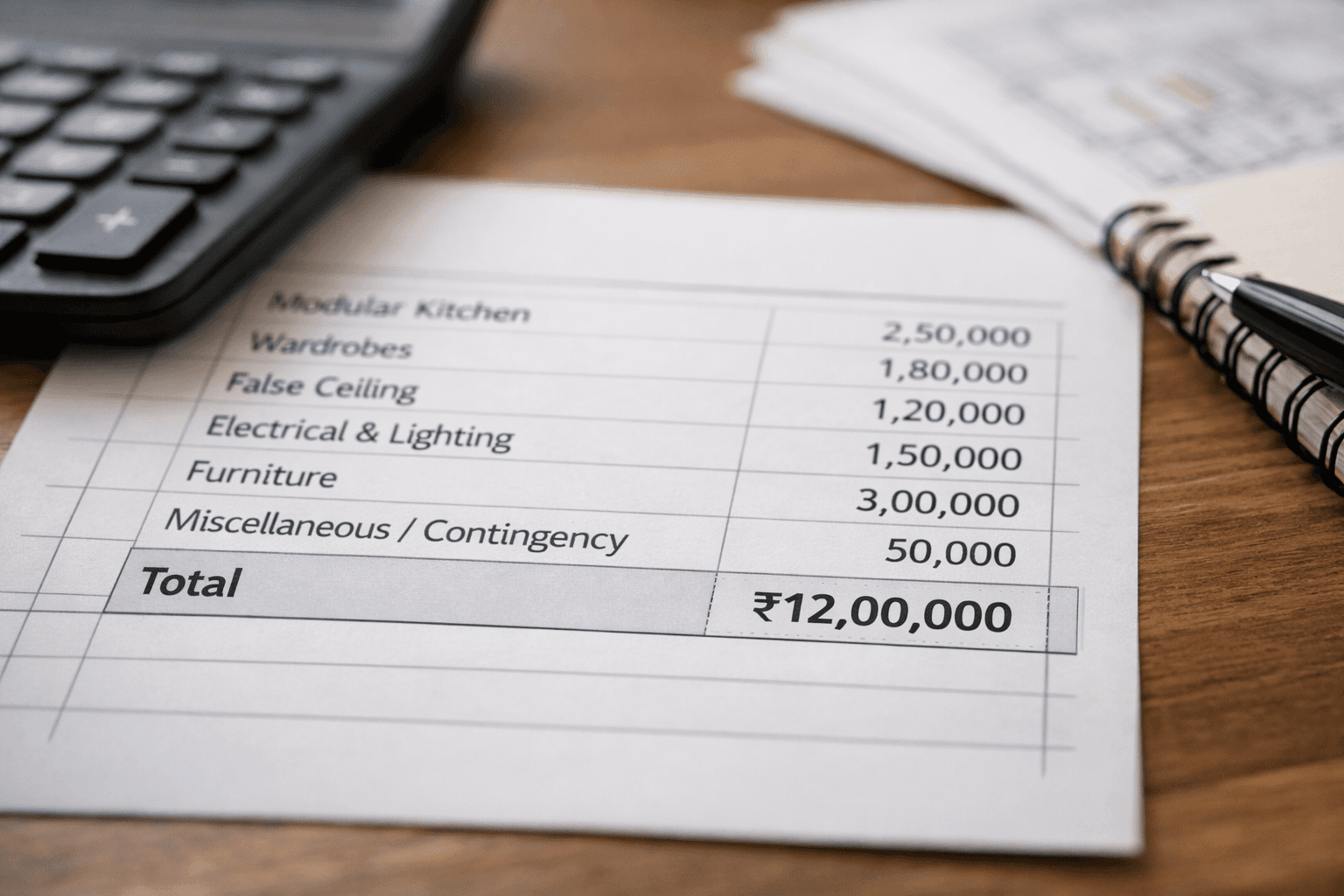
A useful way to think about budget is by broad allocation. Not as fixed rates, but as planning brackets that help you talk clearly about where the money is likely to go.
Category | Indicative Allocation (of total interior budget) |
Modular kitchen (including basic accessories) | 30% – 40% |
Wardrobes and storage | 25% – 35% |
TV unit, study, shoe rack, pooja | 10% – 20% |
False ceiling and basic lighting | 10% – 15% |
Painting, minor civil, and electrical | 10% – 15% |
Having these brackets on the table in the very first discussion makes it easier to pick trade-offs. Instead of randomly cutting one drawer here and one accessory there later, both sides can decide early where to keep things simple and where to invest more.
Calm Money Conversations to Have Before Design Starts
The quietest projects usually begin with a few clear, non-emotional talks about money before any design work starts.
Some useful questions to settle early are:
What is the maximum comfortable spend, including GST and any society charges?
Which spaces are non-negotiable for move-in, like a full kitchen and main wardrobes?
Which items can be phased later, like a guest room or extra study table?
Then it helps to fix a simple decision framework:
If the total quote goes above a certain number, what should change first?
Should material grade, finish type, accessories level, or scope of work be adjusted?
Is phasing a room an option instead of downgrading everything?
Having 2 to 3 pre-decided “compromise paths” makes later discussions calmer. There is less blaming and more “we already agreed how to handle this”.
Transparent pricing supports this calm. A detailed item-wise bill of quantities with:
Unit rates and square footage
Hardware and brand levels clearly mentioned
Clear notes on what is included and what is excluded
No hidden clauses related to warranty or service
Timelines tied to payments also matter. Instead of vague “work in progress” stages, it helps to have:
Payment stages linked to clear milestones, like factory release, delivery, and installation completion
Dates or ranges agreed up front, so families can plan rent and school timing
This way, funding and timeline stress does not spill into every design decision.
Designing Within Limits Without Feeling Constantly Cut Short
Once money conversations are clear, design can feel lighter, not restricted. A structured, step-by-step process helps keep both costs and expectations in control:
Requirements and priorities
Layout options
3D or visual references for key spaces
Material and finish locking
Final BOQ sign-off before production
Each stage has approvals, so surprises are reduced.
For Chennai, material choices are more than just look and feel. Coastal humidity and water seepage can affect:
The type of core board used in modular units
Laminate and edge band choices
Hardware resistance to rust
Sometimes a cheaper option today might swell, peel, or rust sooner in this climate. That can mean higher replacement spend in a few years. A calm budget talk includes long-term value, not only day one saving.
To stay within budget without endless arguments, designers can:
Use standard module sizes so material wastage stays low
Limit the number of finishes in each room so labour is simpler
Plan neat ways to hide services with lighter elements instead of heavy panelling
When modular products come with a clear replacement guarantee for a fixed period, with all terms and exclusions documented upfront and no hidden conditions, the question shifts from “Where can we cut another bit?” to “What is the lowest-stress choice over the next few years?” This is especially helpful if you do not plan to renovate again soon.
Handling Extras, Scope Creep and After-Sales Calmly
Budget slippage rarely happens in one big jump. It usually creeps in through:
Changes after civil work starts
Extra electrical points, switches, or LED strips
Moving plumbing lines or changing countertops
Building society rules about balcony grills or shaft access
A simple rule helps: every change in scope should be confirmed in writing before work starts on that change. The note should cover:
Extra or reduced cost
Time impact, if any
Any change in warranty for that part
Verbal “we will see later” is where confusion and stress grow.
Accountability on site is another part of the money story. When one team takes responsibility for:
Carpentry or modular installation
Basic electrical related to the interiors
Painting touch-ups linked to the work
There is less finger pointing, less rework, and fewer repeat visits. All of this quietly protects your budget.
After-sales clarity also affects how you feel while spending today. Calm questions to ask:
If a hinge or shutter fails in the third year, who handles it?
Is labour included in the service visit or only materials?
How do we log a complaint and how is it tracked?
When these things are clear and documented, families feel less pressure to over-analyse every hinge spec or every screw. Decision fatigue reduces because there is a system to handle issues later.
When to Start Budget Discussions in a New Chennai Home
Timing matters, especially in Chennai where many families plan interiors around:
School term changes
Lease expiry and notice periods
Festival periods when they want to move in
A practical approach is to start serious money and scope conversations around 60 to 90 days before expected possession. Even if final measurements are pending, builder floor plans usually give enough to:
Mark storage needs
Decide broad kitchen shape and counter lengths
Plan the basic electrical strategy for the TV wall, study, and AC points
From there, broad budgets and priority spaces can be frozen. Once the builder hands over the flat and exact measurements are taken, numbers are refined, not started from zero. This avoids:
Rushed choices under moving pressure
Higher labour charges in peak demand periods
Compromises driven only by time, not by value
Closing Note
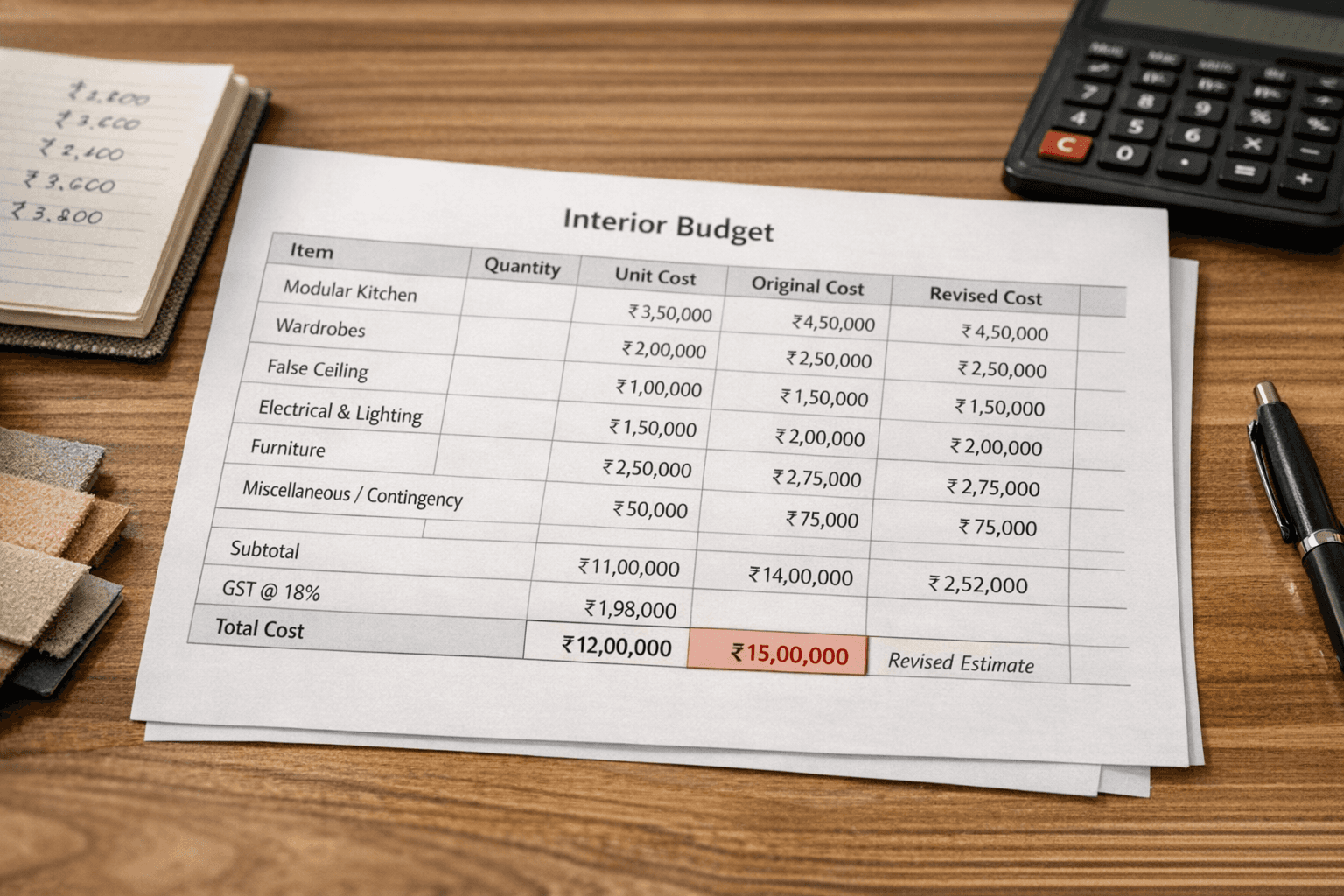
A calm, structured approach to money turns the budget from a stress point into a shared planning tool. Clear allocations, written scope changes, transparent warranty terms, and defined timelines help both homeowners and interior teams in Chennai work with fewer surprises and more accountability. If you are about to start interiors, the most useful first step is often a straightforward budget discussion built around these points, before any detailed designs are drawn.
Conclusion
Transform Your Space With Smart, Budget-Friendly Design Today
If you are ready to create a beautiful home without overspending, our team at Interiors by DeX is here to help. Explore how our budget home interiors in Chennai can be tailored to your space, lifestyle and preferences. We will guide you through every step, from planning to final finishes, so you know exactly where your money is going. Have questions or want to discuss your ideas in detail? Simply contact us to schedule a no-obligation consultation.
Frequently Asked Questions
When should I set my interior budget for a new flat in Chennai?
Ideally 60 to 90 days before possession. This gives enough time to plan layouts, prioritise rooms, and get a detailed BOQ, without rushing decisions close to the move-in date.
Is per-square-foot pricing reliable for Chennai interiors?
Per-square-foot figures are useful as a broad starting point, but they hide variations such as kitchen intensity, amount of storage, and level of loose furniture. A detailed item-wise quote is more reliable for actual decision-making.
How can I avoid hidden costs during execution?
Ask for an itemised BOQ with clear inclusions and exclusions, written change orders for every scope change, and documented site-coordination charges (if any). Clarify warranty terms and ensure there are no hidden clauses related to service or replacements.
Does Chennai’s climate really affect interior costs?
Yes. Humidity and occasional seepage mean material and hardware choices matter. Boards, laminates, and hinges suited for coastal conditions may cost slightly more upfront but often reduce swelling, rust, and early replacements.
Practical ways to stay on budget without feeling restricted Start with clear priorities (must-have vs can-wait), use standardised modules where possible, limit finish variations, and agree on 2 to 3 predefined compromise paths, such as phasing a room or adjusting accessory levels, before design begins.
Start with clear priorities (must-have vs can-wait), use standardised modules where possible, limit finish variations, and agree on 2 to 3 predefined compromise paths, such as phasing a room or adjusting accessory levels, before design begins.