Tips
Jan 9, 2026
How to Read an Interior Proposal in Chennai with Confidence

Why Most Homeowners Struggle with Interior Proposals
For most Chennai homeowners, the real problem with interior proposals is not just the design, it is the uncertainty around what you are actually getting for the money. Drawings, abbreviations, brands, rates per square foot and fine print can make it hard to see whether a 10, 15 lakh proposal is fair, overpriced, or simply incomplete.
When you are talking to interior design contractors in Chennai for work worth several lakhs, that confusion can lead to gaps in scope, unexpected extras and difficulty comparing options.
We see this regularly with new apartments in OMR and Sholinganallur, older flats in areas like T. Nagar or Adyar, and villas along ECR. Each contractor sends a different format, a different price and very different levels of detail. You are effectively making decisions worth 10 to 15 lakh, based on a PDF that you only half understand.
The instinct is to check the final amount and choose the lowest. In reality, the safer approach is to focus on what is actually specified: materials, brands, measurements and, just as important, what is excluded. Price makes sense only when you are clear about these details.
How to Decode Specifications and Build Quality
Once the structure looks reasonable, the main work is in reading the specifications. This is where long-term durability and day-to-day comfort are decided, especially in Chennai’s heat and humidity.
For woodwork, pay attention to:
Core material: MR plywood, BWR plywood, BWP plywood, MDF or particle board. For humid areas like kitchens, utility and bathrooms, water-resistant grades are typically safer than MR or plain MDF.
Thickness: 16 mm, 18 mm or 19 mm for shutters and carcasses. Thicker boards usually give better strength and stability.
Hardware: hinges, drawer channels and lift-up systems. Check if they are soft-close, and whether the brand and series are specified.
On surfaces and finishes, check:
Laminate: commonly used, cost-effective and easier to maintain in humidity.
Veneer: richer look, usually higher cost, needs proper polishing and care.
PU or similar paint: smoother finish, but sensitive to surface preparation and site conditions.
For kitchens, some small lines in the proposal have a big impact:
Countertop material, thickness and edge profile
Whether there is a backing support or only front fascia
Dado finish: tiles or quartz-type material, and how high it is taken
Waterproofing or special treatment near the sink
Skirting details and whether they are included in the rate
A simple way to compare is to create a quick table for yourself:
Column A: Item, for example "Kitchen base units"
Column B: Contractor 1 specs
Column C: Contractor 2 specs
Column D: Notes or concerns, such as "thinner board" or "no brand mentioned"
When you set it out like this, the price difference usually starts to make more sense.
Brands, Inclusions and the Fine Print That Change Your Final Cost
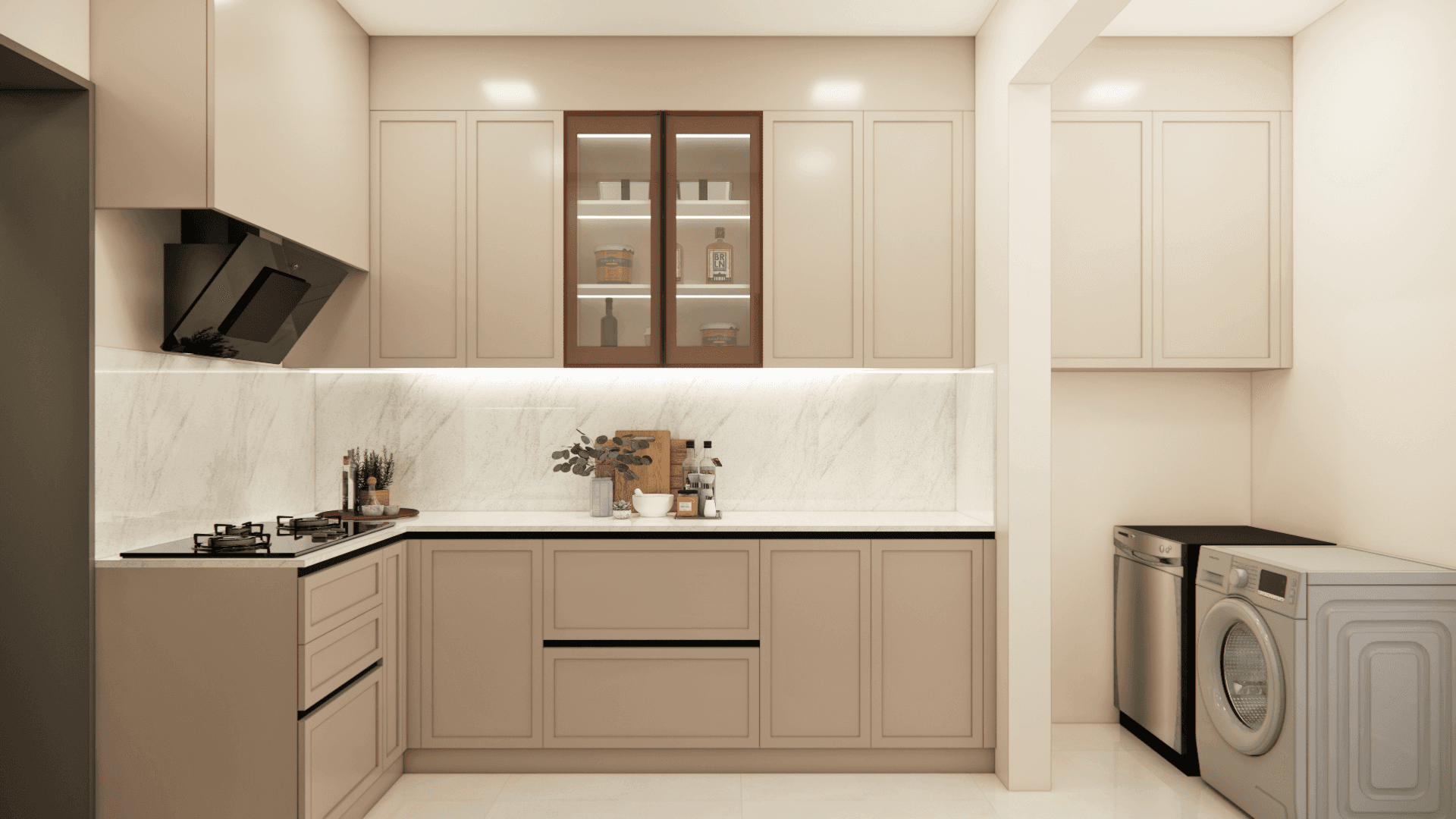
In Chennai, many interior design contractors mention popular hardware brands, along with local or house brands. How they are written in the proposal matters:
Clear: Brand, series and, where relevant, model
Vague: "Hettich type" or "equivalent brand" with no detail
For kitchen accessories, wardrobes and storage, ask:
Which brands are actually included in the quote?
Is the proposal including the actual hob, chimney, sink, mixer and lights, or only the provision and cut-outs?
Are these products easily serviceable in Chennai, with local support?
You can again create a small reference table for yourself:
Hardware: local, mid-tier or imported, and the approximate per-set range your contractor mentions
Kitchen accessories: basic baskets, corner units and tall units, with rough ranges
Items you are open to downgrading or upgrading later
Brand choice is usually important for hinges, channels and regularly used moving parts. For some accessories, it can be more about preference and budget.
Then comes the fine print. Exclusions often decide the real final bill more than the initial quote. Typical inclusions in a Chennai residential interior contract are:
Carpentry and modular units
Standard hardware
Basic painting touch-up
Standard false ceiling in selected areas
Limited electrical point shifting
Frequently excluded items, which surprise homeowners later, are:
Full repainting of the flat
New wiring and MCB upgrades
Civil demolition, new walls or flooring
Window or grill changes
Bathroom waterproofing and tiling
AC copper pipes and extra electrical work
Curtain rods, blinds and loose furniture
Local realities also matter. In many Chennai gated communities, there are restrictions on working hours, lift usage, debris disposal and common area protection. Clarify:
Who will pay for lift padding and usage charges?
Who is responsible for debris removal and any penalties from the association?
Requesting an "assumption sheet" is often helpful. This is a page where the contractor notes what they are assuming about:
Existing wall and floor conditions
Ceiling levels and the slab quality
Existing plumbing and electrical condition
If these assumptions turn out to be incorrect, you know why a variation may be needed.
Costs, Comparisons and Working with a Partner
Most proposals in Chennai present cost in one of three ways: per room, per item or as a flat package rate per square foot. Asking for a simple breakdown by space and activity makes it easier to see where the money is going.
Below is an example of how a typical 3BHK interior quote in Chennai might be structured. These numbers are only indicative ranges to help you frame discussions; actual costs will vary by design, materials and site conditions.
Scope Head
Typical Inclusions
Indicative Range (₹)
Key Notes
Kitchen
Base & wall units, laminate finish, basic hardware
2,50,000 to 4,00,000
BWR/BWP carcass, standard accessories
Living & Dining
TV unit, crockery, basic false ceiling
1,50,000 to 3,00,000
Check for electrical and lighting scope
Bedrooms (each)
Wardrobe, lofts, study unit (if any)
1,00,000 to 2,00,000
Board thickness and hardware matter
Electrical
Point shifting, new points within limits
50,000 to 1,50,000
New wiring and MCB upgrades often extra
False Ceiling
Selected areas, basic design
60,000 to 1,50,000
Includes frame, boards, finishing
Painting
Touch-up or single-coat refresh
30,000 to 1,00,000
Full repaint usually separate
When you receive your own proposals, ask for a breakdown such as:
Kitchen
Living and dining
Each bedroom
Electrical
False ceiling
Painting
Others or contingencies
Alongside each, note:
Estimated cost
What is included
Any clear risks, for example, "no provision for new wiring"
Payment schedules usually follow stages such as:
Booking advance
Design finalisation
Production start
Site work start
Midway payment
Final payment at handover
When reading this, check:
Are payments linked to clear milestones, or only dates?
Is there any retention amount held back until completion and snag rectification?
Variations are normal during execution, especially when homeowners change finishes or expand scope. For Chennai homes, common causes of cost escalation include:
Upgrading from laminate to veneer or PU finishes
Adding extra electrical points or light fixtures
Extending false ceiling to more areas
Discovering hidden site issues after demolition
Ask that every change is recorded in a simple variation sheet, with date, description, quantity and agreed cost impact.
When you have multiple proposals, avoid looking only at the total price. Instead, create a normalised comparison:
List the same scope items across contractors
Mark where any contractor has left out an item
Highlight thinner boards, lower material grades or missing brands
It is also helpful to define two or three non-negotiables for yourself, for example, "BWR or better in kitchen carcass", "soft-close hardware from named brands" and "written warranty and service process".
Beyond numbers, compare how each contractor works:
How many design iterations are included?
Who will supervise the site and how often?
What timelines are they committing to and how are delays handled?
What is written about warranty response time and service charges in Chennai?
A lower quote can be reasonable if the scope is genuinely smaller or the finishes are simpler. It becomes a warning sign when the price is low but specs are vague, drawings are missing and exclusions are long.
If you are reviewing proposals now, a practical next step is to pick one current quote, run it through the structure and specification checks above, and then ask your contractor direct questions where details are missing. This usually gives you a clearer, grounded basis to decide whether to proceed, negotiate or look for another option.
Transform Your Space With Expert, Stress-Free Design Support
If you are ready to turn your ideas into a well planned, beautifully finished home, our team at Interiors by DeX is here to help. As experienced interior design contractors in Chennai, we manage every stage of your project so you can enjoy the result without the hassle. Tell us about your space, your style and your budget, and we will create a tailored design solution that fits. To discuss your requirements or book a consultation, simply contact us.
FAQs
Frequently asked questions
Find helpful answers about our services, detailed process, and bringing your vision to life.
Is My Quote Reasonable for My Flat Size in Chennai?
Can I Choose a Cheaper Contractor Using "Equivalent" Brands?
What If Two Proposals Use Materials I Don’t Understand?
Is Per-sq-ft Pricing Reliable in Chennai?
What Cost Buffer to Set Aside for Extras and Changes?