
You're standing in a kitchen where the base cabinets are full, the corner cabinet is a black hole, and the top shelf holds things you use once in a while, if you can reach them at all. That's the point where storage solutions kitchen cabinets stop being a style choice and start becoming a daily usability problem. In Indian homes, especially compact apartments, the market already points toward storage-heavy planning, with floor and wall cabinets holding 62.8% of modular kitchen product share in 2025 and tall storage cabinets at 23.6% in the same report, which makes vertical, reachable storage a practical default rather than a luxury IMARC's India modular kitchen market overview. If you're planning a remodel or a new kitchen, the smartest choices are the ones that match cabinet type, item frequency, and how you cook. Jennifer Gilmer's cabinet storage ideas also reinforce the same practical mindset, which is why the best systems are built into the layout, not added as afterthoughts Jennifer Gilmer Kitchen & Bath storage tips.
1. Pull-Out Drawer Organizers and Baskets
Pull-outs solve one of the most common cabinet problems, the back row that nobody wants to dig through. Instead of stacking jars, packets, utensils, or containers in a fixed box, the cabinet contents slide toward you, so the whole run becomes visible at once. In Chennai apartments, that matters because compact kitchens need every inch to work, and humid conditions make it even more important to choose hardware that moves smoothly and resists wear.
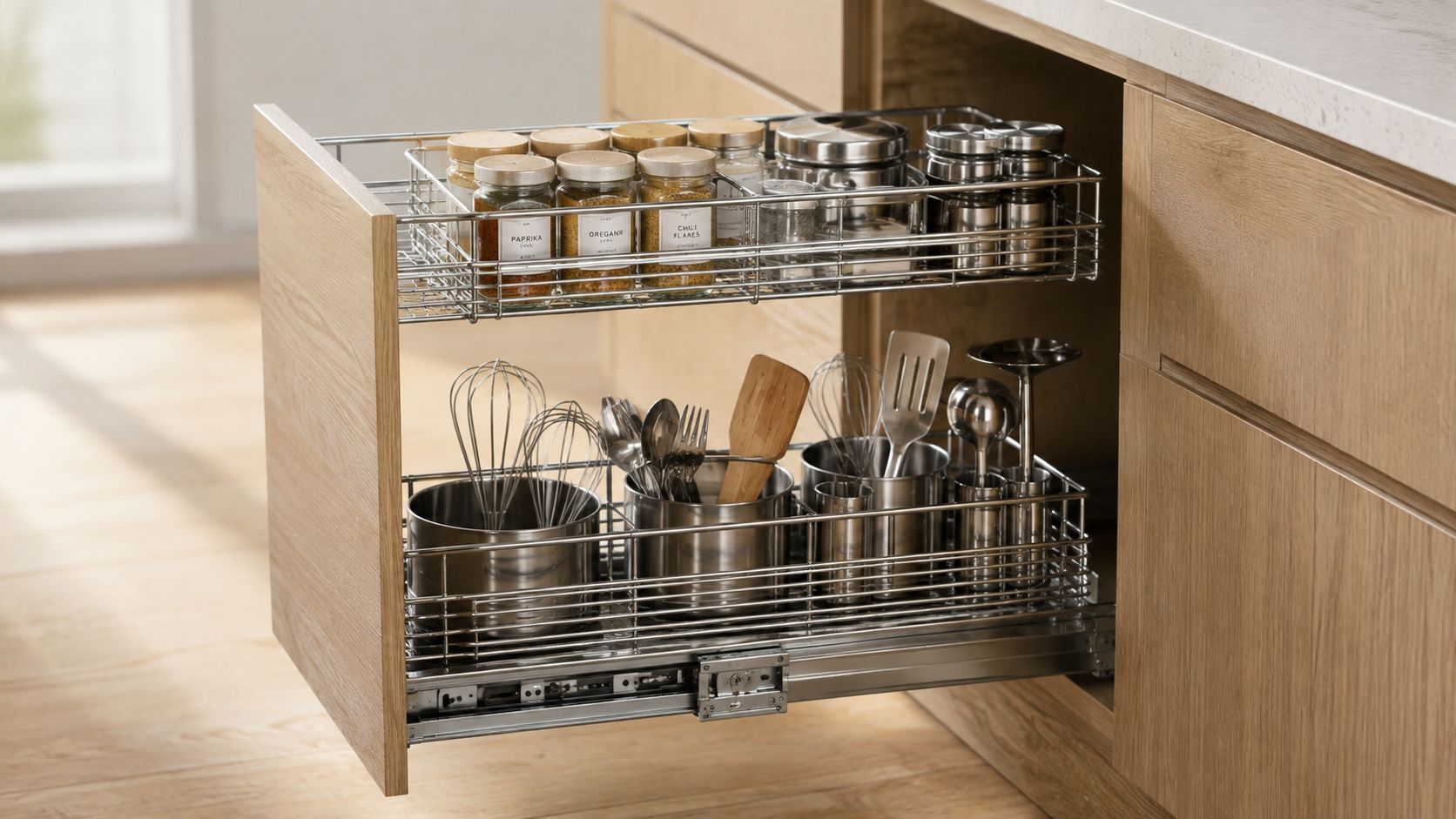
For kitchens in T. Nagar or Kodambakkam, pull-outs often make sense in tight footprints where deep shelves would otherwise waste storage. In villas, they fit neatly into butler's pantries and prep zones, while new flat projects often use them for efficiency because they keep oil bottles, masala jars, and daily-use utensils within reach.
Practical rule: choose pull-outs for items you touch often, not for things you can store higher up and forget about.
A few planning details matter more than most homeowners expect:
Measure the internal cabinet size first. Basket width and glide clearance have to match the actual box, not just the face width.
Use stainless steel glides in humid climates. Chennai's moisture makes rust resistance a real design requirement.
Keep heavier items lower. That helps the runner stay balanced and keeps opening movement smooth.
Add soft-close hardware. In open kitchens, that reduces slamming and keeps the cabinet feel more controlled.
Group items by task. Keep tea supplies together, breakfast items together, or cooking staples together so the cabinet supports workflow.
If you're commissioning a custom unit, a cabinetry team like Interiors by DeX custom furniture and carpentry can size the pull-outs around how you cook, not just around standard modules. That's the difference between a drawer that looks organised and one that saves time.
2. Corner Cabinet Carousels and Lazy Susans
A corner cabinet becomes frustrating when the item you need sits behind everything else. A carousel or lazy Susan brings the stored items forward by rotating the shelf, making the back corner accessible without kneeling and reaching blindly. It suits lower corner cabinets best, particularly where the cabinet depth would otherwise create unused space.
In apartment projects, where every cabinet dimension matters, a corner organiser can turn awkward volume into usable storage. It also fits villa renovations where the kitchen plan includes larger corner units and separate prep zones. For rental interiors, a rotating shelf is easier to maintain than a deep fixed shelf that repeatedly hides containers. When planning modular kitchen layouts for apartments and villas, check the corner opening, internal width, shelf clearance, and door swing before choosing the mechanism.

Ball-bearing mechanisms usually provide steadier movement than basic rotating plates. They handle regular use better and feel more controlled when loaded with jars or compact appliances. The trade-off is that the hardware needs accurate installation and enough clearance around the rotating shelves. In Chennai's humid conditions, choose corrosion-resistant fittings and keep the cabinet base dry.
Test the carousel before loading it fully. If it does not rotate freely when empty, added jars and containers will only make the problem worse.
Use the rotating tiers with discipline:
Choose lighter containers. Heavy, loose items can make rotation harder and less stable.
Keep the mechanism clean. Dust, crumbs, and moisture collect quickly in floor-level corners.
Add door-mounted storage carefully. It can hold small items, but confirm that the door still closes without striking the carousel.
Group similar items together. Keep cookware, snacks, or cleaning supplies on separate tiers.
A carousel earns its space when the corner stores items used regularly. For rarely used cookware, a fixed shelf may cost less and require less maintenance. The right choice depends on access, cabinet geometry, and the way the kitchen is used.
3. Vertical Shelf Dividers and Stackable Racks
Flat items are the first things to disappear into a messy cabinet. Baking sheets lean, cutting boards slip, trays topple, and each grab disturbs the whole stack. Vertical dividers solve that by giving each item its own standing slot instead of one loose pile.
For Chennai kitchens, that matters in practical ways. Apartments often have limited cabinet width, but the household still needs space for tawa pans, chopping boards, serving platters, and baking trays. Stackable racks help when shelf height is available but floor space is tight, because they add a second or third level without forcing everything into a heap. In homes that host often, they also keep serving pieces grouped by type so they are easier to reach.
The fit has to match the cabinet, though. Standard Indian cabinet sizes vary by layout and maker, so check the shelf depth and opening before you buy hardware standard Indian cabinet sizes. A divider system works best when there is enough clearance to lift items out without scraping the frame or catching the front edge.
A few choices make the setup work better:
Add felt or cork where metal touches cookware. It cuts rattling and protects finishes.
Place daily-use items near eye level. That keeps the most used trays and boards within easy reach.
Set dividers slightly back from the front edge. Items lift out more cleanly.
Use clear stackable racks when visibility matters. You can see what sits behind the front row.
Material choice matters in Chennai's humidity too. Metal parts need a corrosion-resistant finish, and wood inserts should be sealed so they do not swell or warp. If the cabinet already has height to spare, vertical storage uses that space better than a flat shelf full of shifting items.
4. Deep Drawer Organizers With Tiered Tray Systems
A deep drawer without inserts becomes a storage pit for platters, cookware lids, and forgotten appliances. Tiered trays create stepped levels, keeping items at the back visible instead of burying them behind the front row.
This setup suits island kitchens and larger modular kitchens with generous drawer depth. In modern villas, it can group serving bowls, entertaining pieces, and seasonal cookware. It also helps households that cook in larger batches, provided the drawer is wide and deep enough for the tray system without restricting movement.
Check the drawer load before choosing the hardware. Heavy cookware needs a drawer box and runners rated for the contents. A tall front may provide more volume, but an overloaded drawer becomes difficult to open and places extra strain on the runners.
Practical rule: leave enough free space for the drawer to open and close smoothly. Filling it to the top creates friction and makes items harder to lift out.
Plan the tiers around weight, reach, and movement:
Place heavy pans and serving dishes on the lowest tier. This keeps the drawer stable and lowers the centre of gravity.
Use compartmented trays for smaller pieces. Lids, ladles, and spice boxes are less likely to slide into one another.
Keep daily-use items on the easiest-to-reach tier. You should not have to remove a baking tray to reach a mixing bowl.
Choose soft-close hardware. Large drawer fronts carrying heavy contents need controlled movement.
Review the drawer by season. Entertaining pieces may need a different position from cookware used every day.
Chennai's humid conditions make sealed wood, washable plastic, or corrosion-resistant metal sensible choices. Avoid inserts that swell, stain, or trap moisture. Daily-use items belong within a comfortable reach zone, while seasonal pieces can occupy the less accessible parts of the drawer, as explained in this kitchen storage planning guide.
5. Modular Drawer Dividers and Customisable Inserts
A drawer can have enough space and still waste time. Forks mix with knives, utensils form one heap, and a peeler disappears beneath measuring spoons. Modular drawer dividers assign each tool a position, making the contents easier to scan and return after use.
They suit compact flats in areas such as T. Nagar, where frequent cooking puts pressure on limited storage. The same system works in villas and rental kitchens because inserts can be adjusted without rebuilding the cabinet. Bamboo dividers add a warmer finish, while washable plastic is easier to clean and replace.
Choose the insert only after checking the drawer's internal width, depth, and runner clearance. A divider that fits the cabinet front but reduces usable space inside can make a drawer harder to use. Allow room for handles and tool heads, and keep the layout aligned with the way the drawer opens beside nearby cabinets.
The main trade-off is order versus adaptability. Fixed compartments hold their arrangement well, while adjustable pieces suit households whose cooking habits change. In Chennai's humid conditions, sealed bamboo, good-quality plastic, or corrosion-resistant metal is safer than material that swells, stains, or traps moisture.
Use the drawer by function:
Separate eating and cooking utensils. Cutlery can stay apart from spatulas, ladles, and serving tools.
Give bulky items deeper sections. Large spoons and spatulas should not crowd smaller tools.
Keep frequently used pieces near the front. Place occasional serving utensils farther back without blocking daily access.
Label shared sections when needed. Clear labels help different users return items consistently.
Review the layout as routines change. An insert that no longer matches the household's cooking pattern is using space poorly.
Indian kitchens often combine everyday cooking with formal serving, so the drawer needs both clear divisions and enough flexible capacity. Standard cabinet planning, including base cabinets around 35 to 36 inches high with countertops and wall cabinets set with a clear gap above the counter, provides the dimensions needed for a workable drawer cabinet dimension guidance. The insert then keeps each tool in reach.
6. Spice Racks and Condiment Organizers
Indian cooking often puts masalas, oils, chutneys, pastes, and dry seasonings into daily rotation. A random shelf forces you to move several containers before finding the right one, while jars left on the counter reduce usable prep space. A dedicated spice system keeps these ingredients grouped and places them near the point of use.
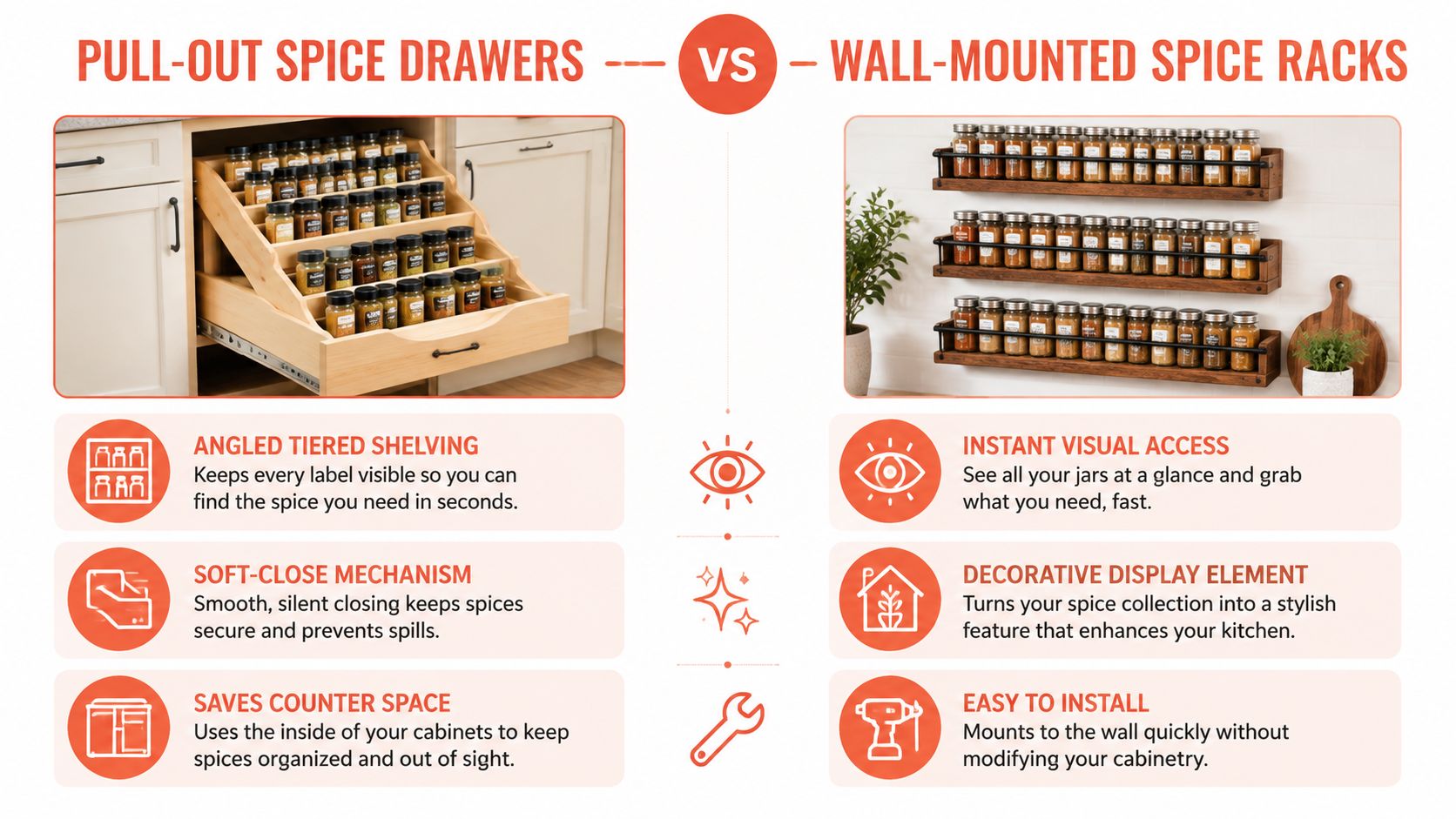
Choose the format according to the cabinet problem. A pull-out spice drawer suits a narrow base cabinet or a kitchen with limited wall area. It brings the full contents forward, but its width must match the cabinet opening and its runners must tolerate frequent use. A wall-mounted rack gives faster access beside the cooktop, although it adds visible storage and needs a layout that will not look crowded in an open kitchen.
Keep labels facing forward and use containers with similar footprints. Uniform glass jars with airtight seals help protect dry ingredients from steam while making the contents easier to scan. Waterproof labels are practical where surfaces are wiped often. In Chennai's humid conditions, avoid arrangements that leave powders exposed to moisture, and wipe spills before they harden around the rack.
Plan the system around the cooking sequence:
Group daily ingredients together. Salt, chilli, cumin, and cooking oil should sit closer than occasional seasonings.
Use eye-level storage when possible. It reduces searching while a pan is on the heat.
Add non-slip liners to angled shelves. Visibility is useful only when jars stay stable.
Reserve deeper storage for backup supplies. Keep active containers in front and refills elsewhere.
Check clearance beside the cooktop. Heat, splashes, and steam can affect both labels and contents.
Recent India-focused design coverage highlights handleless fronts, motion-assisted hardware, and tall pantry columns for concealed, easy-access storage 2025 Indian kitchen trends coverage. Spice storage should follow that practical approach, rather than becoming a decorative display that is difficult to maintain.
7. Under-Cabinet Hooks and Hanging Rails
Under-cabinet hooks and rails solve a specific problem: small, frequently used items have no convenient home. Mugs, ladles, measuring cups, small utensils, and kitchen towels can hang within reach without taking up a drawer or shelf. This approach suits compact apartments where every cabinet compartment is already assigned.
Install the rail near the prep or cooking zone, but keep towels away from direct heat and heavy splash areas. Hanging tools beside the work surface shortens the reach between storage and use. In Chennai's humid conditions, choose corrosion-resistant hardware and wipe the rail regularly, especially where steam settles. A coated or stainless finish is easier to maintain than untreated metal.
Open storage needs limits. Use the rail for items that are used often and acceptable to keep in view. Rarely used tools belong in a cabinet, while mismatched pieces can make an otherwise orderly kitchen look cluttered.
Keep hook spacing even. Items stay separate and are easier to lift off.
Match the rail to the cabinet finish. Consistent hardware makes visible storage look planned.
Leave clearance from cabinet edges. Handles and cups need room to swing or be removed.
Check the underside before drilling. Confirm the rail will not interfere with cabinet doors, lighting, or the wall behind it.
Avoid overloading the rail. Too much weight can loosen fixings and make daily access awkward.
A rail works best when its length matches the number of tools assigned to it. A short run near the prep zone may be more useful than one spanning the entire cabinet row. Keep the items used together in the same area, and leave enough space for hands to reach each piece without moving the others. Typical under-cabinet clearance can support this arrangement, provided the rail and hanging items do not obstruct the counter workspace, as covered in standard layout guidance for Indian kitchens.
8. Glass-Fronted Cabinet Doors With Adjustable Shelving
Glass-fronted cabinets solve the problem of visible storage without leaving dishes exposed. They display dishware, glassware, and serving sets while reducing contact with dust and Chennai's humid air. Open shelves can look lighter, but they demand more frequent cleaning and stricter organisation.
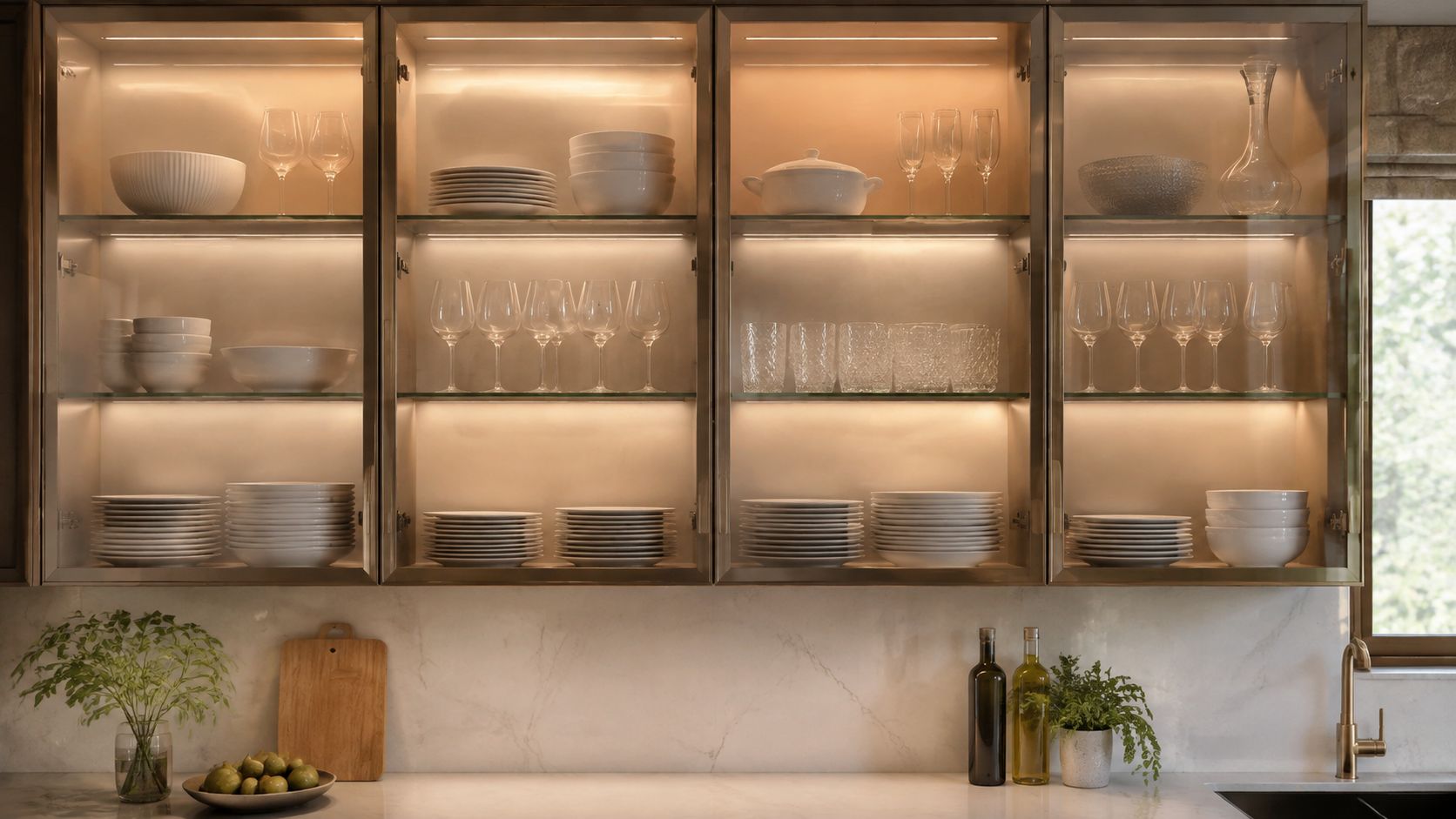
Adjustable shelves determine whether the cabinet fits your actual collection. Set wider clearance for tall platters, tighter spacing for stacked plates, and a separate level for glasses. Check the cabinet's internal width and shelf depth before ordering, especially if the unit sits above a counter or beside another door. Shelves that are too deep can hide smaller pieces and make retrieval awkward.
Use this storage for attractive items that are handled regularly. Matching serving sets, consistent dishware colours, and a simple arrangement keep the display controlled. Random containers, chipped pieces, and overcrowded shelves make the glass reveal clutter rather than organise it.
Plan the cabinet around the problem it needs to solve:
Put display units near eye level. Items are easier to identify, and the cabinet contributes to the kitchen's visual finish.
Match shelf spacing to the contents. Avoid wasted vertical space while leaving enough clearance to lift plates and glasses safely.
Keep frequently used pieces within easy reach. Reserve higher shelves for lighter or occasional items.
Add internal lighting after organising the shelves. Lighting improves visibility, but it also makes disorder more noticeable.
Coordinate the frame with nearby cabinetry. The glass door should look integrated, not like a separate display case.
Choose finishes that tolerate humidity. The frame, edge details, and shelf supports need regular wiping and should resist moisture-related wear.
For material and finish choices, Interiors by DeX's modular kitchen material guidance helps compare options relevant to the frame, shelf support, and surrounding cabinetry. Display storage works best when its construction suits both the kitchen's workflow and its maintenance conditions.
Kitchen Cabinet Storage: 8 Solutions Compared
Item | Implementation Complexity 🔄 | Resource Requirements ⚡ | Expected Outcomes 📊⭐ | Ideal Use Cases 💡 | Key Advantages ⭐ |
|---|---|---|---|---|---|
Pull-Out Drawer Organizers and Baskets | Medium 🔄: precise measurement & glide fitting | Medium ⚡: quality glides, baskets; moderate cost | High 📊⭐: greatly improved access & usable space | Compact modular kitchens, pantry drawers in apartments | Maximises drawer capacity, faster retrieval |
Corner Cabinet Carousels and Lazy Susans | Medium 🔄: alignment and sufficient depth needed | Medium–High ⚡: rotating bearings, custom sizing | High 📊⭐: converts dead corner space into usable storage | Lower corner cabinets in small kitchens or retrofits | Smooth access to deep corner items; reduces reaching |
Vertical Shelf Dividers and Stackable Racks | Low 🔄: simple placement or adjustable fitting | Low ⚡: low-cost dividers/racks, minimal hardware | Medium 📊⭐: better vertical organisation, less toppling | Baking sheets, cutting boards, platters in deep shelves | Affordable vertical use of space; tool-free install |
Deep Drawer Organizers with Tiered Tray Systems | Medium–High 🔄: multi-tier configuration & sturdy supports | High ⚡: tiered trays, durable materials; higher cost | High 📊⭐: full visibility in deep drawers; multi-level storage | Island drawers, large modular kitchens, villas | Maximises deep-drawer capacity; accessible layered storage |
Modular Drawer Dividers and Customisable Inserts | Low 🔄: easy reconfiguration, tool-free | Low ⚡: inexpensive materials (bamboo/plastic/wood) | High 📊⭐: organised compartments, quick retrieval | Wide/deep drawers for utensils, gadgets, linens | Flexible, customisable compartments; cost-effective |
Spice Racks and Condiment Organizers | Low–Medium 🔄: install pull-outs or wall/door mounts | Low–Medium ⚡: tiered shelves, containers; moderate cost | High 📊⭐: immediate access, reduces duplicate purchases | Spice-heavy Indian kitchens, eye-level cooking zones | Clear visibility of spices; improves cooking workflow |
Under-Cabinet Hooks and Hanging Rails | Low 🔄: straightforward mounting under cabinets | Low ⚡: rails/hooks; minimal installation cost | Medium 📊⭐: frees cabinet interior, easy access to daily items | Open kitchens, mugs, towels, small utensils | Frees shelf space; decorative and instantly accessible |
Glass-Fronted Cabinet Doors with Adjustable Shelving | Medium–High 🔄: careful fitting, optional lighting | High ⚡: tempered glass, framing, LED lighting | High 📊⭐: strong visual impact; encourages organisation | Premium kitchens, display storage, entertaining areas | Showcases dishware, increases perceived space and aesthetics |
Choose Storage by Workflow, Not Appearance
The right storage solutions kitchen cabinets use is the one that solves the cabinet problem in front of you. Pull-outs and carousels work best for hard-to-reach zones, because they bring contents forward instead of forcing you to dig. Vertical dividers and tiered trays are better for flat items and deep drawers, because they stop stacks from collapsing into clutter. Spice organisers belong near the cooking zone, where daily-use ingredients need fast access, while glass-front cabinets and hanging rails make sense only when visible storage fits the household's habits and the room's overall look.
The best planning decision is to map the cabinet dimensions first, then list what you store by frequency, weight, and shape. That matters in Chennai especially, because humidity affects hardware, drawer movement, and material choice, so stainless glides, moisture-aware inserts, and sensible ventilation are not extras, they're part of a working kitchen. Standard Indian cabinet sizes and reach zones give you a practical starting point, but the answer comes from how your household cooks, stores groceries, and moves through the kitchen each day cabinet dimensions, storage reach planning.
For new builds, renovations, or full modular upgrades, a workflow-based plan is usually better than buying accessories one by one. That's where a Chennai-focused team such as Interiors by DeX can help, because it covers modular kitchen planning, storage optimisation, accessory integration, and execution as part of one residential interior process. If you want a kitchen that works hard in daily use, start with the cabinet map, then build the storage system around it.
If you're planning a new kitchen or renovating an old one, Interiors by DeX can help you map cabinet sizes, storage access, and accessory placement around how you cook. Their modular kitchen planning and storage optimisation services are a practical fit if you want the cabinets to work better every day, not just look finished on handover.