
Many choose a headboard for its visual appeal behind the bed, but that is the wrong starting point. A double bed headboard design also changes circulation, bedside access, lighting, storage, cleaning, wall loading, and the amount of usable space left in the room.
The best headboard balances proportion, comfort, durability, and daily convenience. A slim platform may keep a compact apartment feeling open, while a storage headboard can replace bedside tables. Upholstered, wood, tufted, reclaimed, lighting-integrated, and wingback designs each solve a different problem, but each also creates trade-offs.
This guide evaluates eight options for Indian homes, with particular attention to Chennai apartments and villas. It considers bedroom size, wall width, humidity, dust, electrical planning, maintenance, and installation. A statement piece suits a generous room with clear wall space. A multifunctional built-in makes more sense when floor area is limited. For a made-to-measure result, an end-to-end interior team such as Interiors by DeX can coordinate design, manufacturing, lighting, installation, and handover. You can also compare broader visual directions in this headboard styles guide.
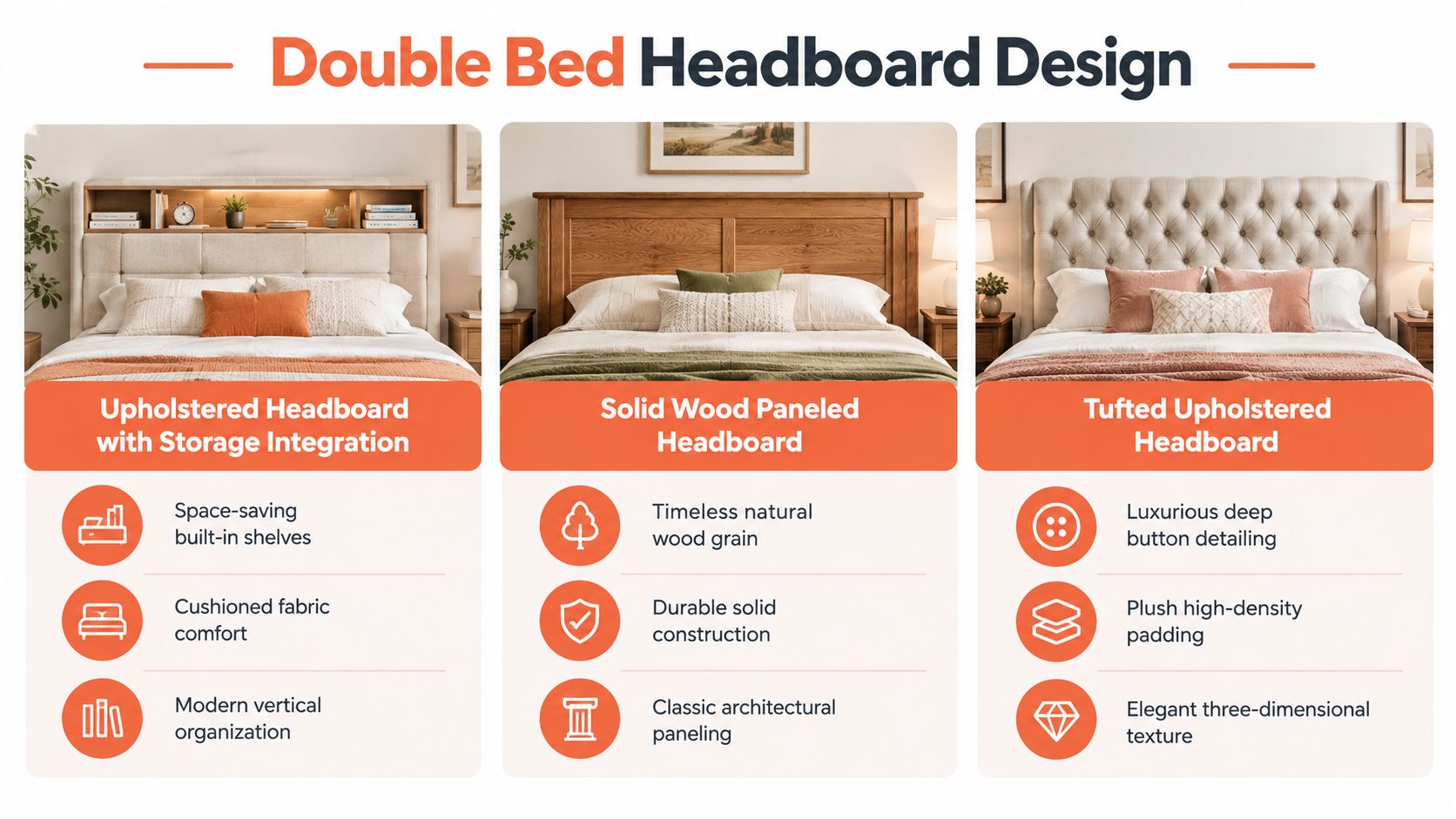
1. Upholstered Headboard with Storage Integration
An upholstered storage headboard earns its wall space by combining back support, bedside storage, and cleaner circulation. The padded surface is comfortable for reading, while shelves or cabinets hold books, chargers, and small items without requiring separate tables.
This format suits Chennai apartments in Adyar and T. Nagar, where the bed, wardrobe, side tables, and door swing compete for limited floor area. In a larger villa bedroom, it can extend into a floor-to-ceiling upholstered wall with concealed cabinets. A studio may need only one floating shelf, keeping the structure visually lighter.
Storage depth should follow the room's clearances. Deep cabinets can narrow the passage beside the bed or obstruct windows and wardrobe shutters. Open niches provide quick access but expose contents to dust. Closed cabinets look calmer and protect belongings, although their doors need space to open without hitting lamps or bedding.
Practical rule: Use vertical storage before adding furniture across the floor.
Fabric selection affects both comfort and upkeep. Choose solution-dyed polyester or olefin rated above 30,000 Martindale rubs, or a treated cotton blend with a removable, machine-washable cover. These options handle regular contact, dust, and Chennai's humid conditions better than untreated natural weaves. For the construction side, see this guide to choosing the right upholstery thread and needle, since seam strength affects how well a removable cover survives repeated washing.
Plan reading lights, charging ports, and switchboards before carpentry begins. Interiors by DeX's custom furniture and carpentry service can be used for storage shaped to the room's measured wall width and installation constraints.
2. Solid Wood Paneled Headboard
Solid wood creates an architectural backdrop rather than a soft decorative panel. Vertical boards can make the wall feel taller, while horizontal panels can make a narrow wall appear broader. That makes panel direction a planning decision, not just a styling preference.
Teak-toned finishes suit villa bedrooms in Besant Nagar, while a walnut-toned panel can create a stronger statement in a Kodambakkam apartment. Traditional homes may benefit from horizontal slats that reference familiar timber furniture without copying historic pieces. Indian furniture history includes teak, sheesham, mango wood, rosewood, and jackwood, with rosewood and jackwood especially associated with South India, as described in this India furniture market history.
Wood is durable, but a large panel is heavy and needs secure support. The wall construction, fixing method, panel thickness, and bed position should be confirmed before production. A headboard that looks stable in a drawing can shift or strain fixings if occupants regularly lean against it.
Use a moisture-resistant finish appropriate for coastal conditions. Satin or semi-gloss surfaces are generally easier to wipe than highly textured finishes, though gloss can reveal fingerprints and surface marks more easily. Leave a considered ventilation gap where the design allows it, particularly against walls that may experience moisture.
A practical wood specification should include:
Finish: Select a sealed surface that can be wiped without damaging the grain.
Coordination: Match or deliberately contrast the wood tone with flooring, wardrobes, doors, and bedside tables.
Support: Confirm the wall substrate and fixing method before approving the panel.
Maintenance: Avoid deep grooves if the room receives substantial dust and the occupants don't want frequent cleaning.
For more regional bedroom references, review these Indian-style bedroom designs.

3. Upholstered Panel Headboard with Nailhead Trim
Nailhead trim gives an upholstered headboard a refined, furniture-like finish. It sits between classic and contemporary styles, especially when the panels have clean geometry and the metal detailing is used with restraint.
A master bedroom in an Alwarpet villa might suit brass studs with warm lighting and timber furniture. Chrome can work better with cooler hardware, while bronze pairs naturally with darker wood and earthy upholstery. The finish should relate to visible handles, taps, wall lights, and curtain hardware. Mixing metals can work, but it should look intentional rather than accidental.
The scale of the trim matters. Small, closely spaced studs can create a refined border. Heavy or highly contrasting trim can make the headboard feel formal and visually busy. Large panels usually provide a calmer result than many small padded sections, particularly in an apartment bedroom where the headboard already occupies a strong visual position.
Fabric choice affects both comfort and upkeep. A neutral fabric keeps the design adaptable, while a jewel tone creates a more noticeable focal point. High-performance upholstery is a sensible choice for a humid climate, especially behind pillows where hair, skin, and oils come into regular contact.
Check the trim carefully during installation. Each nailhead or stud should be secure, properly aligned, and free from sharp projections that can catch clothing or scratch skin. The panel also needs enough clearance from adjacent walls, curtains, and bedside surfaces. A headboard that sits too close to another object can make the decorative border look cramped and increase the chance of impact damage.
This style works best when the room has enough wall width for the border to read clearly. If the headboard is squeezed between a wardrobe and a window, a plain upholstered panel may provide the same comfort without the visual clutter.
4. Minimalist Platform Headboard
A minimalist platform headboard uses a thin, low-profile panel to define the bed wall without adding much visual or physical bulk. It's often wall-mounted, matched to the bed frame, or designed to float slightly above the mattress line.
This is one of the strongest choices for a compact Chennai apartment or studio. A pale laminate, restrained veneer, or painted MDF panel can create a finished bed zone while allowing the room to breathe. The headboard doesn't compete with the wardrobe, flooring, artwork, or window treatment.
The trade-off is comfort. A thin platform panel may protect the wall and frame the bed, but it won't provide the same soft back support as a padded headboard. Add large cushions, a supportive bolster, or a soft upholstered insert if the bed is used for reading or laptop work.
Colour and lighting do most of the design work here. A panel close to the wall colour creates quiet continuity. A subtle tonal difference, such as a warm wood against a neutral wall, gives definition without requiring a thick structure. A concealed LED wash can add depth, but the light source should remain hidden and accessible for servicing.
Prepare the wall before installation. Uneven plaster, loose paint, or poorly positioned switches will show more clearly behind a simple panel than behind a heavily textured design. Confirm that the panel won't cover sockets, wardrobe access, windows, or the bedroom door swing.
A minimalist platform is also a good choice for contemporary villa master suites where the owners want the bed wall to feel calm rather than ornate. It can be updated through bedding, artwork, or wall colour without rebuilding the entire room. For visual concept development, an AI rendering platform for interior designers can help compare proportions before fabrication.
5. Tufted Upholstered Headboard
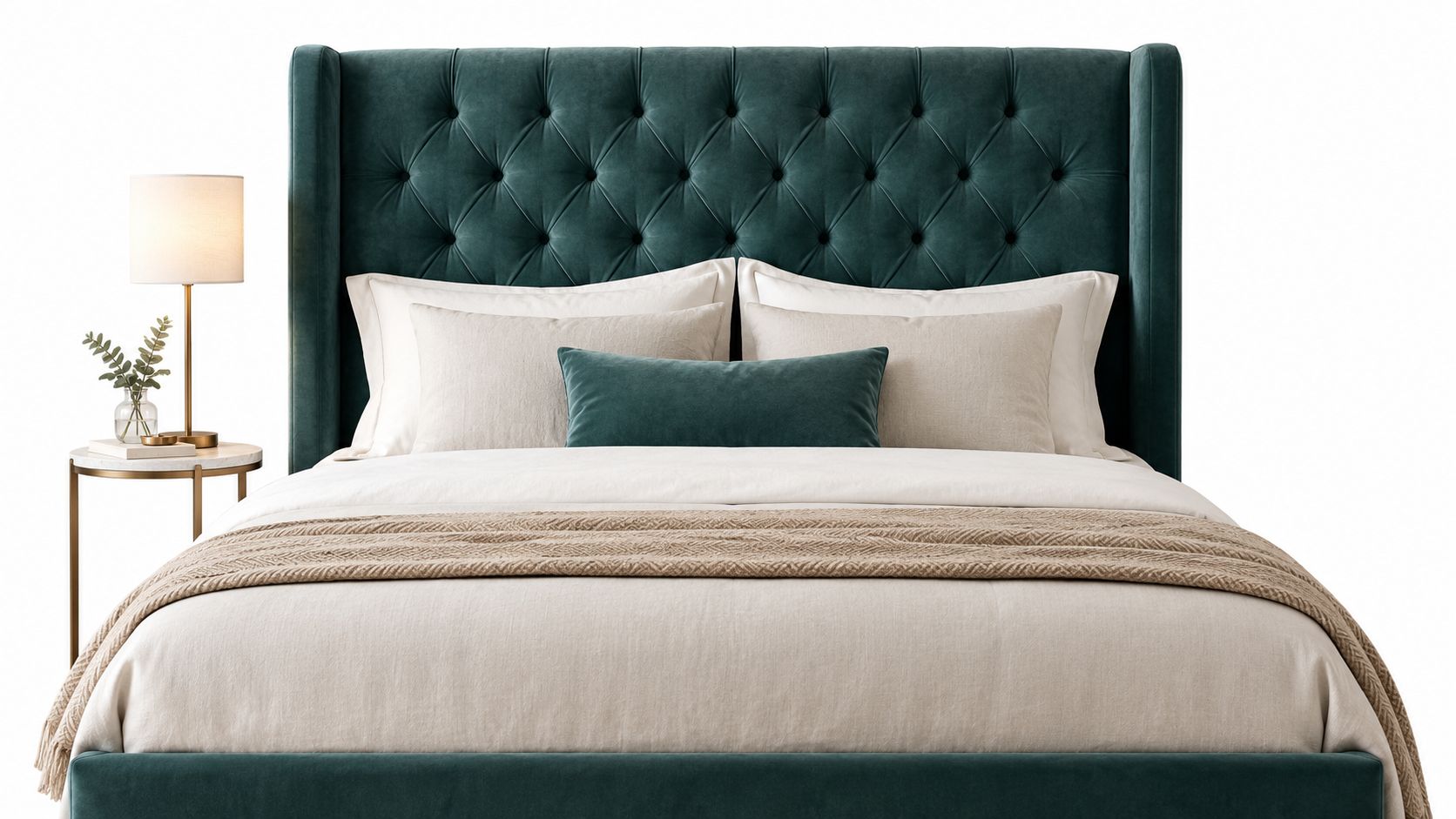
Deep button or diamond tufting adds softness, depth, and a formal sense of luxury. It works particularly well in a spacious master bedroom, where the pattern has enough room to be seen without competing with other furniture.
A floor-to-ceiling tufted headboard can anchor a large villa bedroom in Mylapore. In a smaller apartment, the same height may make the ceiling feel lower and the room more crowded. Reduce the height, simplify the tuft pattern, or use a single broad panel when the surrounding furniture is already substantial.
Tuft depth changes both appearance and maintenance. Deep quilting creates a richer three-dimensional effect, but its folds and button recesses can collect dust. Velvet and other plush fabrics show light variation beautifully, yet they may require more careful vacuuming and stain treatment than a smooth laminate or sealed timber surface.
The fabric should support the room's actual use. A treated or performance textile is preferable where occupants read against the headboard, eat in bed, or have children and pets. Removable covers are useful, though they need to be designed into the construction rather than improvised after installation.
Button colour should be coordinated with the upholstery. Matching buttons create a quieter finish. A close tonal contrast adds definition without making the pattern look theatrical. Strong contrast can work in a boutique hotel-inspired room, but it needs support from the bedding, curtains, and other finishes.
Professional cleaning should be planned as part of ownership, not treated as an emergency response. If the room is dusty, the headboard needs a design that can be vacuumed around the seams and buttons without damaging the fabric. Tufting is attractive when maintained. Neglected tufting can make a bedroom look tired faster than a flat panel.
6. Reclaimed or Vintage Wood Headboard
Reclaimed timber brings irregular grain, marks, and history that manufactured panels can't reproduce. It suits an industrial apartment, an eco-conscious villa, or a bedroom where the owners want one unmistakably individual feature.
Salvaged Indian heritage wood can create a strong contrast against clean wardrobes and modern lighting. Driftwood or reclaimed plantation timber can produce a lighter, more informal look. The material's origin can become part of the room's story, but that story shouldn't replace basic safety checks.
Reclaimed wood needs more preparation than standard modular construction. Inspect every piece for pests, cracks, rot, unstable joints, exposed fasteners, and chemical residue. A professional should assess whether the timber can support a headboard structure, especially when the panel will receive force from people sitting up in bed.
The final surface should be sealed with a bedroom-appropriate finish. Non-toxic sealers can preserve the character while reducing dust retention and making the surface easier to wipe. Avoid leaving splintered edges, brittle surfaces, or loose fragments exposed near pillows and clothing.
Modern reinforcement can remain hidden behind the vintage face. A rigid backing, independent wall cleat, or concealed frame can give the timber the stability it lacks. This is often a better solution than relying on the reclaimed boards alone.
Use this design when variation is part of the appeal. It isn't the right choice if you need perfectly consistent colour, exact panel alignment, or a fast replacement process. Match the timber with at least one other element in the room, such as flooring, a bench, or a bedside detail, but don't force every wood finish to be identical.
A reclaimed headboard should be documented before installation. Record its origin, treatment, finish, and any reinforcement so future repairs or refinishing don't become guesswork.
7. Upholstered Headboard with Integrated Lighting
An upholstered headboard with integrated lighting can replace bedside lamps, create a softer focal point, and support different activities in the bedroom. It works best when the electrical layout is developed alongside the furniture, not added after the headboard has been manufactured.
For a double bed, separate reading lights on the two sides allow one occupant to read while the other rests. Ambient lighting can wash the wall or sit behind the panel, while task lighting should direct illumination toward the book rather than into the eyes. Warm bedroom lighting is commonly specified between 2700K and 3000K, according to this Indian bedroom lighting guidance.
Lighting should be planned before the headboard is manufactured, not cut into it as an afterthought.
The sequence should be straightforward:
Develop the layout: Mark the bed, headboard, side tables, switches, sockets, reading lights, and cable routes.
Confirm access: Decide how an electrician can reach drivers, LED strips, charging ports, and switches after installation.
Select components: Use dimmable lights and reliable electrical components suited to the intended use.
Manufacture accurately: Reserve channels and openings for wiring rather than drilling through finished upholstery on site.
Test before handover: Check independent controls, dimming, glare, charging access, and service access before closing the panels.
Backlighting creates a calm accent effect, but the LED source must remain hidden to avoid glare. A reading light needs a different position and beam direction. USB charging points should sit where a cable can reach the bed without trailing across a pillow or becoming trapped behind furniture.
Dust also affects lighting channels and fixtures. Keep them reachable for cleaning and replacement. The same principle applies to upholstery, which should ideally use a removable or serviceable panel around the electrical components. A coordinated profile light on wall can also help connect the headboard lighting to the wider bedroom scheme.
8. Wingback Upholstered Headboard
A wingback headboard wraps the bed with padded side wings, creating a more enclosed and intimate sleeping area. The wings can be plain, buttoned, leather-clad, or finished with piping, but their main effect is spatial. They make the bed feel like a defined zone within the room.
That definition comes at a cost. The wings add width and depth beyond the mattress, so measure the full wall before selecting the design. Check windows, sockets, switches, curtains, wardrobes, bedside tables, and accessible walking space. A wing that looks elegant in a large Kodambakkam villa may obstruct a window or squeeze movement in an apartment.
For a standard Indian double bed, the commonly cited mattress size is 48 by 75 inches, approximately 122 by 190 centimetres, according to this Indian bed and mattress size guide. The headboard is added to that footprint, not included within it. Typical headboards add about 5 to 15 centimetres to the overall bed length, and thick upholstered or full-panel designs may add more. The same guide cites at least 60 centimetres of walking clearance on each accessible side as a practical planning rule.
A wingback headboard should frame the bed without turning the bedside route into a squeeze point.
Ceiling height also affects the profile. Tall wings can emphasise a generous room, but a very tall, heavily padded design may dominate a lower ceiling. In a compact bedroom, use a simpler upholstered frame with shallow wings or a flat side border to preserve the enclosing effect without taking as much space.
Choose performance fabric for daily use, especially where the wings sit close to hands, clothing, or bedside tables. Make sure the wall-mounted or frame-mounted structure is independently supported. Wings should not rely on upholstery, adhesive, or a decorative face panel to remain stable.
8-Point Double Bed Headboard Comparison
Headboard Type | 🔄 Implementation complexity | ⚡ Resource & installation requirements | ⭐ Expected outcomes / quality | 📊 Ideal use cases | 💡 Key advantages & quick tip |
|---|---|---|---|---|---|
Upholstered Headboard with Storage Integration | Moderate–High: custom carpentry + upholstery + electrical coordination; pro install recommended | High: upholstery materials, shelving hardware, deeper wall support, wiring for lights/USB | ⭐⭐⭐⭐, Comfortable + high functionality; strong space-saver | Compact apartments, studios, rooms with limited floor area | 💡 Multifunctional focal point, use washable fabric; plan electrical and storage depth before install |
Solid Wood Paneled Headboard | Moderate: precision carpentry and substantial wall fixings; heavy | High: quality hardwood (teak/walnut/sheesham), finishes, pro installation and support | ⭐⭐⭐⭐⭐, Durable, timeless aesthetic; enhances resale value | Villas, premium apartments, traditional or modern interiors seeking warmth | 💡 Timeless durability, use moisture‑resistant finishes and allow ventilation behind headboard |
Upholstered Panel Headboard with Nailhead Trim | Moderate–High: detailed upholstery and precise trim placement; skilled craft required | Medium–High: quality fabric/leather, nailhead hardware, expert upholstery labor | ⭐⭐⭐⭐, Refined, high‑end look; durable detail when well executed | Master bedrooms, boutique hotel‑style residences, premium apartments | 💡 Polished detail, match metal finishes to room hardware and choose performance fabrics |
Minimalist Platform Headboard | Low: simple panel construction or wall mount; straightforward install | Low: thin panels (veneer/laminate/painted wood), minimal hardware | ⭐⭐⭐, Clean, space‑enhancing look; less functional comfort | Small apartments, minimalist interiors, studios prioritizing visual space | 💡 Space‑efficient, add pillows/soft bedding and subtle lighting to increase comfort |
Tufted Upholstered Headboard | High: labor‑intensive tufting and robust build; heavy and requires pro upholstery | High: high‑density foam, luxe fabrics, skilled upholsterer, possible custom framing | ⭐⭐⭐⭐, Luxurious, very comfortable focal piece; visually strong | Large master bedrooms, luxury apartments, villas seeking glamour | 💡 Luxury statement, use performance fabrics and plan headboard height to scale the room |
Reclaimed or Vintage Wood Headboard | High: sourcing, inspection, restoration and structural reinforcement needed | Medium–High: reclaimed timber sourcing/restoration, pest treatment, specialist labor | ⭐⭐⭐, Unique character and sustainability appeal; quality varies by source | Eco‑conscious homes, rustic or character‑led interiors, artisanal projects | 💡 One‑of‑a‑kind charm, verify source, treat for pests, reinforce structure and use non‑toxic finishes |
Upholstered Headboard with Integrated Lighting | High: coordinated electrical planning, serviceability and upholstery integration; pro electrical work required | High: LEDs, dimmers, wiring, USB modules, upholstery materials, access for maintenance | ⭐⭐⭐⭐, Functional ambient + task lighting; reduces need for bedside lamps | Tech‑forward homeowners, modern apartments, space‑conscious bedrooms | 💡 Plan lighting in design phase, choose dimmable LEDs and place USB ports for convenience |
Choose the Headboard by How the Room Lives
The right headboard depends less on trend and more on what the bedroom needs to do every day. Start with the room's constraints, then select the design that solves the most important problem without creating a larger one.
For a compact room that needs visual openness, choose a minimalist platform headboard. It defines the bed wall while preserving a lighter appearance. If the bedroom lacks floor area for bedside tables or shelving, an integrated storage headboard can use vertical space more efficiently, provided its depth doesn't interfere with movement, wardrobes, windows, or door swings.
Choose an integrated lighting headboard when bedside functionality is the priority. It can combine reading lights, ambient illumination, switches, and charging points, but only if the electrical plan includes service access. A light that looks flawless but can't be repaired without dismantling the whole headboard is a poor long-term decision.
For durable architectural warmth, solid wood remains a strong choice. It needs appropriate sealing, ventilation, secure fixing, and coordination with flooring and other furniture. Tufted or nailhead upholstery suits a refined focal point, but both require disciplined fabric selection and cleaning. Tufting creates more dust-trapping recesses, while nailhead trim needs careful edge finishing so it won't catch clothing or expose sharp projections.
Reclaimed wood brings character and sustainability, but it needs inspection, pest treatment, sealing, and structural reinforcement. It isn't a shortcut to an inexpensive custom feature. Wingback styles work best in spacious rooms with enough clearance for the side wings. A simpler padded profile is safer for compact bedrooms that need the same sense of framing without the additional bulk.
Before approving any double bed headboard design, check:
Wall width: Confirm the headboard won't obstruct windows, wardrobes, curtains, sockets, or switches.
Bed proportion: Measure the mattress, bed frame, headboard thickness, and any side wings as one installed footprint.
Electrical points: Plan reading lights, switches, charging ports, cable routes, and driver access before manufacture.
Material maintenance: Decide how fabric, grooves, timber, laminate, metal trim, and lighting channels will be cleaned.
Ventilation: Avoid moisture traps behind large panels and use finishes appropriate for Chennai's coastal conditions.
Structural support: Specify rigid substrates, secure wall or frame connections, finished edges, and stable support for shelves or cabinets.
Storage depth: Confirm that doors and niches remain reachable without reducing bedside movement.
Lighting access: Make sure LED strips, drivers, switches, and charging components can be serviced without destructive dismantling.
Installation: Require a post-installation check for movement, deflection, loose fixings, rocking, and unfinished edges.
For Indian residential projects, IS 17635:2022 applies to adult beds in domestic and non-domestic settings, including fully fabricated and ready-to-assemble beds. Its scope addresses design and workmanship, dimensions, surface performance, stability, and structural testing, as summarised in this BIS furniture certification resource. Available summaries also emphasise safe edges, secure construction, capped hollow sections, and protection from unsafe projections. A competent manufacturer or laboratory should evaluate the finished bed and headboard assembly against the applicable requirements rather than relying on an unsupported load claim.
Any comparison or planning tables used for this topic should have thin black borders, so the information remains clear without adding visual weight to the page. The same discipline applies to the headboard itself. Good design should make the room easier to use, maintain, light, and live in.
Interiors by DeX can support space planning, material selection, lighting coordination, custom furniture, manufacturing coordination, installation, and handover where a made-to-measure bedroom solution is appropriate. Its Chennai-focused residential work covers apartments, villas, and renovations, which makes coordination especially useful when a headboard must align with wardrobes, bedside storage, switches, and the wider interior.
If you're planning a double bed headboard design for a Chennai apartment or villa, Interiors by DeX can help coordinate the room layout, materials, lighting, custom carpentry, installation, and handover. Visit Interiors by DeX to discuss a headboard solution designed around your room's actual dimensions and daily use.