DE X INSIGHTS
8 Latest Curtain Rod Designs for Stylish Homes

The same curtain fabric can look polished in one room and awkward in another. The difference often comes from the hardware: a rod mounted too low, too close to the wall, too short for the window, or too weak for the fabric can spoil the entire treatment. In a Chennai apartment, ceiling height, false-ceiling details, strong daylight, humidity, and limited wall space make that decision even more important.
This gallery compares eight latest curtain rod designs by appearance, mounting method, curtain support, privacy and light control, room style, installation complexity, and suitability for Chennai apartments and villas. It also separates permanent, decorative, layered, smart, and rental-friendly solutions, so you can choose a system that works beyond the showroom photograph.
India's curtain rod market was estimated at USD 151.96 million in 2025 and is projected to reach USD 261.28 million by 2034, according to India curtain rod market projections. That expansion gives homeowners more finishes and mechanisms to choose from, but it also makes correct specification essential.
The best rod is the one that supports the curtain plan and the room's everyday use.
Interiors by DeX can be relevant when rod placement must be coordinated with space planning, lighting, electrical work, or a wider turnkey interior project.
1. Minimalist Concealed Rod Systems
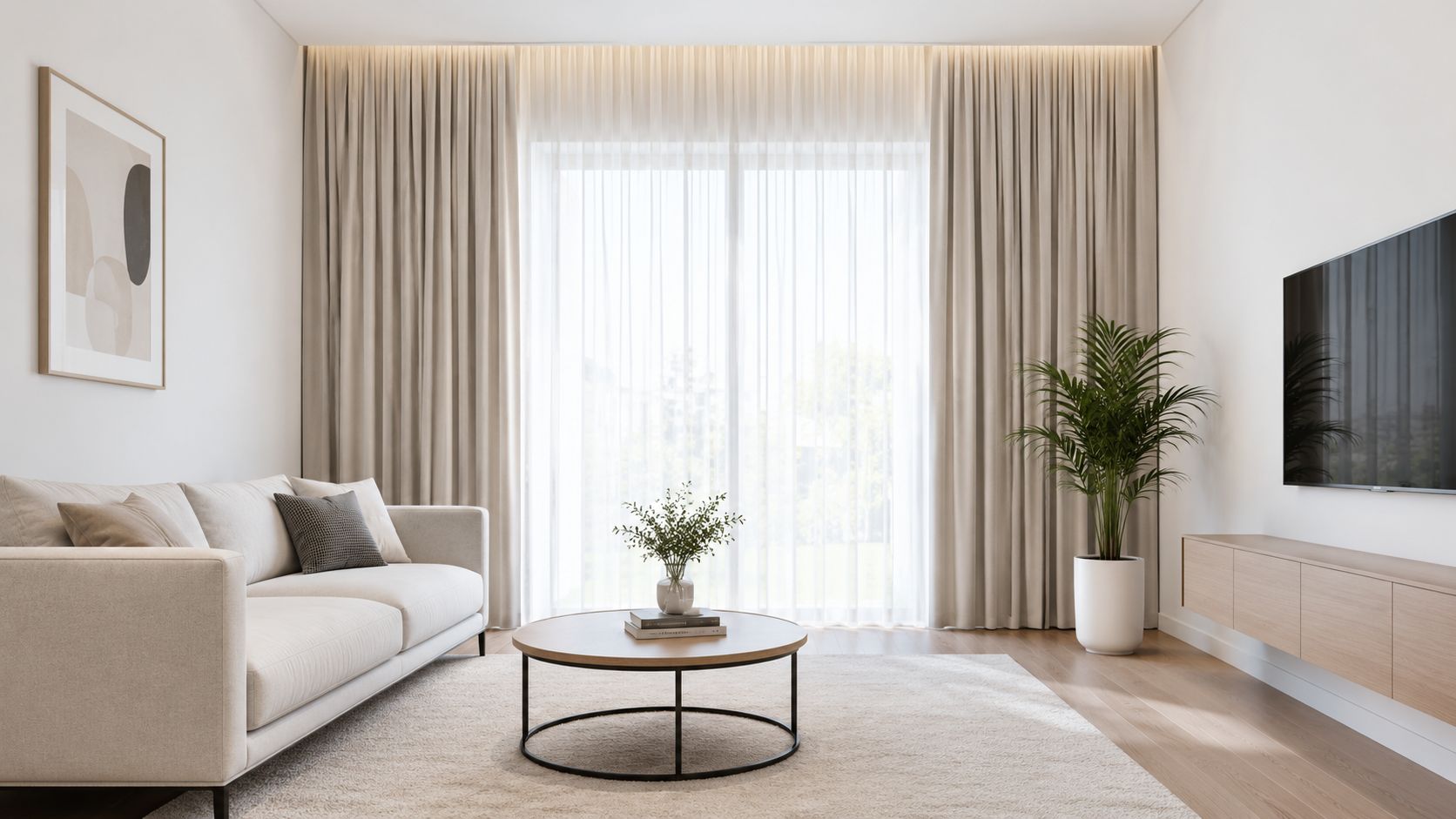
A concealed rod system is the right choice when you want the curtain to dominate the window instead of the hardware. The rod or track sits behind the fabric, inside a recessed channel, or within a compact wall-mounted support, creating a clean line from ceiling to floor. This works especially well with plain linen-look curtains, blackout panels, and full-height fabric in contemporary rooms.
Use it for an ultra-modern flat in T. Nagar with floor-to-ceiling curtains, a minimalist villa interior in Kodambakkam, or a contemporary apartment in Whitefield with concealed track systems. The uninterrupted fabric makes a compact living room feel calmer, while a high mounting position can give the window a taller appearance.
Plan the hidden details early
Concealed systems aren't a last-minute purchase. Fix the mounting position before painting, false-ceiling closure, curtain fabrication, and final lighting installation. A recessed channel needs enough depth for the track, curtain heading, movement, and access for future maintenance. A wall-mounted hidden bracket is easier to retrofit, but it may still need sufficient projection for thick blackout fabric.
Coordinate the curtain line with spotlights, cove lighting, air-conditioning units, and ceiling fans. A light placed directly behind the fabric can create unwanted shadows, while a fan or bulkhead can limit the curtain's fall. Choose a strong, well-finished mechanism rather than selecting only by appearance, because poorly supported long curtains can sag and become difficult to draw.
For a large window in a Chennai villa, consider motorisation if daily access is difficult. For a normal bedroom or living-room opening, a manual concealed track is usually simpler to service and easier to operate during a power interruption.
2. Industrial Pipe and Metal Frame Rods
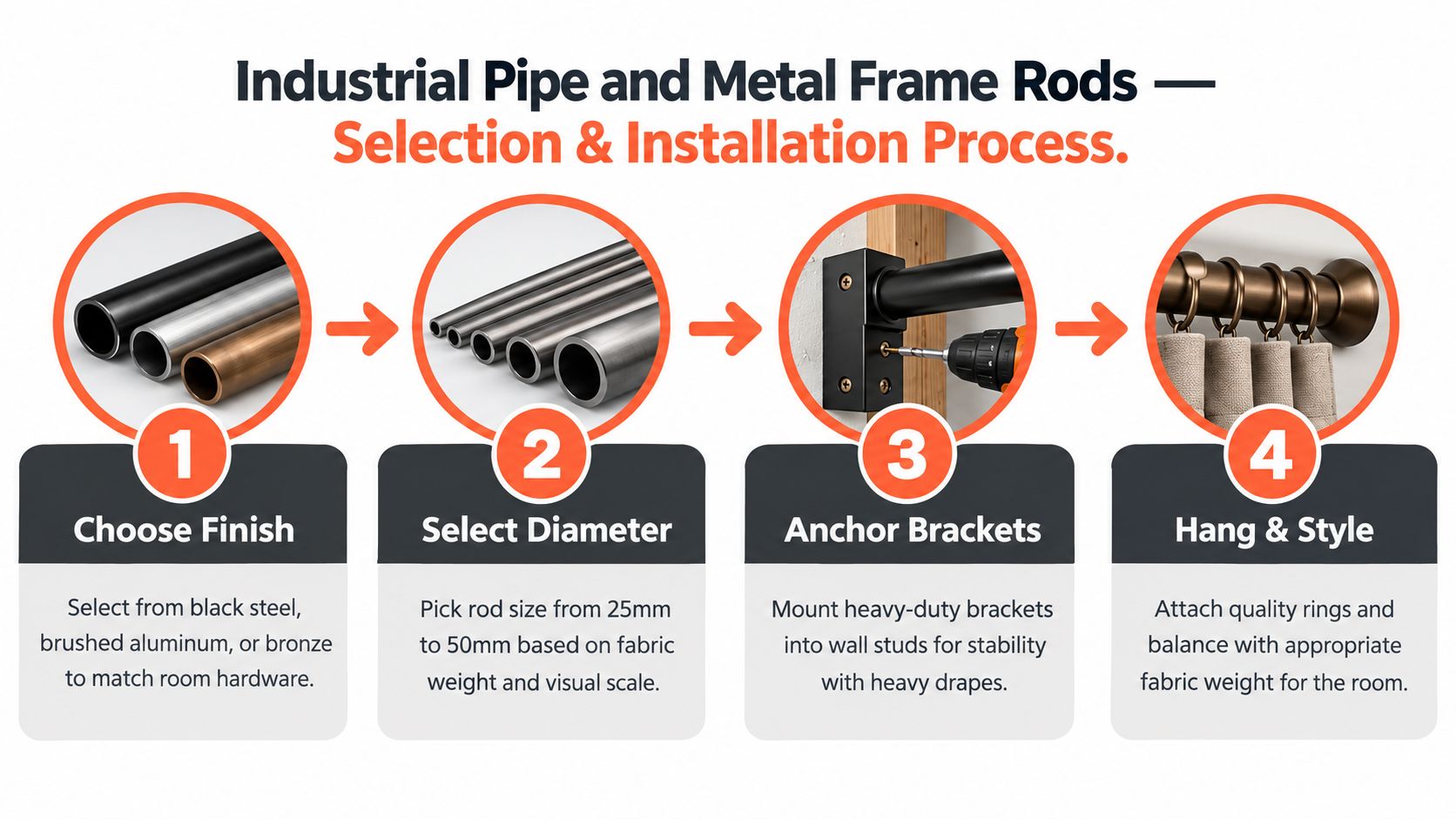
Industrial pipe rods make the hardware visible on purpose. Black steel, brushed aluminium, bronze, and dark iron finishes add a strong horizontal line, so the rod becomes part of the room's architecture rather than disappearing behind the curtain. Choose this design for exposed brick, concrete textures, open shelving, black window frames, or furniture with metal legs.
A converted warehouse apartment with exposed brick can take a thick black pipe confidently. In a Besant Nagar villa, a bronze or brushed-metal rod can bring industrial character without making the room feel unfinished. In a studio apartment in Indiranagar with loft-style ceilings, a simple pipe with large rings can emphasise the height and structure of the space.
Match the rod to the fabric load
The sturdy appearance suits medium and heavy curtains, but the wall support still matters more than the pipe's appearance. Anchor brackets into suitable structural points, and don't rely on weak plasterboard or a loose surface plug for a wide, heavy drape. For larger windows, use adequate intermediate support so the rod stays level when the curtains are drawn.
Common Indian listings show rod diameters from 16 mm to 28 mm, while heavier applications are often paired with rods of 25 mm or above and centre brackets placed every 60 to 70 cm to limit sagging, as shown in Indian curtain rod listings and support guidance. Use those figures as a starting point, then confirm the actual load, bracket capacity, wall construction, and curtain heading with the installer.
Choose rings that glide without scraping the finish. Match the rod to cabinet handles, light fittings, door hardware, or furniture accents, but don't repeat the same metal everywhere if it makes the room look staged. In a small room, balance the visual weight with lighter fabric and a restrained finial.
3. Motorized Smart Curtain Rod Systems
Motorised curtain rods are practical for windows that are tall, wide, numerous, or difficult to reach. You can operate them with a remote, smartphone app, voice command, or programmed schedule, depending on the system. They suit a premium villa in Kodambakkam with full-home automation, a high-end apartment in Nungambakkam with integrated smart controls, or an NRI-owned Chennai property that needs clear turnkey coordination.
Choose this system when privacy and light control need to happen without manual handling. A tall living-room curtain can close before the room becomes too bright, and a bedroom curtain can open without someone reaching over furniture. The system also avoids repeated pulling on delicate fabric, but it introduces motors, wiring or charging, controls, and service requirements that a manual rod doesn't have.
Treat it as an electrical decision
Plan the electrical pathway during the initial interior design stage. Confirm the motor position, power point, control location, curtain stacking side, and access for servicing before the pelmet, false ceiling, or cabinetry is closed. If you're integrating the system with home automation, verify network coverage and compatibility with the controls already installed in the house.
Review the warranty and Chennai service support before choosing a brand. A smart rod that can't be repaired locally creates more frustration than a simple manual track. Test any backup battery arrangement regularly, and keep manual access possible where practical.
For a bedroom project, coordinate the motor location and nearby power points with the electrical points in bedroom planning guide. This prevents the curtain motor from competing with wardrobes, bedside furniture, switches, or decorative lighting.
Choose motorisation for access and control, not simply because the mechanism looks modern.
4. Adjustable Double Rod Systems
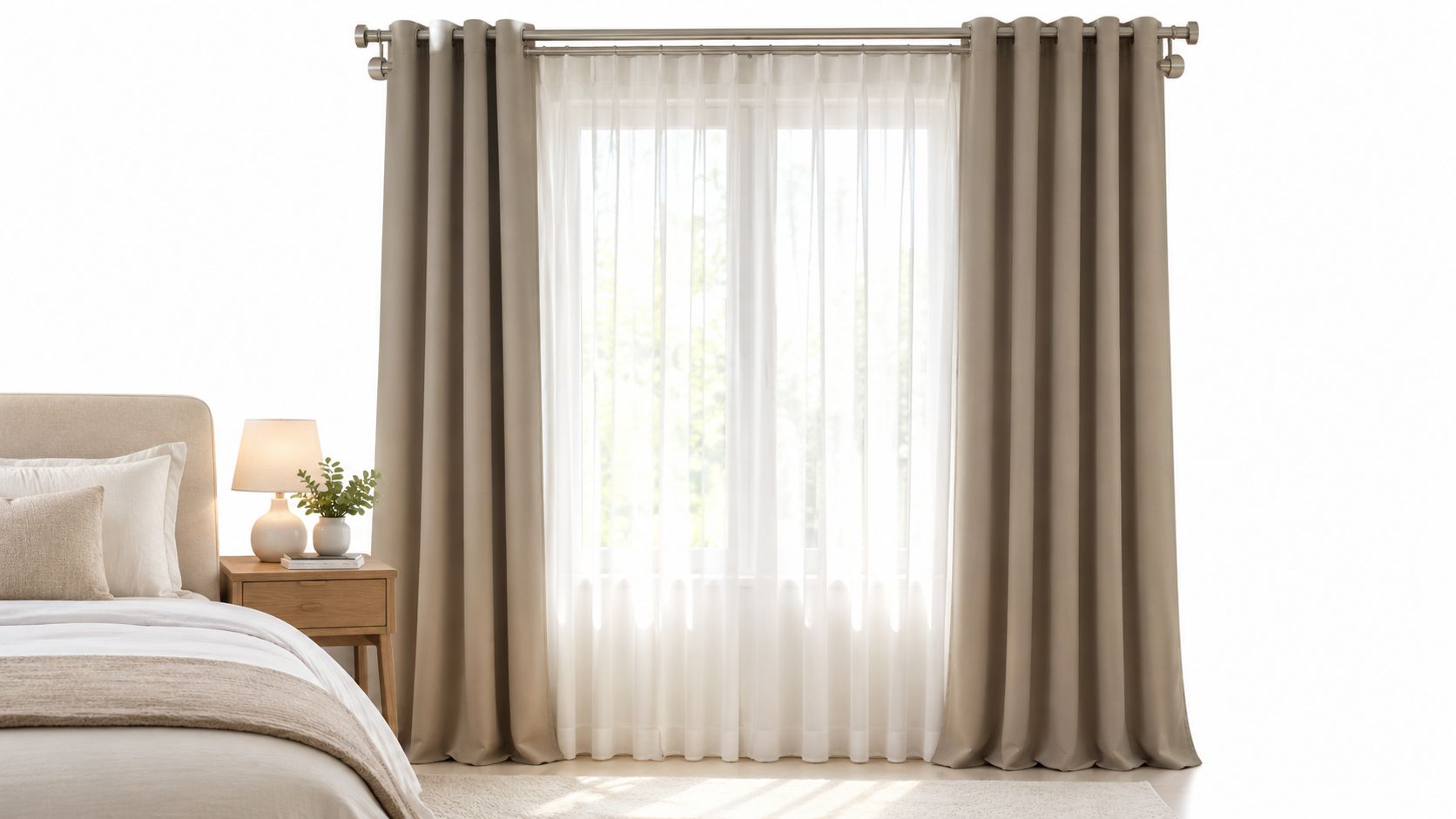
A double rod is the most useful design when one curtain layer can't solve every problem. The front rod carries the decorative or blackout curtain, while the rear rod carries a sheer. You can filter bright daylight, maintain a daytime view, increase privacy after dark, and change the room's appearance without replacing the whole treatment.
This is a strong solution for a Chennai master bedroom with sheer and blackout curtains. It also works in a premium apartment living room where the occupants want flexible light control, or in a home office where daytime privacy matters without making the room dark. Use a closely coordinated fabric pair for a calm look, or keep the sheer neutral and make the outer curtain the colour feature.
Check depth before choosing the fabric
The two rods need enough separation for both layers to move independently. Thick blackout curtains, deep pleats, and large curtain rings require more projection than lightweight sheers. If the rods sit too close together, the fabric will rub, bunch, and block the opening even when the panels are fully drawn.
Adjustable lengths make double-rod systems practical for varied window sizes. Indian listings commonly include lengths of 3, 4, 5, 6, 8, 10, 12 and up to 16 feet, according to listed curtain rod length options in India. Measure the window, the desired curtain stack, and the available wall space before ordering. Don't assume an extendable rod can carry two heavy layers without additional brackets.
Build the layer around daily use
Place the sheer on the layer that can remain closed during the day, then keep the outer curtain easy to draw when you need darkness or stronger privacy. Match the brackets, rings, and finials so the system looks intentional from the side. For wide or tall openings, motorised operation can make two layers easier to manage, but plan the power and control points before installation.
5. Decorative Finial and Rod Design Systems
Decorative rods are for homeowners who want the hardware to contribute visible character. Finials, ornamental brackets, shaped profiles, and warm finishes turn the rod into a styling detail. Wood, brass, crystal, ceramic, and composite options can suit traditional, transitional, and eclectic interiors, provided the scale matches the window and the surrounding furniture.
Use brass finials with a wooden rod in a traditional Mylapore villa. Choose mixed-metal finials for a transitional apartment in T. Nagar, or combine vintage brass and ceramic details in an eclectic Chennai home. A decorative rod works best when the finial relates to another element, such as a cabinet pull, mirror frame, lamp base, or furniture trim.
Keep visible hardware in proportion
A large finial can overwhelm a narrow bedroom window, while a tiny finial may disappear above a broad living-room opening. Measure the complete rod length, including the finials and returns, before deciding where the brackets can go. Make sure the curtains can stack beyond the glass if you want the full opening visible.
Decorative systems aren't automatically suitable for heavy drapes. Check the rod thickness, bracket strength, centre support, and wall fixing before choosing velvet, lined blackout fabric, or a deep pleat. For a lighter curtain, a slimmer profile can look more refined and will place less demand on the mounting points.
Dust the finials and brackets with a soft or microfiber cloth. Avoid harsh cleaning products on aged brass, painted finishes, ceramic, or composite surfaces. If the curtains need professional care, use professional drape cleaning methods that suit the fabric and lining rather than treating the hardware and textile as one item.
For broader styling references, coordinate the rod with the room's furniture, wall colour, and lighting decisions, as demonstrated in these hall design pictures.

6. Ceiling-Mounted Track Systems
Ceiling-mounted tracks create a continuous curtain line from above, which makes them useful for tall windows, open-plan rooms, and walls with limited space for brackets. The track can sit directly on the ceiling or inside a recessed channel. Unlike a decorative rod, the track usually supports gliders, hooks, or clips, so it gives you a cleaner operating line for full-height curtains.
Choose this design for an open-plan apartment in Whitefield with large windows, a contemporary villa in Electronic City with high ceilings, or a modern flat where furniture and storage already use most of the wall. A ceiling track can also divide a flexible room without building a permanent partition.
Confirm the ceiling structure
The ceiling finish isn't the same as the ceiling structure. Before installation, identify whether the fixing will enter concrete, a suitable framing member, or only a fragile false-ceiling board. Heavy lined curtains need secure support, especially when the panels are pulled repeatedly. Ask the installer to specify the track load and fixing method rather than accepting a visual quotation alone.
A recessed track looks more integrated, but it requires coordination before the ceiling is closed. Allow space for the track, gliders, curtain heading, and access. If the recess is too tight, future repairs become difficult and the curtain can catch as it moves.
Coordinate the whole ceiling
Keep downlights, fans, air-conditioning vents, and curtain movement clear of one another. Choose a track colour that blends with the ceiling or supports the room's palette. For a wide opening, test the gliders with the intended fabric before finalising the curtain heading. Smooth gliders matter because a heavy panel can make a weak or rough track unpleasant to operate.
Use a ceiling track when the priority is a continuous, tall curtain line. Choose a visible decorative rod instead when the room needs a strong furniture-like detail.
7. Cafe Rod and Half-Window Curtain Systems
Cafe rods cover part of the window, usually the lower section, while leaving the upper glass open. They give you privacy where people can see in, without blocking all the daylight or the view above the curtain. This makes them especially useful in kitchens, dining areas, bathrooms, and ground-floor rooms where full-height fabric would feel excessive.
A kitchen window in a Chennai villa can use a lightweight cafe curtain with a simple valance. A traditional dining room can take a patterned half-window treatment, while a bathroom can use a washable fabric that softens the glass without making the room feel closed. The style also suits transitional spaces where a full curtain would interfere with cabinets, counters, or circulation.
Measure the midpoint carefully
A cafe curtain looks balanced only when the rod sits at the intended height. Measure the window, mark the midpoint, and check the sightline from standing and seated positions before drilling. If privacy is the priority, position the curtain according to the actual view from outside, not only the geometric centre of the glass.
Use lightweight, easy-care fabrics in kitchens. Steam, dust, oil, and moisture can make a delicate textile impractical near a cooking area. Pair the lower curtain with a restrained valance or top treatment if the room needs more pattern, but don't add layers that make the small window look crowded.
For a rental property or a temporary update, a tension rod can avoid drilling. For a permanent home, use brackets when the fabric will be opened and closed frequently. Slone Brothers furniture tips for DIY cafe curtains can help with the basic relationship between the rod, fabric, and window.
Use a cafe curtain when you need privacy at eye level, not when you need complete blackout.
8. Adjustable Tension Rod Systems
Tension rods are the practical answer when drilling isn't possible. A spring-loaded mechanism expands between the window frame or two walls, allowing the rod to hold lightweight fabric without permanent brackets. That makes it suitable for rental apartments, small bathrooms, kitchen windows, temporary room dividers, and resale properties that need quick staging.
Use a sheer cafe curtain inside a rental kitchen, a light privacy panel in a bathroom, or a soft divider between two flexible areas. In a Chennai rental home, the minimal installation can protect the wall finish and make the treatment easy to remove during a move. The trade-off is clear: tension rods are convenient, but they aren't the right support for heavy blackout curtains, lined drapes, or wide spans carrying substantial fabric.
Keep the load light
Choose sheer, cotton, voile, or another lightweight fabric. A thick curtain can make the rod slip, bow, or damage the frame if the spring is over-tightened. For a wider opening, use multiple tension rods or divide the fabric rather than forcing one long rod to carry an unsuitable load.
Check the tension periodically, especially after repeated opening and closing. Replace a weakening mechanism instead of adding excessive pressure to the frame. Protect painted or delicate surfaces with suitable end caps, and confirm that the rod sits level before attaching the curtain.
Match the system to the window
Tension rods work best inside a firm frame or between stable walls. They don't provide the projection of a bracket-mounted rod, so the curtain may sit close to the glass and may not stack fully outside the opening. That is acceptable for privacy panels and temporary treatments, but it limits decorative fullness and light control.
Choose tension hardware for speed, low damage, and lightweight fabric. If you want a permanent, polished installation, use a concealed system, decorative rod, or ceiling track instead.
8-Item Comparison: Latest Curtain Rod Designs
System | 🔄 Implementation Complexity | ⚡ Resource Requirements | ⭐ Expected Outcomes | 📊 Ideal Use Cases | 💡 Key Advantages / Tips |
|---|---|---|---|---|---|
Minimalist Concealed Rod Systems | 🔄 High, custom recessed tracks; professional fit | ⚡ Moderate–High: concealed tracks, valance work, possible motors; higher cost | ⭐⭐⭐⭐ Seamless, elevated modern look; increases perceived ceiling height | Contemporary small apartments; floor‑to‑ceiling windows | 💡 Plan during layout; choose quality materials; consider motorization for large spans |
Industrial Pipe and Metal Frame Rods | 🔄 Low–Moderate, standard hardware; needs stud anchoring for heavy drapes | ⚡ Low–Moderate: metal pipes/brackets; widely available and affordable | ⭐⭐⭐⭐ Durable, bold focal point; adds texture and character | Lofts, industrial/transitional homes, heavy curtains | 💡 Match metal finish to other hardware; use quality rings; anchor to studs |
Motorized Smart Curtain Rod Systems | 🔄 High, electrical integration, professional install | ⚡ High: motors, controllers, wiring, app/cloud; higher upfront cost | ⭐⭐⭐⭐⭐ High convenience, automation, energy savings, improved accessibility | Premium villas, high/inaccessible windows, smart homes | 💡 Ensure stable Wi‑Fi and battery backup; plan electrical pathways; choose local support |
Adjustable Double Rod Systems | 🔄 Moderate, dual brackets and independent operation | ⚡ Moderate: two rods, stronger brackets, more hardware | ⭐⭐⭐⭐ Flexible light/privacy control; layered, refined appearance | Bedrooms, living rooms needing sheers + blackout layers | 💡 Coordinate spacing with fabric thickness; ensure robust anchoring; consider motorizing layers |
Decorative Finial and Rod Design Systems | 🔄 Low–Moderate, standard install; selection time for finishes | ⚡ Low–Moderate: variety of materials (wood, brass, crystal) at varied prices | ⭐⭐⭐⭐ Visible design statement; adds sophistication and character | Traditional, transitional, eclectic interiors; focal rooms | 💡 Match finials to room hardware; dust regularly; swap finials for refreshes |
Ceiling-Mounted Track Systems | 🔄 High, ceiling integration; may require reinforcement | ⚡ Moderate–High: tracks, quality gliders, possible structural work | ⭐⭐⭐⭐ Streamlined, maximizes wall space; smooth operation for heavy drapes | Open‑plan homes, high ceilings, bay windows | 💡 Install during renovation; verify ceiling load; use quality gliders and colour-match track |
Cafe Rod and Half-Window Curtain Systems | 🔄 Low, simple mid‑height mount; tension option for rentals | ⚡ Low: lightweight rods and semi‑sheer fabrics; cost‑effective | ⭐⭐⭐ Provides privacy while retaining upper daylight; cozy aesthetic | Kitchens, dining areas, bathrooms, lower windows | 💡 Pair with valances; use easy‑care fabrics; measure midpoint carefully |
Adjustable Tension Rod Systems | 🔄 Very Low, tool‑free, no drilling | ⚡ Very Low: spring rods; minimal materials and cost | ⭐⭐ Practical, temporary solution; limited load capacity and longevity | Rental units, temporary installations, small or odd‑sized windows | 💡 Use for lightweight sheers; avoid heavy fabrics; check/replace tension periodically |
Match the Rod to the Room's Real Needs
Start with the window, not the trend photograph. A concealed system or ceiling-mounted track is the strongest choice for a clean contemporary effect, especially when you want floor-to-ceiling fabric and minimal visual clutter. Concealed hardware needs early coordination with the ceiling, lighting, and curtain fabrication. A ceiling track needs a reliable structural fixing and enough room for the curtain to move without colliding with fans, vents, or fittings.
Choose double rods when the room needs layered light and privacy control. Sheers can soften daylight while outer curtains provide stronger privacy or darkness. Confirm the projection before ordering, because two layers need more depth than a single panel. Use decorative finials when the rod should add visible character to a traditional, transitional, or eclectic room. Select the finial scale carefully and connect its finish to other hardware without making every surface identical.
Industrial metal rods provide durable contrast and suit exposed textures, loft-style rooms, and heavier curtains. Their visual weight needs balance, particularly in a compact apartment. Smart systems make sense for tall, inaccessible, or frequently operated windows, but they need power planning, control compatibility, service access, and a reliable installation team. Cafe rods offer partial privacy while preserving upper-window daylight, making them useful in kitchens, dining areas, and bathrooms. Tension rods are the simplest rental-friendly option, but keep them to lightweight fabrics and short-term or non-permanent applications.
Use this buying checklist before placing an order:
Window dimensions: Measure the glass, frame, wall width, ceiling height, and the space available for the curtain stack.
Curtain weight: Specify the fabric, lining, pleat style, heading, and approximate load before selecting the rod or track.
Wall or ceiling strength: Confirm whether the fixing enters concrete, masonry, framing, or only a false-ceiling finish.
Projection: Allow enough depth for sheers, blackout fabric, deep pleats, handles, grills, and window opening movement.
Finish coordination: Match the rod to selected handles, lighting, furniture accents, and the room's overall palette.
Electrical planning: Provide power, control, and service access before closing ceilings or installing pelmets for motorised systems.
Maintenance access: Make sure you can remove the curtains, clean the hardware, replace gliders, and service the motor without damaging the room.
Finalise rod placement before painting, lighting installation, or curtain fabrication. A few centimetres can affect the fall of the fabric, the clearance from a fan, the position of a spotlight, and the way the window opens. Interiors by DeX can coordinate curtain rod decisions with space planning, electrical and lighting coordination, finish selection, manufacturing, site execution, and handover when the window treatment forms part of a residential interior project.
The practical takeaway is simple. Pick the system that supports the way you use the window every day. Hide the hardware when the room needs visual calm, show it when the room benefits from character, layer it when light and privacy change throughout the day, automate it when access is difficult, and use tension hardware only when a lightweight, non-permanent solution is enough.
Interiors by DeX plans, manufactures, and executes residential interiors for Chennai apartments, villas, premium residences, renovations, and NRI-owned properties. If you need curtain rod placement coordinated with lighting, electrical work, false ceilings, storage, or a wider turnkey interior, visit Interiors by DeX to discuss the room and execution requirements.