For a standard L-shaped kitchen, an acrylic finish typically falls around ₹3 lakh to ₹7 lakh, while broader metro-city indications range from ₹800 to ₹2,500 per sq. ft., depending on the sheet, substrate, edges and installation scope Indian acrylic kitchen material guide. It looks superb and wipes clean, but in Chennai it only works well when the moisture-tolerant substrate, edge sealing and cleaning routine are specified properly.
You've probably seen this happen. You enter a showroom for a new flat or villa, and the acrylic shutters catch the light like mirrors. The kitchen looks larger, brighter and far more expensive than the ordinary laminate options beside it. Then you imagine your own household, with frying, sambar splashes, wet hands, steam, spice residue and someone opening the shutter with oil on their fingers.
That is where the actual decision begins. Acrylic is a premium shutter finish, not a complete cabinet construction. The face may resist absorption and wipe clean, but the hidden board, cut-outs, joints, adhesive and edge treatment determine whether the kitchen remains sound in Chennai's humid coastal conditions.
Why Acrylic Kitchens Captivate Chennai Homeowners
A new Chennai homeowner often reaches the showroom with a simple brief: make the kitchen modern, spacious-looking and easy to clean. The designer shows a deep grey or crisp white acrylic finish, adds handle-less shutters and warm lighting, and the choice feels obvious. The reflective surface gives compact apartment kitchens a sense of brightness that textured finishes rarely match.
That visual impact has a practical design advantage. Acrylic works particularly well on broad, flat shutters where uninterrupted colour and reflected light can make a kitchen feel more open. It also suits open-plan living areas, where the kitchen remains visible from the dining or sitting room and needs to look like part of the home rather than a service zone.
But the showroom is quiet, clean and carefully lit. A Chennai kitchen is different. Daily cooking introduces oil film, turmeric, steam, water spots and fingerprints. Dark, mirror-like shutters reveal these marks quickly, while fine scratches and edge irregularities become more obvious under daylight.
My showroom rule: Never choose acrylic from a single cabinet door under display lighting. Inspect a full sample in daylight, with the edge and back visible.
The housing context also matters. Tamil Nadu's housing-statistics programme tracks dwelling units, construction, floor and plinth area, construction type and estimated cost, while the state Housing and Urban Development Department reports an estimated housing shortage of 9.11 lakh units, with 50% in urban areas, approximately 4.555 lakh urban units Tamil Nadu housing statistics. That urban pressure makes space-efficient modular planning important, but it doesn't make every premium finish suitable for every family.
This guide takes a firm position. Acrylic is excellent when visual impact, wipe-clean surfaces and controlled cooking habits matter most. It becomes frustrating when a household expects a glossy shutter to hide daily mess, tolerate rough cleaning or compensate for poor board construction.
Understanding Acrylic as a Kitchen Cabinet Material
Acrylic is not a solid cabinet box. Think of it as a glass-like shield over a sturdy book cover. The visible layer is a thermoplastic PMMA, or polymethyl methacrylate, sheet bonded to MDF or plywood. The PMMA provides the colour, shine and smooth surface. The board behind it carries much of the shutter's structural responsibility.
Indian product descriptions commonly place acrylic sheets in the 1 to 6 mm range, depending on specification, while a shutter substrate is often around 18 mm Indian acrylic kitchen material guide. Those figures aren't a universal recipe. Your quote should identify the actual sheet and board rather than using “acrylic finish” as a substitute for a material schedule.

What the PMMA layer contributes
Clear PMMA transmits about 92% of visible light, which helps explain the depth and mirror-like brightness associated with a polished acrylic face PMMA acrylic sheet properties. Commercial PMMA has a density of about 1.18 g/cm³, tensile strength of approximately 65 to 75 MPa, flexural strength of 100 to 115 MPa, and 24-hour water absorption of roughly 0.2% to 0.3% PMMA acrylic sheet properties.
In plain language, the surface is light compared with many solid materials, reasonably strong for a decorative panel and low in porosity. That makes it suitable for wiping away oil, sauces and ordinary kitchen spills. It doesn't make the entire shutter waterproof.
The reported continuous service-temperature range is near −40°C to +80°C PMMA acrylic sheet properties. In a Chennai kitchen, that means you shouldn't place shutters directly against a high-temperature appliance or expose them repeatedly to concentrated steam and heat. The adhesive, board, edge and installation gap remain separate performance questions.
What the standards help you verify
Indian Standard IS 14753:1999 covers PMMA acrylic sheets and defines requirements and test methods for sheets produced from methyl-methacrylate monomer by cell casting PMMA acrylic sheet properties. Ask the fabricator for the sheet thickness, grade, backing substrate, adhesive system and available test documentation.
For a broader selection of fitted storage and cabinet work, homeowners can also review kitchens and wardrobes by Varun Marbles to compare how different cabinetry packages describe finishes and construction.
The central distinction is simple:
Acrylic sheet: Provides gloss, colour depth and a smooth wipe-clean face.
Substrate: Controls much of the shutter's stability and moisture behaviour.
Bonding and edges: Protect the joint between the decorative face and the board.
Cabinet construction: Determines what happens around sinks, hinges, cut-outs and plumbing.
Acrylic's shine is an optical and maintenance benefit. It isn't proof of superior structural durability.
Comparing Acrylic Finishes to Laminates and Alternative Materials
Acrylic and laminate solve different visual problems. Acrylic creates a deeper, more reflective appearance, while laminate offers a wider range of textures and can be easier to live with in high-contact areas. PU paint can create a smooth, colour-matched look, but its performance depends heavily on the coating process and repair method.
Decision factor | Acrylic | Laminate | PU paint and other alternatives |
|---|---|---|---|
Visual effect | Mirror-like, high gloss | Matte, textured, woodgrain or glossy options | Painted, smooth and customisable |
Marks | Fingerprints and water spots are prominent | Matte and textured surfaces conceal marks better | Depends on colour and sheen |
Scratch visibility | Fine scratches stand out on reflective faces | Texture can disguise everyday wear | Local damage may be visible |
Cleaning | Wipes easily with suitable products | Generally practical for routine wiping | Requires care around coating damage |
Best use | Visible feature shutters and controlled cooking zones | Busy lower units, rentals and heavy-use kitchens | Selected feature fronts and custom colour schemes |
The important comparison isn't “which lasts longer?” It is which finish makes normal household activity look acceptable between clean-ups. A high-gloss acrylic shutter may be technically easy to wipe, yet still look untidy sooner because every fingerprint or water mark catches the light.
Heavy Indian cooking adds pressure. Oil and grease settle on cabinet fronts, especially near the hob and frequently used drawers. Guidance for Indian kitchens notes that matte laminate or semi-gloss finishes can be more practical because they conceal everyday marks better than high-gloss acrylic Indian kitchen cabinet finish guidance.
Gloss is not the same as toughness
Acrylic can resist absorption, but it remains more vulnerable to visible scratching than many textured laminates. Dry wiping gritty dust across a dark glossy panel is a common household mistake. Scouring pads and abrasive powders can dull the surface even when the shutter itself remains structurally sound.
If you're comparing painted alternatives, a practical spray painting kitchen cabinets guide can help you understand why preparation, application and curing matter as much as the paint name.
For a more focused material comparison before choosing colours and hardware, review this laminate versus acrylic kitchen guide. My preference for many Chennai homes is selective use: acrylic where the eye lands first, and a more forgiving matte or textured finish where hands, water and cooking residue do most of the work.
Specifying Acrylic Cabinets for Chennai Climate and Cooking Habits
The first line on your quotation should not say only “acrylic kitchen.” It should say PMMA sheet bonded to a moisture-tolerant substrate, followed by the sheet, board, adhesive and edge details. This prevents the most common buying mistake, treating the decorative face as if it defines the whole cabinet.
Chennai's sink units deserve special attention. Water can reach the board through an unsealed cut edge, damaged edge band, plumbing leak, hinge drilling or joint. A moisture-resistant face cannot stop MDF or another moisture-sensitive board from swelling once water gets behind the finish.
Put the construction in writing
The board below the acrylic deserves its own specification. IS 12406 for prelaminated MDF separates boards into Grade 1 and Grade 2, with each grade further classified into Type 1 through Type 4 surface-abrasion categories. It also assigns formaldehyde emission classes E1 and E2 Indian sustainable furniture and board specification guidance.
Ask for an ISI mark, supplier test certificate or test report from a BIS-recognised or empanelled laboratory where applicable. Around the sink, dishwasher and hob, specify sealed board edges, protected cut-outs and a construction method that doesn't leave raw MDF exposed.
Specification Element | Required Detail |
|---|---|
Acrylic face | PMMA sheet, named product and confirmed thickness |
Substrate | Moisture-tolerant MDF or plywood, with applicable grade and standard |
Board classification | IS 12406 grade, abrasion type and formaldehyde class where relevant |
Adhesive | Product or system identified in the material schedule |
Edges | Sealed, polished or edge-banded method stated clearly |
Sink cut-outs | Sealed edges with protection against repeated moisture |
Heat zones | Clearance and protection near hob, oven and steam sources |
Cleaning | Soft microfiber and diluted neutral detergent instructions |
Documentation | Test records, care sheet, warranty and replacement process |
The PMMA standard and board standard answer different questions. PMMA sheet requirements and test methods address the visible polymer sheet, while the board classification helps you assess what sits behind it. You need both.
Clean the surface without damaging it
Use a soft microfiber cloth with diluted neutral detergent. Do not use abrasive powders, scouring pads or gritty dry cloths. Avoid ketones, esters and chlorinated solvents unless the sheet manufacturer specifically approves them, because these chemicals can attack PMMA.
For a kitchen planned around workflow, storage and daily habits, this guide to the best material for a modular kitchen is useful alongside the technical specification. Also ask for a written cleaning sheet at handover. The person who cleans the kitchen should not have to guess whether a common solvent or scrubber is safe.
Real-World Scenarios Where Acrylic Fits or Fails
Consider a compact Chennai apartment where the family cooks several meals daily, fries regularly and opens the lower shutters with wet or oily hands. The kitchen has limited extraction, and the lower cabinets sit close to the sink. High-gloss acrylic may look impressive on day one, but its reflective face will show fingerprints, oil film, water marks and fine scratches quickly. A super-matte or textured laminate can look cleaner for longer between wipe-downs.
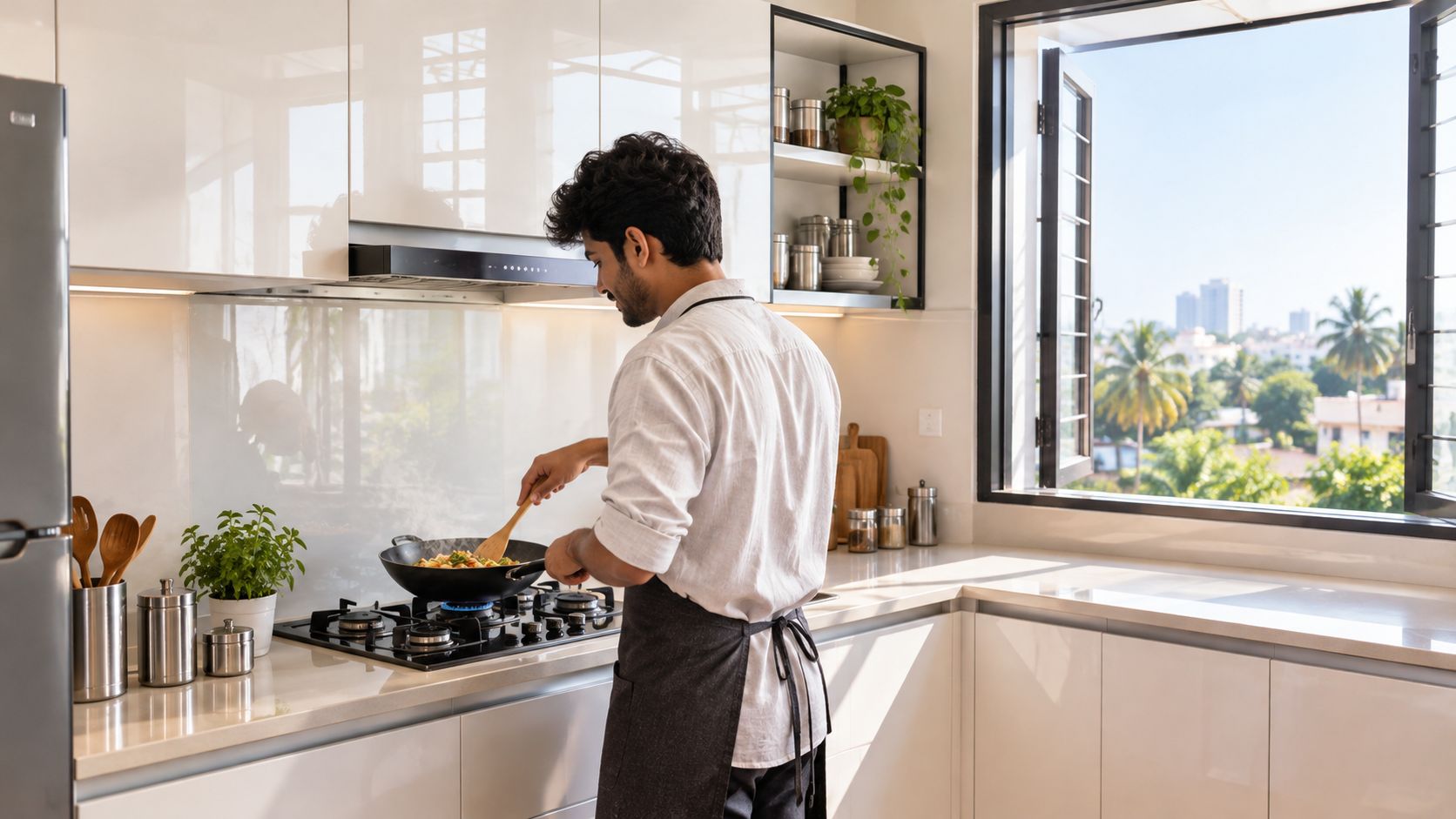
Now consider a villa kitchen with filtered daylight, strong ventilation and a professional chimney. The household does light to moderate frying, keeps the handles clean and uses a soft cloth after cooking. In that setting, acrylic can retain the visual advantage that attracted the owner in the showroom, especially on upper shutters and tall visible units.
Match the finish to the household
A busy family apartment may benefit from matte or semi-gloss lower shutters, with acrylic reserved for less exposed upper cabinets. The practical gain comes from reduced visual noise, not from a claim that matte material never marks.
A carefully maintained primary residence can use acrylic more broadly, provided the family accepts regular microfiber cleaning and avoids abrasive products. Light colours usually make routine marks less dramatic than very dark reflective shades.
A rental home needs a forgiving finish and straightforward replacement. Glossy acrylic can be attractive for resale presentation, but high-contact areas may show neglect faster when occupants don't follow the care instructions.
A villa with strong sunlight needs sample testing under both daylight and artificial light. Reflected light can reveal waviness, edge misalignment, hairline scratches and inconsistent colour that a showroom spotlight hides.
Indian-kitchen guidance makes the same practical point: heavy cooking creates oil and grease, while matte laminate or semi-gloss finishes can conceal everyday marks more effectively than high-gloss acrylic kitchen cabinet material guidance. Darker colours also reveal dust and residue sooner.
The right finish is the one that still looks acceptable on an ordinary Wednesday evening, not only on installation day.
Making Your Final Decision on Acrylic Kitchen Finishes
Choose acrylic when you want strong visual impact, clean colour fields and a smooth surface that can be wiped without absorbing ordinary spills. I recommend it most confidently for low-to-medium cooking intensity homes, upper cabinets, dry-zone fronts and households willing to clean with care.
Choose matte, semi-gloss or textured laminate when the kitchen sees heavy frying, frequent family use, wet hands and quick cleaning. This isn't a downgrade. It is a better match for a surface that needs to hide everyday marks instead of reflecting them back at you.
Use this decision test
Choose high-gloss acrylic if appearance is the priority, the cooking load is controlled and the household accepts visible fingerprints.
Choose a hybrid finish if you want acrylic on upper or display-facing shutters but need a more forgiving surface near the sink, hob and lower cabinets.
Choose matte or textured laminate if the kitchen handles heavy daily frying, frequent wiping or rental turnover.
Reject vague quotations that say only “premium acrylic finish” without naming the PMMA sheet, substrate, edge method and adhesive.
Inspect before production under daylight and artificial light, checking flatness, colour consistency, edge polishing, bonding and visible waviness.
Record the care and replacement process so a damaged shutter can be matched and replaced without reconstructing the original specification.
The price must also be read correctly. A typical L-shaped acrylic kitchen is reported at approximately ₹3 lakh to ₹7 lakh, while broader metro-city indications sit around ₹800 to ₹2,500 per sq. ft., with the final figure affected by layout, hardware, carcass material, edge treatment and installation scope Indian acrylic kitchen pricing and material guide. Treat those figures as planning guidance, not a fixed Chennai rate.
A kitchen also contributes to how a home functions and presents itself, so homeowners comparing finishes may find this discussion of kitchen remodel return on investment useful. For the construction scope itself, review what a modular kitchen includes before comparing two quotes that may contain different carcasses, hardware or installation work.
One final sustainability detail deserves attention. Acrylic shutters are often composite products, and India's Plastic Waste Management Rules require recyclable plastic waste to be channelised to registered plastic-waste recyclers, with recycling conforming to IS 14534:1998 India indoor air quality and plastic recycling guidance. Ask whether the acrylic can be separated from the board substrate and who will handle disposal or recycling at replacement time.
Acrylic isn't a mistake. Unspecified acrylic is the mistake. Name the PMMA sheet, verify the board, seal every vulnerable edge, protect the wet zones and choose the sheen according to how your family cooks.
Interiors by DeX plans, manufactures and executes Chennai home interiors, including modular kitchens with acrylic-faced shutters, workflow-led storage and material selection for apartments, villas and renovations. Visit Interiors by DeX to discuss a kitchen specification that matches your cooking habits, substrate requirements and finish expectations before production begins.